Why does the North Star stay almost still—and how do you find it?
Find Polaris with the Big Dipper, discover why the North Star barely moves, and learn how its altitude gives a rough guide to your northern latitude.
Watch the night sky for a while and most stars shift noticeably. Polaris, the North Star, seems to hold its place. The explanation starts on Earth: our planet’s north-pointing rotation axis aims almost directly toward it. As Earth turns, other stars appear to circle that direction. Polaris traces only a tiny circle, making it look nearly stationary.
In the Northern Hemisphere, that makes it a useful guide to direction. You don’t need a telescope—or the brightest star in the sky. You need a recognizable star pattern and a clear view north.
Earth’s axis explains the apparent motion
Imagine extending a line through Earth’s South and North Poles far out into space. The northern end points toward the north celestial pole, a direction on the imaginary celestial sphere. That pole is not a star or a physical object that the other stars orbit.
Earth rotates around its axis. From the ground, the sky therefore seems to turn the opposite way. Stars farther from the celestial pole describe larger apparent circles. NASA explains this geometry using Polaris.
Polaris is close to the celestial pole, not exactly on it. Saying it never moves is a convenient starting point, but its small daily circle is real as an apparent motion. Your unaided eyes barely notice it.
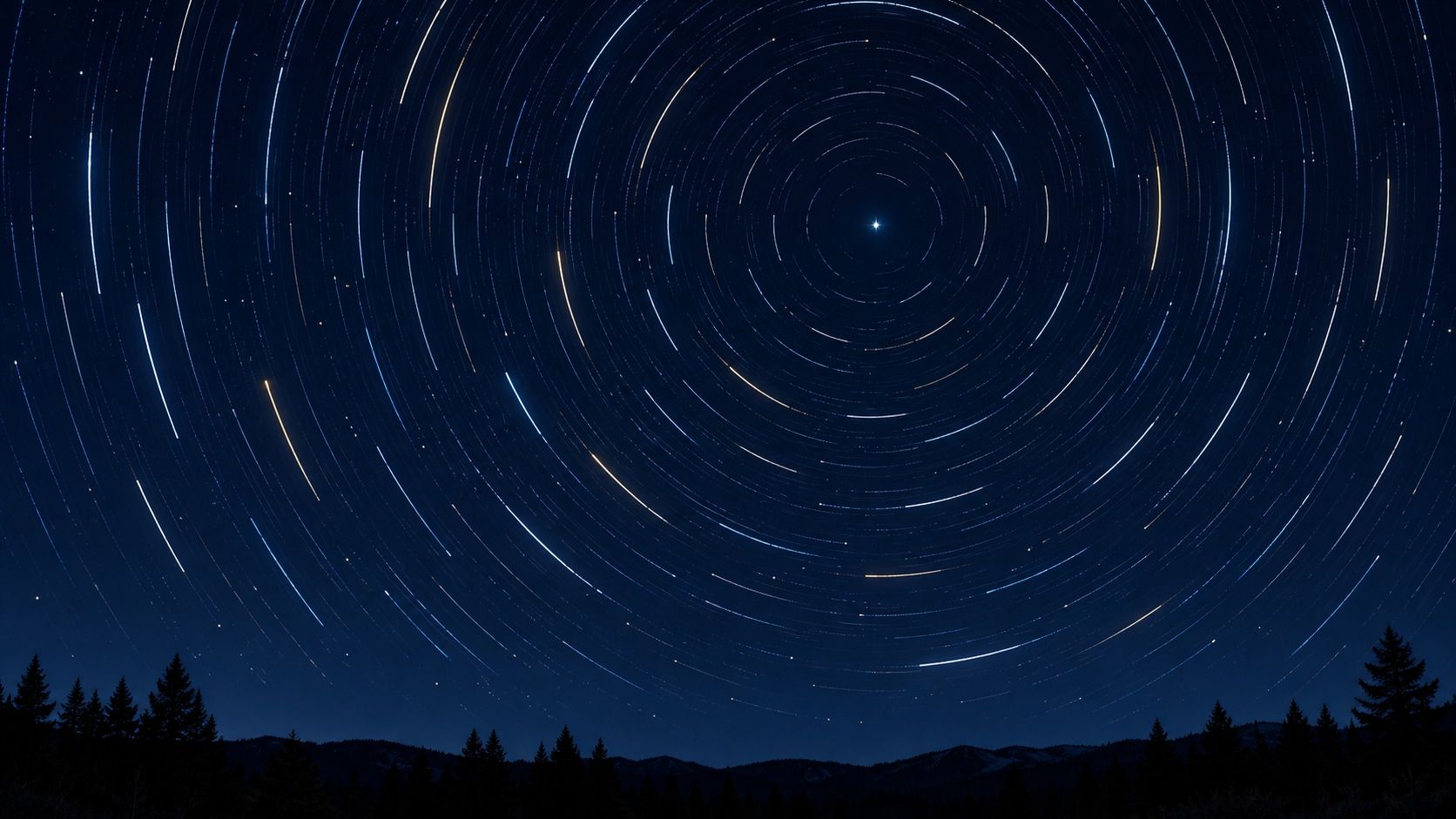
Long-exposure photographs collect this motion as star trails: arcs sharing a common center. These images gather light over time; you won’t see luminous circles by simply looking up. This article’s cover is an editorial illustration of that effect, not a single observed sky photograph.
Find Polaris with the Big Dipper
The Big Dipper is a familiar pattern within Ursa Major, the Great Bear. Four stars form its bowl and three make its handle. Polaris belongs to Ursa Minor, the Little Bear: it marks the end of the Little Dipper’s handle.
Use this classic route:
- Locate the Big Dipper: Look for its four-star bowl and bent handle. If the pattern is new to you, start with a current star chart set to your location and time.
- Pick the bowl’s outer edge: Use the two bowl stars on the side opposite the handle. Their names are Merak and Dubhe.
- Follow Merak through Dubhe: Extend the line beyond Dubhe by roughly five times the distance between the pair. That takes you to the neighborhood of Polaris. LEIFIphysik illustrates the method, in German.
- Check the Little Dipper: Polaris is at its handle’s tip. The other stars can be harder to see in light pollution, so don’t insist on finding the entire Little Dipper first.
The Big Dipper may be upright, sideways or apparently upside down. Follow Merak → Dubhe → Polaris, rather than “up the page” on a diagram. Trees or buildings can hide parts of the pattern when they are low in the sky.
Does the North Star show true north?
For everyday orientation, approximately. Look toward Polaris, then drop a line straight down to the horizon: that direction is close to true, or geographic, north, toward Earth’s geographic North Pole.
A magnetic compass responds to Earth’s magnetic field. Magnetic north and true north do not point the same way everywhere. A mismatch between a compass and the star doesn’t automatically mean you identified the wrong star.
Polaris also sits slightly away from the exact celestial pole. It’s a helpful rough guide, rather than a precision surveying reference without further corrections.
Its height in the sky roughly reveals your latitude
Here, height means angular altitude above the horizon, not distance in miles or kilometers. The north celestial pole’s altitude above a level horizon equals the observer’s northern geographic latitude. Because Polaris is near that pole, its altitude gives approximately the same value (LEIFIphysik).
| Illustrative location | Approximate altitude of Polaris | What to expect |
|---|---|---|
| Latitude 30° N | 30° | Relatively low above the northern horizon |
| Latitude 50° N | 50° | More than halfway from the horizon to overhead |
| Latitude 70° N | 70° | High in the northern sky |
These are simplified geometric examples, not measurements. At the North Pole, the celestial pole is at the zenith—directly overhead. At the equator it is on the horizon. Travel north and Polaris gets higher. That provides a rough latitude clue, but it doesn’t tell you your longitude.
Can you see it from the Southern Hemisphere?
Across much of the Southern Hemisphere, Polaris is below the horizon. Very near the equator, its slight separation from the celestial pole and local observing conditions make the situation less clear-cut. It’s not a convenient guide there.
There is currently no similarly prominent star marking the south celestial pole. Southern observers use other patterns, such as the Southern Cross, for orientation. The Big Dipper method is not a worldwide recipe.
Will Polaris always be the North Star?
No. Earth’s axis changes direction very slowly, rather like the wobble of a spinning top. This precession takes roughly 26,000 years to complete a cycle. The celestial pole therefore shifts among the stars over long periods (NASA).
That’s a different timescale from the sky’s daily apparent rotation. Polaris remains almost fixed for your observing session; over millennia, the job of “North Star” need not belong to the same star.
Try a simple observing exercise
Choose a clear night in the Northern Hemisphere and a fixed spot with an open view north:
- Locate Polaris and remember its position relative to a stationary foreground feature, such as a roof edge.
- Note the orientation of the Big Dipper as well.
- Return after about an hour to the same spot. The Dipper’s orientation will have changed, while Polaris will look almost unchanged.
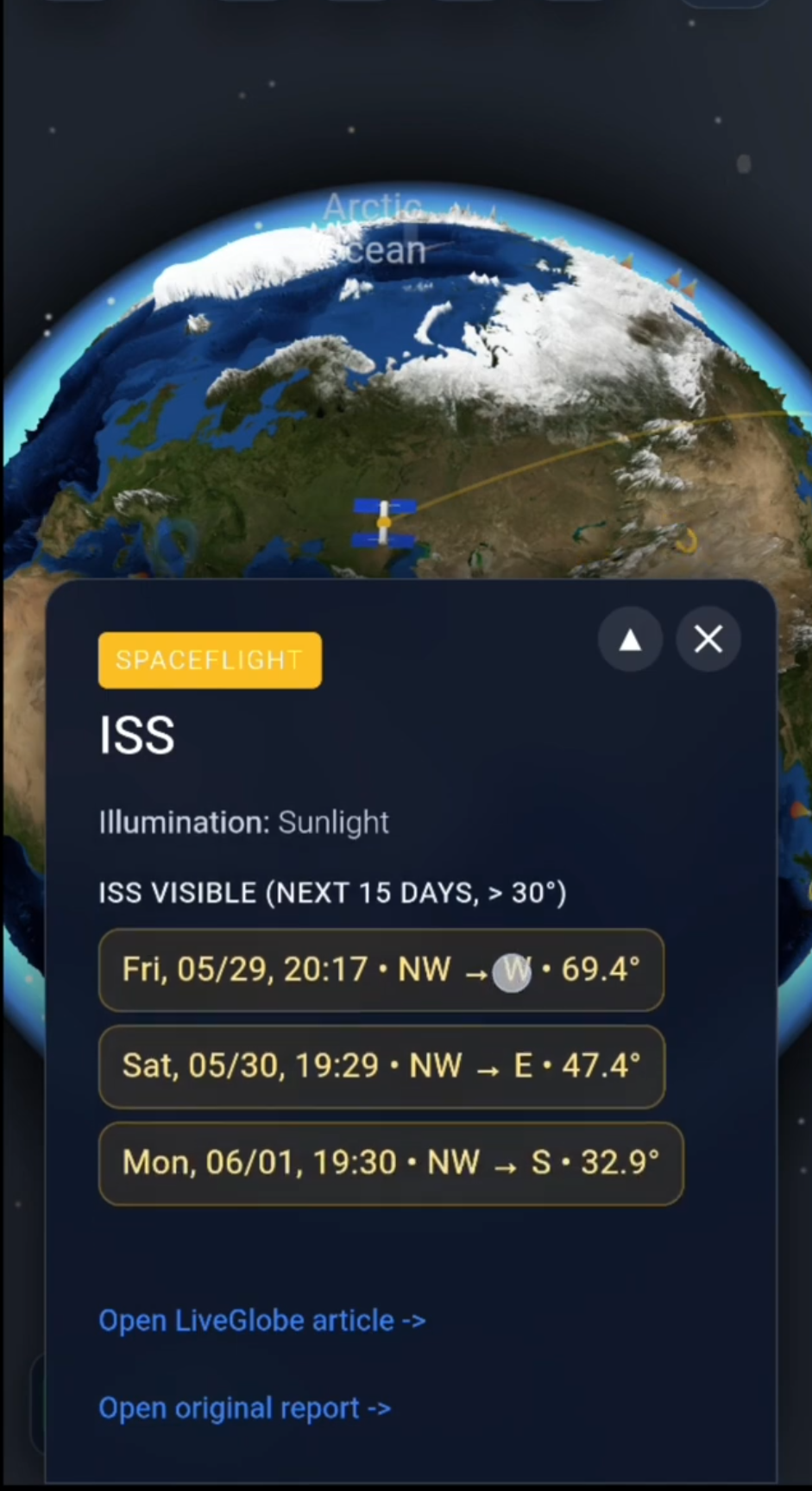
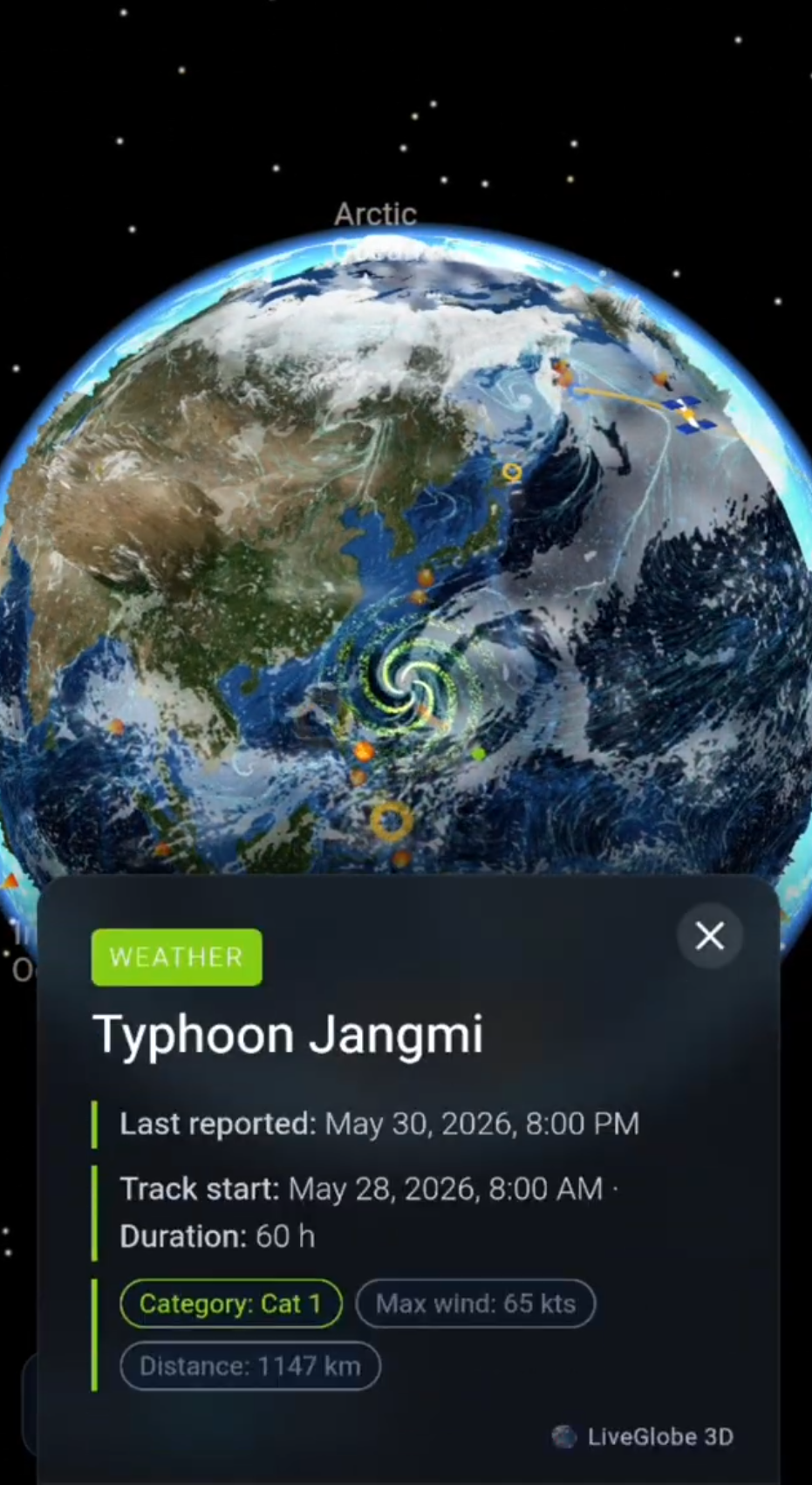
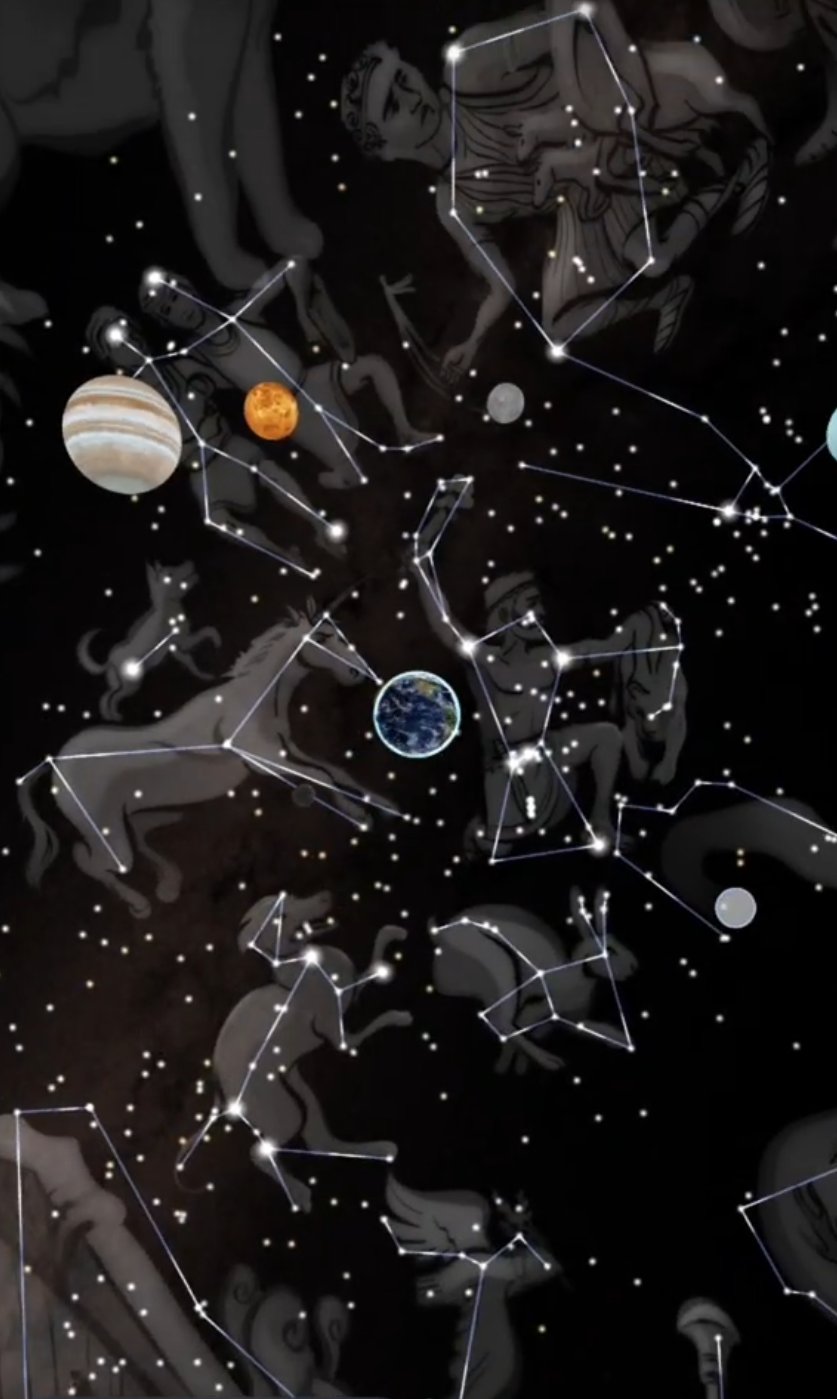
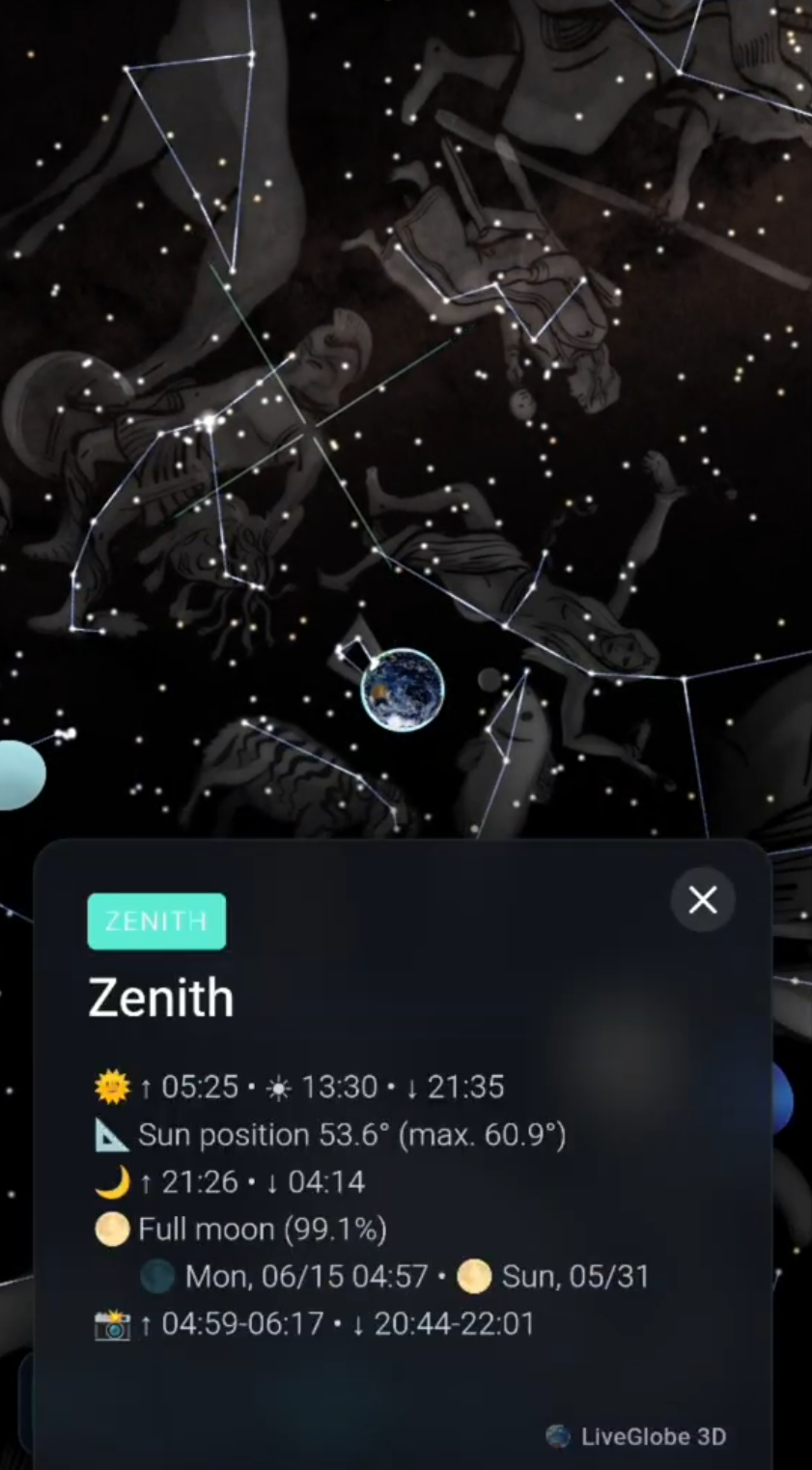
In LiveGlobe 3D, you can switch between Earth and Sky views and explore stars and constellation lines in the space menu. Use the views as an introduction to the connection between Earth and sky. The web app has a sign-in flow; for identifying stars outdoors, use a current chart for your location and time.
For a different kind of apparent change, read why stars twinkle. Twinkling comes from the atmosphere; the daily movement across the sky comes from Earth’s rotation.
Explore LiveGlobe 3D’s sky view—then look for that nearly steady reference point on your next clear night.
Short clips
The app in motion: short, genuine glimpses straight from use.
At a glance
How the app feels on your phone.