Why do stars twinkle, while planets usually shine more steadily?
Learn why stars twinkle and planets usually look steadier, why the horizon matters, and how to compare points of light on a clear night.
One bright dot flickers; another looks almost steady. The difference often develops right at the end of the light’s journey: moving air in Earth’s atmosphere changes the light reaching your eyes. Stars act almost like point sources, making these disturbances especially noticeable. With planets, many small fluctuations tend to average out.
That makes twinkling a useful clue, but not a fixed rule. A planet can twinkle too, particularly near the horizon. The explanation starts with the air between you and the sky.
What air does to starlight
The atmosphere is not equally warm or dense everywhere. Patches of air with different properties move and mix. Their refractive index varies too: this describes how light travels through a material and how its direction changes as it passes between regions with different optical properties.
Starlight is therefore not passing through one perfectly still, uniform window. Turbulent air keeps making small changes to its path. Your eye receives slightly more light from a star at one moment and slightly less at another. Its apparent position can also jitter. Welt der Physik explains the atmospheric origin of this effect in German.
The rapid changes in apparent brightness are called scintillation. Ordinary twinkling does not mean a star is switching its energy output up and down every second. It develops along the light’s route through our air. Stars can have genuine brightness variations as well, but those are a different subject.
Why planets usually twinkle less
The key is not simply brightness, or whether an object makes its own light. It is the object’s apparent size in the sky.
Stars are so distant that they behave almost like single points of light for this comparison. The visible planets in our solar system are much closer. A telescope reveals little disks, even though your unaided eyes still see bright dots.
Light from different parts of a planet’s disk is not affected in exactly the same way. As one contribution brightens slightly and another dims, their fluctuations partly average out. The combined light looks steadier. EarthSky explains this point-source versus disk distinction.
| Object | Apparent source | Typical naked-eye impression |
|---|---|---|
| Star | Almost a point | Rapid brightness changes may be obvious |
| Visible planet | A small disk that the eye cannot resolve | Many fluctuations average out, so the light often looks steadier |
Stars produce light and planets reflect sunlight, but that is a separate distinction. Reflected light is not immune to atmospheric disturbance.
Why twinkling is stronger near the horizon
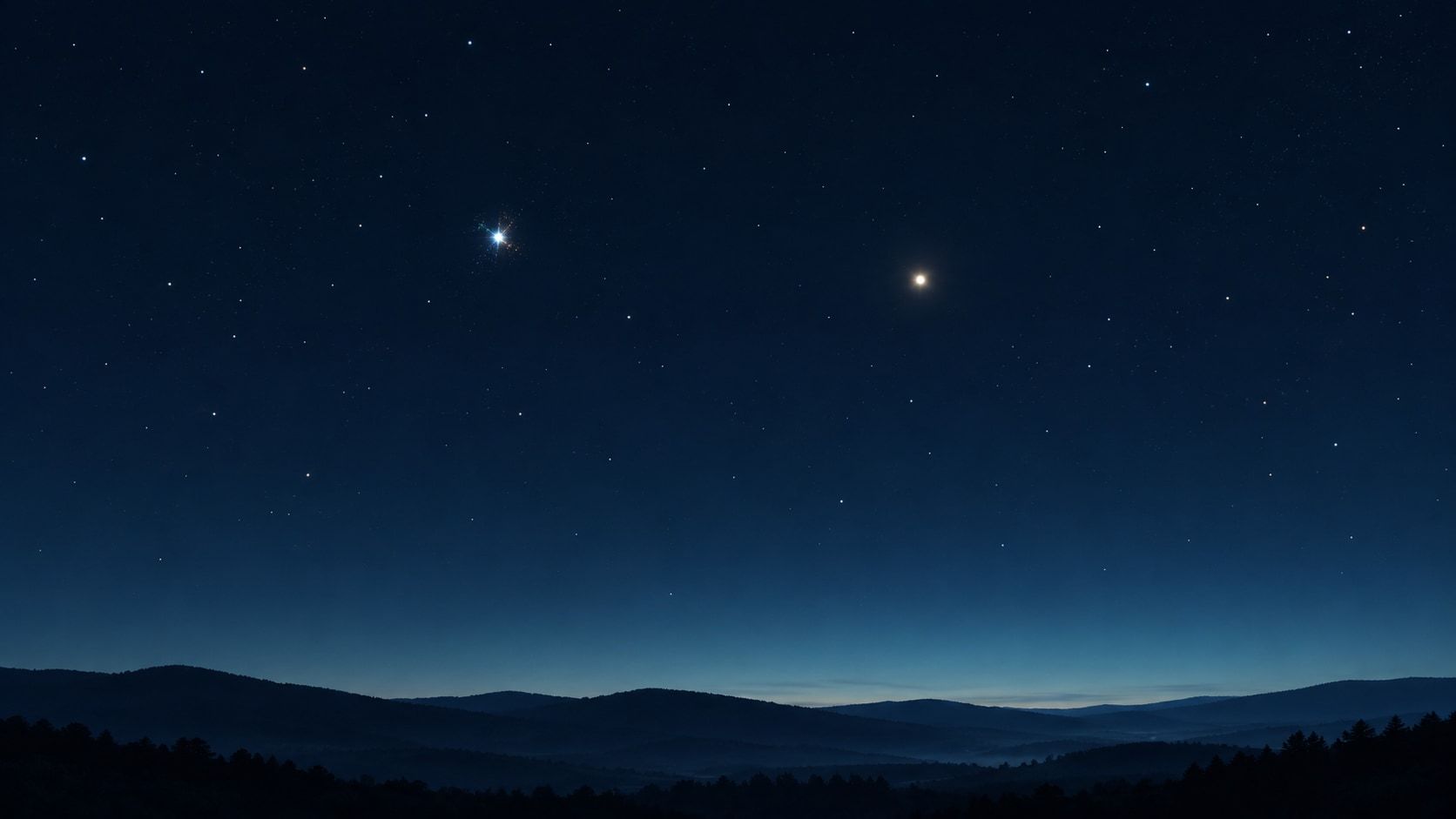
Look high overhead and the light takes a relatively direct route through the atmosphere. Look toward the horizon and you are peering at a shallow angle through much more air. Disturbances can become more noticeable along that longer path.
A bright star low down often twinkles more conspicuously than one higher up. Planets can visibly flicker there too. “Stars twinkle; planets never do” is therefore too rigid: twinkling is a clue, not a reliable identification test on its own (EarthSky).
Sometimes the flashes seem to alternate between white, red and blue. BBC Sky at Night also describes these rapid color changes as an atmospheric effect. The star itself is not repeatedly changing into a red star and then a blue one.
Twinkling, seeing and clouds are different
Twinkling emphasizes rapid changes in apparent brightness. Telescope observers also talk about seeing: atmospheric turbulence makes fine details shake or blur. Both involve the atmosphere, but they describe different aspects of what you observe (BBC Sky at Night).
A cloudless sky does not guarantee a steady telescopic image. “The stars are visible” and “the air is optically steady” are different statements. Equally, a passing veil of cloud dimming a star is not the same explanation as rapid atmospheric scintillation.
Try a simple comparison on a clear night
You do not need a telescope for this exercise:
- Choose two stars: compare a bright star fairly low down with one much higher up. An unobstructed view matters more than a particular constellation.
- Watch for a little while: does each light look steady or restless? Note its direction and height above the horizon.
- Add a known planet: use a current sky chart for your location and time to identify it independently of its twinkling.
- Compare similar heights: a planet on the horizon and a star overhead are experiencing different viewing conditions. Aim for a more comparable pair.
- Repeat another evening: turbulence changes. One observation cannot turn a useful rule of thumb into an exception-free law.
This is a qualitative comparison, not a measurement of atmospheric turbulence. Its main value is separating observation from explanation: record what you see first, then consider the likely cause.
Explore stars and planets with LiveGlobe 3D
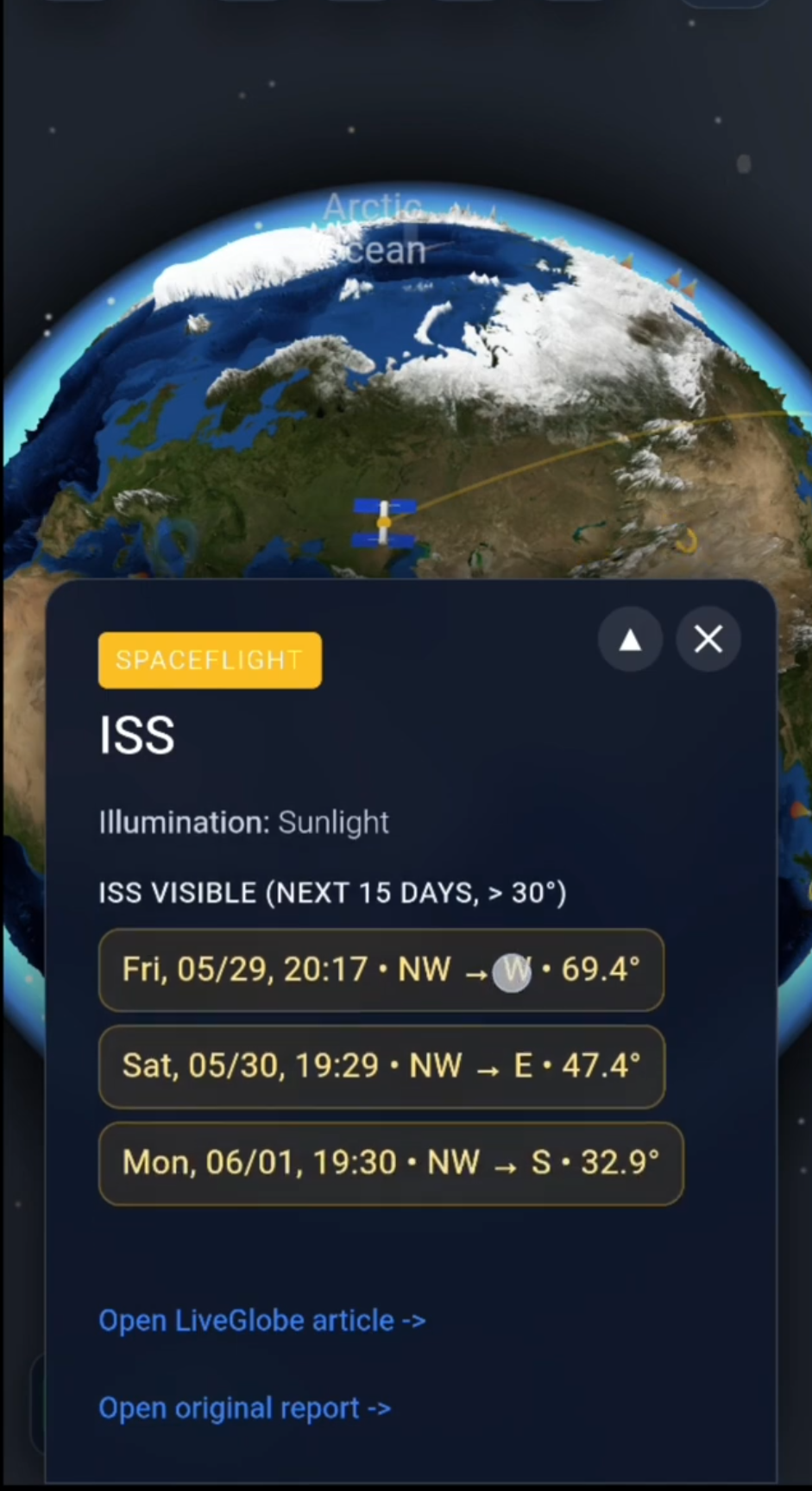
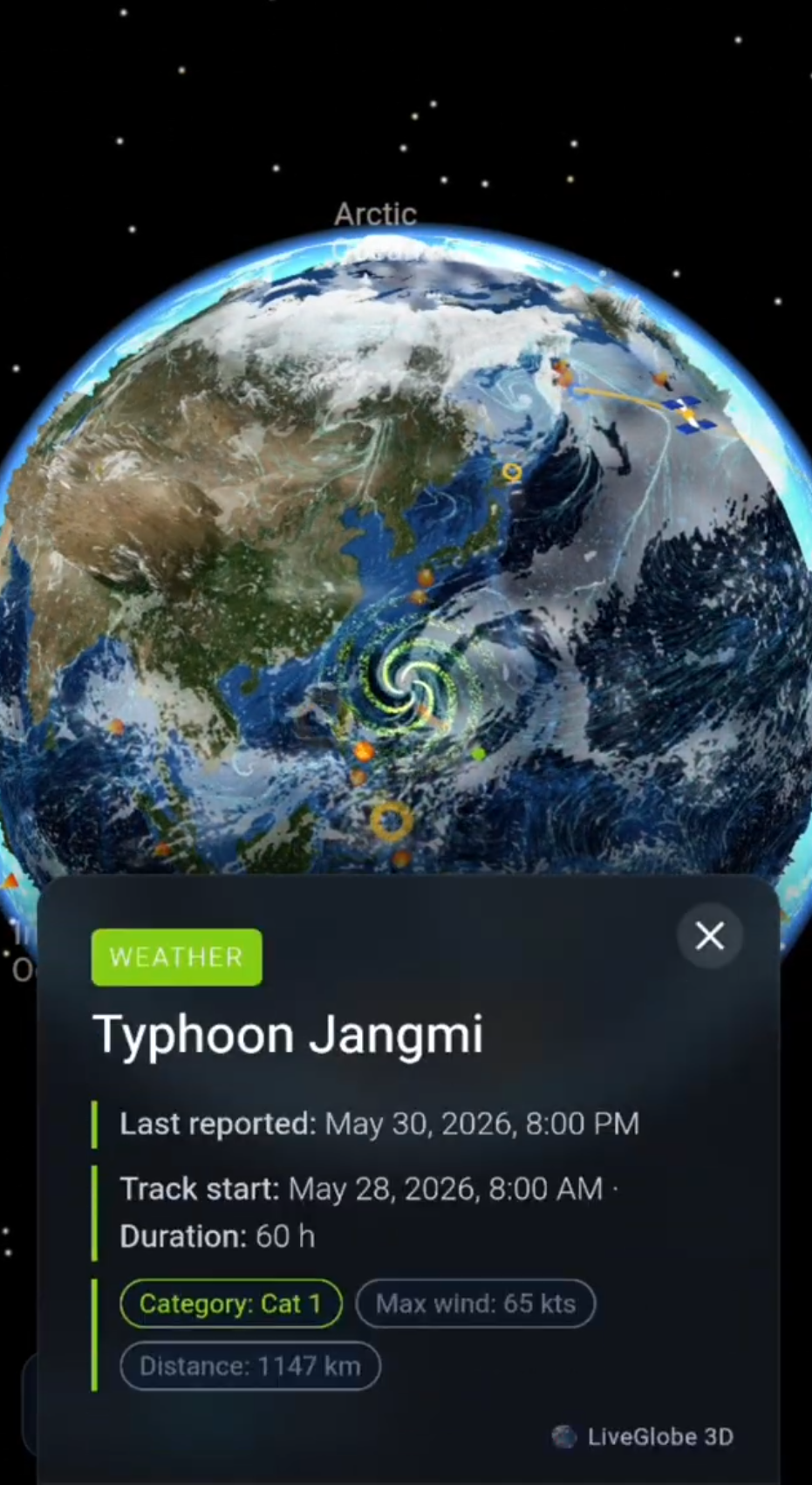
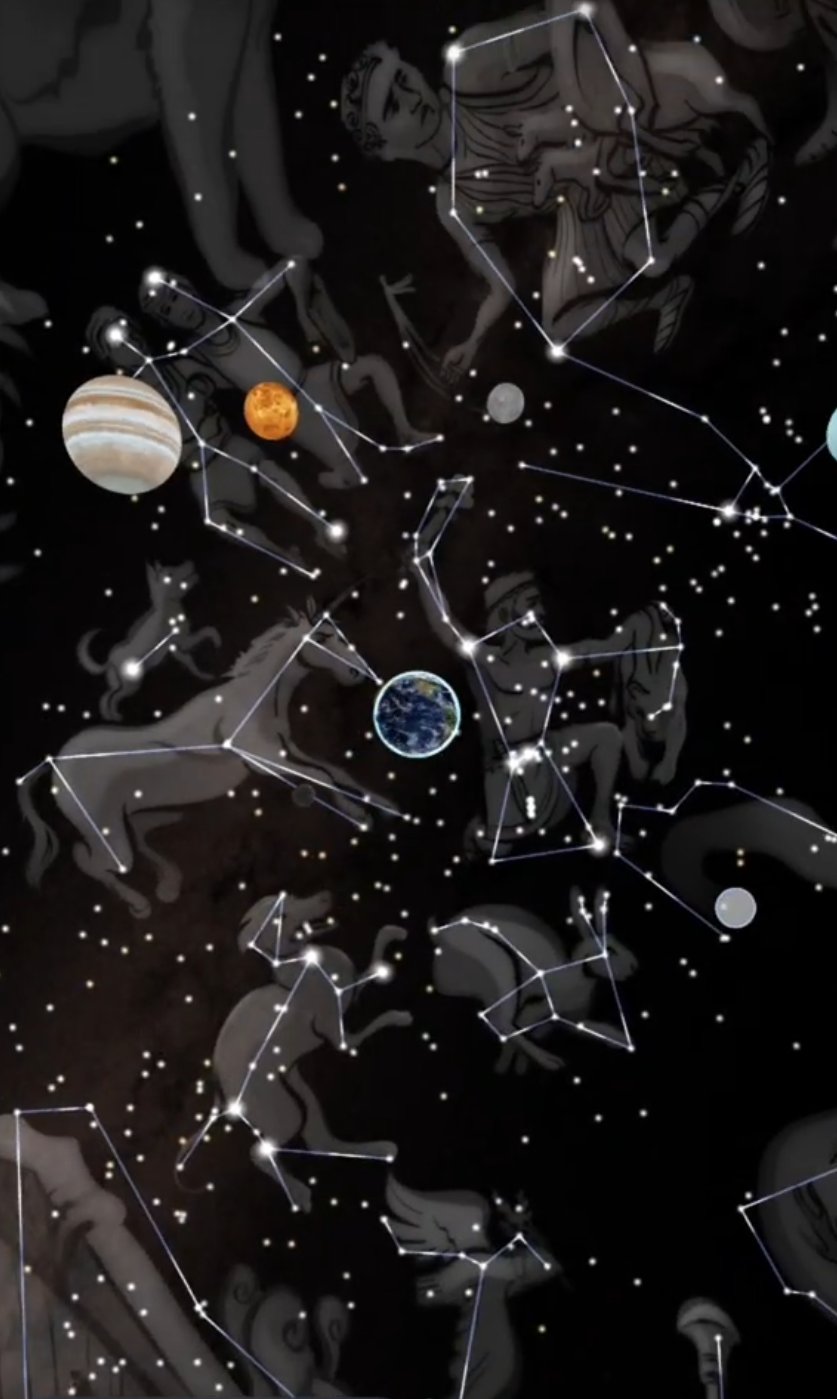
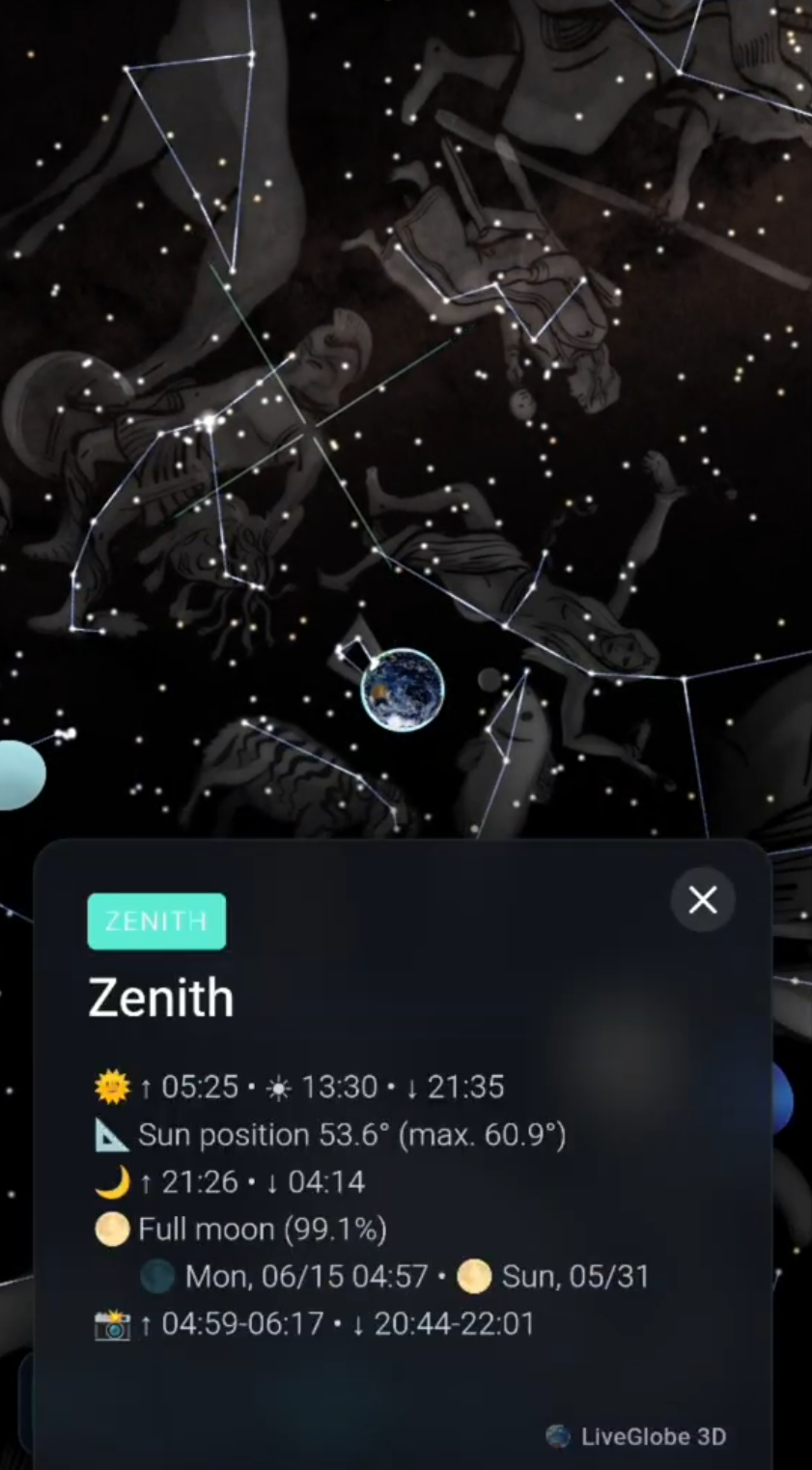
In LiveGlobe 3D, you can switch between Earth and Sky views and explore stars, constellation lines and planets through the space menu. Use the view to put the different objects into context, then compare it with your outdoor observations. The web app has a sign-in flow; planet data depends on external services.
For another atmospheric light effect, read Why is the sky blue—and why are sunsets often red?. That article concerns scattering; this one concerns the changing effect of turbulent air on incoming light.
Explore LiveGlobe 3D and the views available to you, then look for steady and twinkling points of light on your next clear evening.
Common questions
Do stars twinkle in space?
The atmospheric twinkling described here disappears outside Earth’s disturbing atmosphere. Intrinsic changes in a star’s brightness are a separate matter.
Can a planet still twinkle?
Yes, especially low in the sky or in strongly turbulent air. A planet’s usually steadier light is a useful tendency, not proof of its identity.
Does strong twinkling predict bad weather?
You are observing an effect on light. That alone is not a reliable local weather forecast. For a night outdoors, cloud cover and atmospheric steadiness are separate things to consider.
Short clips
The app in motion: short, genuine glimpses straight from use.
At a glance
How the app feels on your phone.