How do contrails form—and why do some last longer than others?
Why do some airplane contrails vanish while others spread? Learn how ice crystals, humidity at flight altitude and winds shape trails, gaps and cirrus clouds.
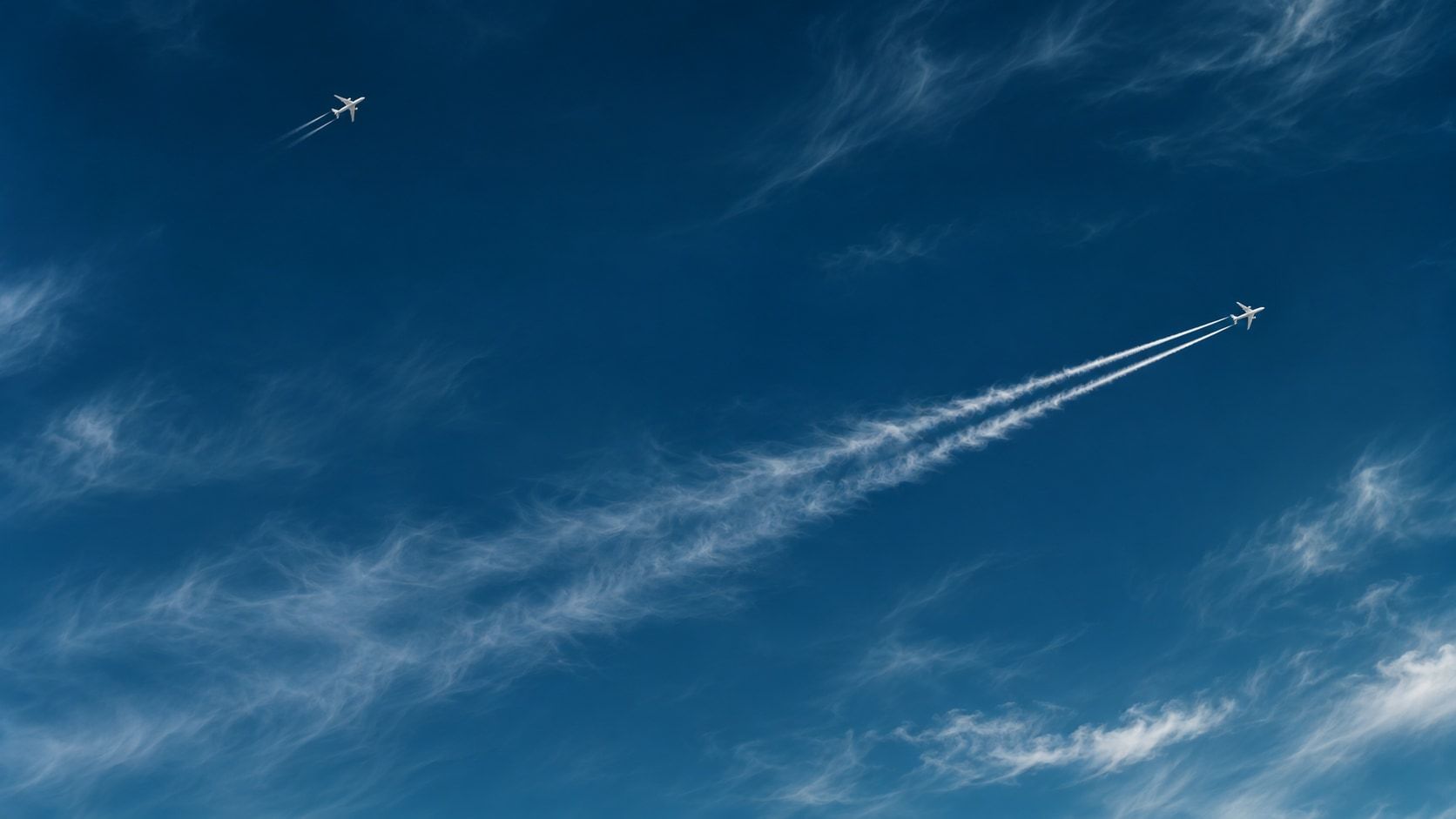
One airplane draws a long white line across the sky. Another leaves a short trail that vanishes just behind its engines. Contrails are clouds of tiny ice crystals. They form when hot, water-rich engine exhaust mixes with sufficiently cold surrounding air. Whether they persist depends mainly on the humidity at flight altitude.
There are two separate questions: can an ice cloud form in the exhaust mixture, and can those crystals survive once they spread into the surrounding air? Keeping formation and persistence apart makes the different trails much easier to understand.
From invisible water vapor to a white ice cloud
Burning aircraft fuel produces water among other combustion products. It initially leaves the engine as hot, invisible water vapor. As the exhaust mixes with cold air high above the ground, the mixture cools. Under suitable conditions, droplets form on small particles and freeze. Together, the resulting ice crystals scatter sunlight and appear as a white trail. The FAA explains this process, including the role of particles from the engine and the surrounding atmosphere.
The visible line is therefore neither gaseous water vapor nor simply a plume of smoke. Water vapor itself is invisible; the ice cloud is what you see. This explanation concerns the familiar exhaust contrails behind jet aircraft. Brief condensation around wings forms by a different mechanism.
There is a useful connection with how natural clouds form: water changes phase. Here, however, the trigger is exhaust mixing with the atmosphere, rather than a parcel of sun-warmed air rising from the ground.
Why a short contrail disappears
An ice cloud can form without being able to last. If the surrounding air is sufficiently dry, the crystals turn directly back into invisible water vapor. That change from ice to gas is called sublimation. The older part of the trail fades while the airplane continues on its way.
In colder air with enough water vapor, the crystals can survive and take up additional water. A narrow new trail may then remain visible long after the aircraft has gone. NOAA’s National Weather Service and the FAA both explain why atmospheric humidity matters so much to a contrail’s lifetime.
| What you see | A possible explanation |
|---|---|
| No visible trail | Formation conditions are not met; the air may be too warm or too dry |
| A short trail just behind the aircraft | Crystals form but quickly sublimate in the surrounding air |
| A long-lasting narrow line | The environment is moist enough to sustain the ice cloud |
| A broad, wispy band | Winds and differences in air movement spread a persistent trail |
These are typical explanations, not a way to calculate an exact temperature or humidity from a photograph.
What is ice-supersaturated air?
Saturation over ice is the water-vapor level at which ice neither gains nor loses mass overall under the given conditions. Air is supersaturated with respect to ice when it contains more water vapor than that equilibrium requires. Existing ice crystals can then grow.
Such a region can initially look clear. An aircraft introduces water and particles through its exhaust plume and can trigger a visible ice cloud. The FAA describes these ice-supersaturated regions as important to persistent contrails.
Humidity at cruising altitude can be very different from humidity in your yard. A dry-feeling day on the ground does not rule out a long-lasting contrail overhead. The atmosphere contains layers with different temperatures and moisture levels.
Why do contrails have gaps, cross each other or spread out?
The air is not uniform. As an airplane crosses regions with different temperature or humidity, its visible trail can start, stop or develop gaps. A break does not require the engines to be switched off. Two aircraft that appear close together may also be flying at different altitudes, in different air layers.
A persistent contrail travels with the wind after the aircraft has left. Differences in wind speed or direction can stretch and spread it. A thin line may become a broad, fibrous contrail cirrus cloud. Several flight paths, combined with drifting older trails, can create crossing patterns. Both changing moisture conditions and subsequent wind drift are described by the FAA.
An old band therefore need not sit underneath the airplane that made it. Nor did every thin cirrus cloud begin as a contrail.
A ten-minute observation you can try
Choose a clearly visible trail away from the Sun and watch how it changes:
- At the start: Is it short and sharply defined, or already long and frayed?
- After two or three minutes: Does the older end fade, or does it broaden?
- After about ten minutes: Has the trail moved relative to a roof or tree? Has the line become a veil?
- When comparing trails: Treat a second trail as a separate observation. You usually do not know its altitude or the humidity there.
“The narrow line remains visible, drifts left and widens at its older end” is a useful note. It says more than “All planes are making long trails today.” A single contrail is not a reliable prediction of rain at your location.
Put the wider cloud pattern in context
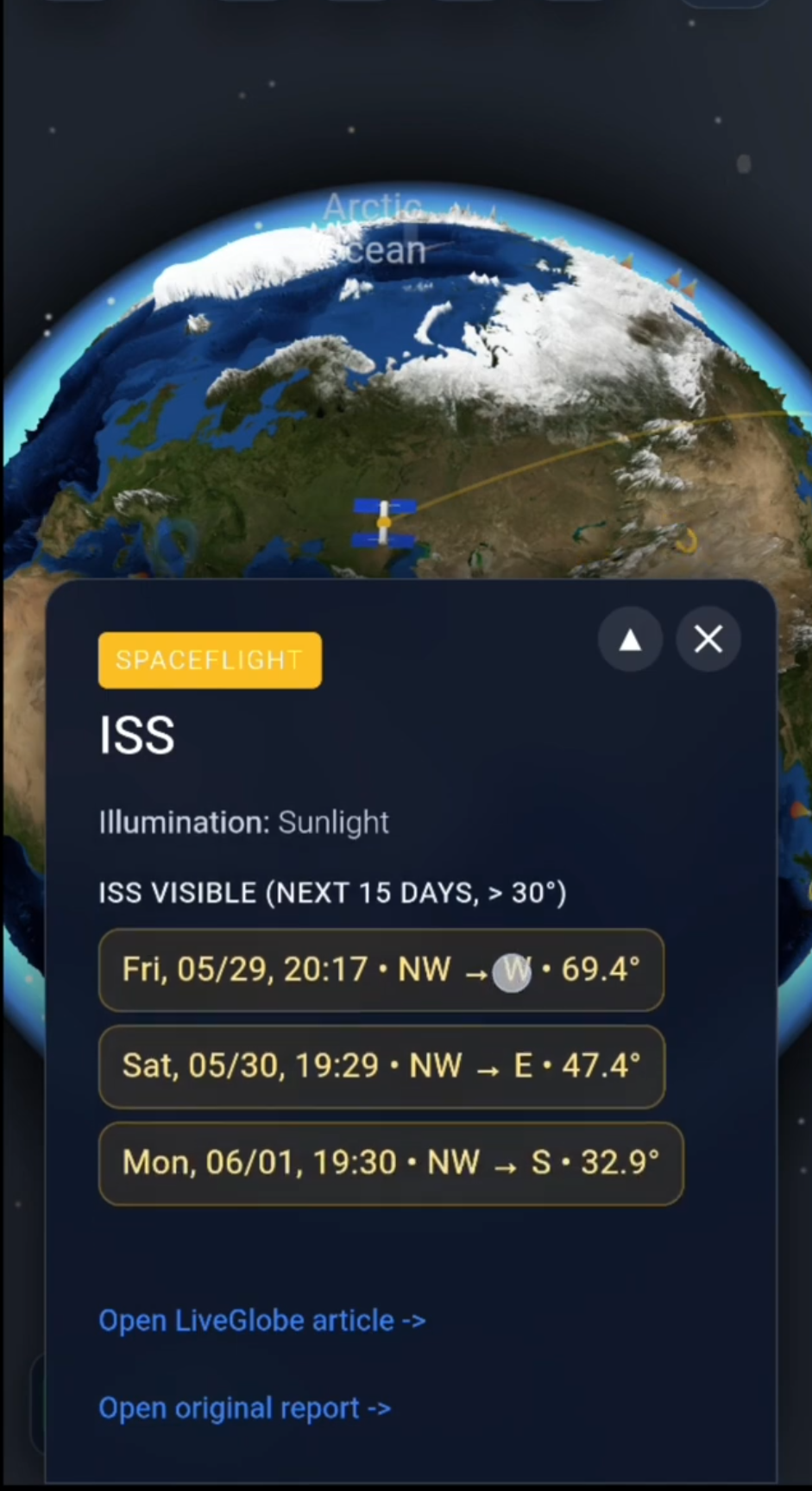
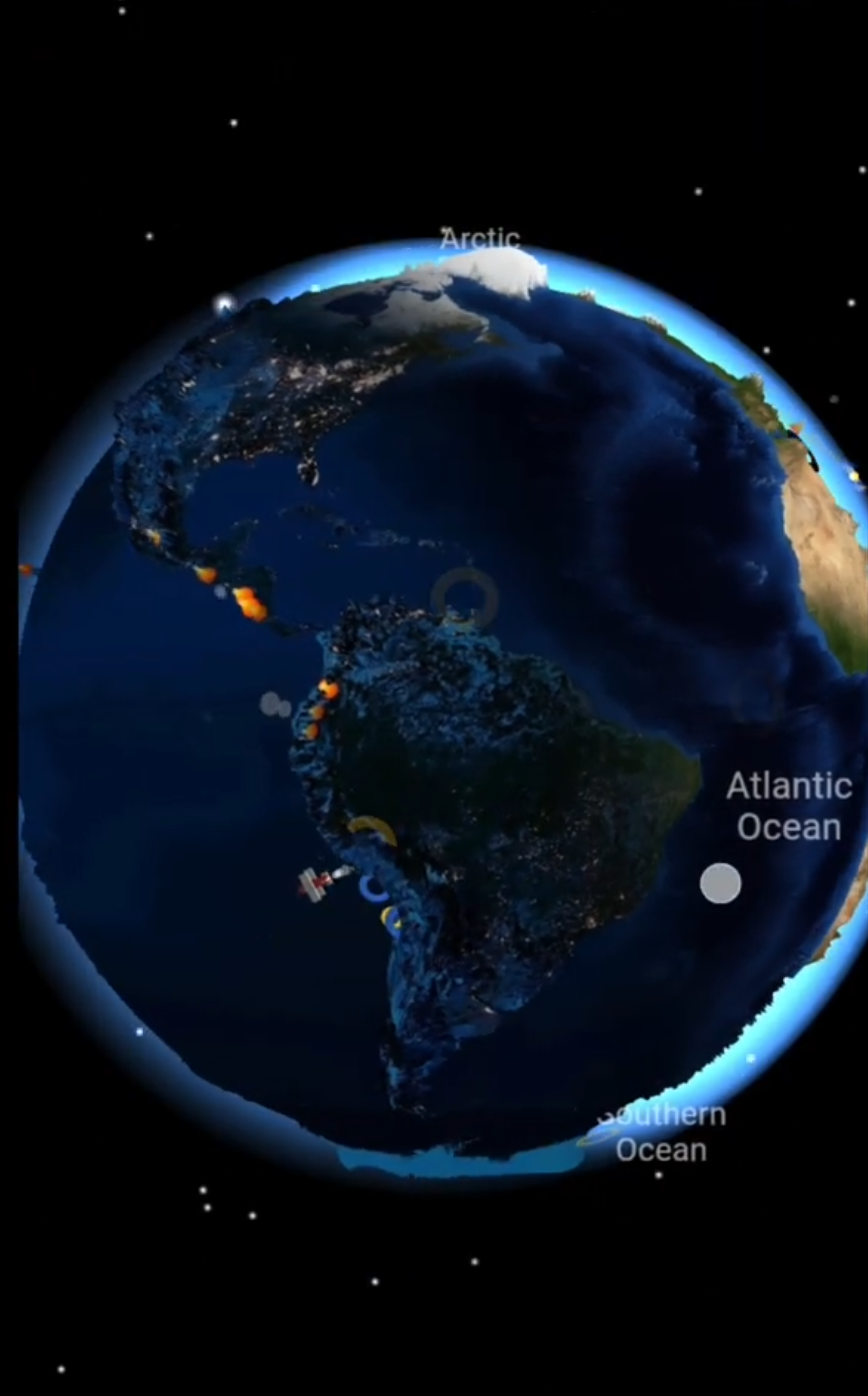
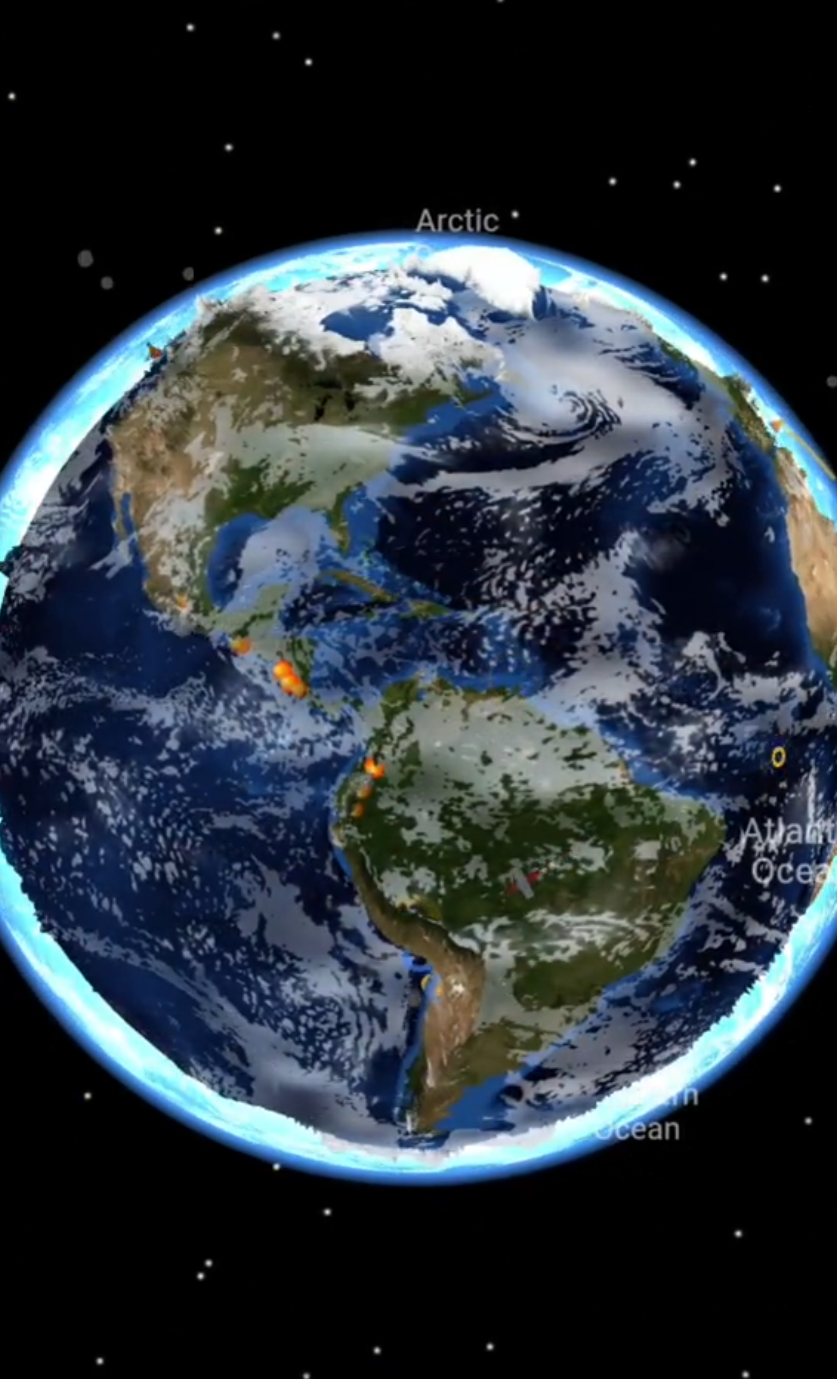
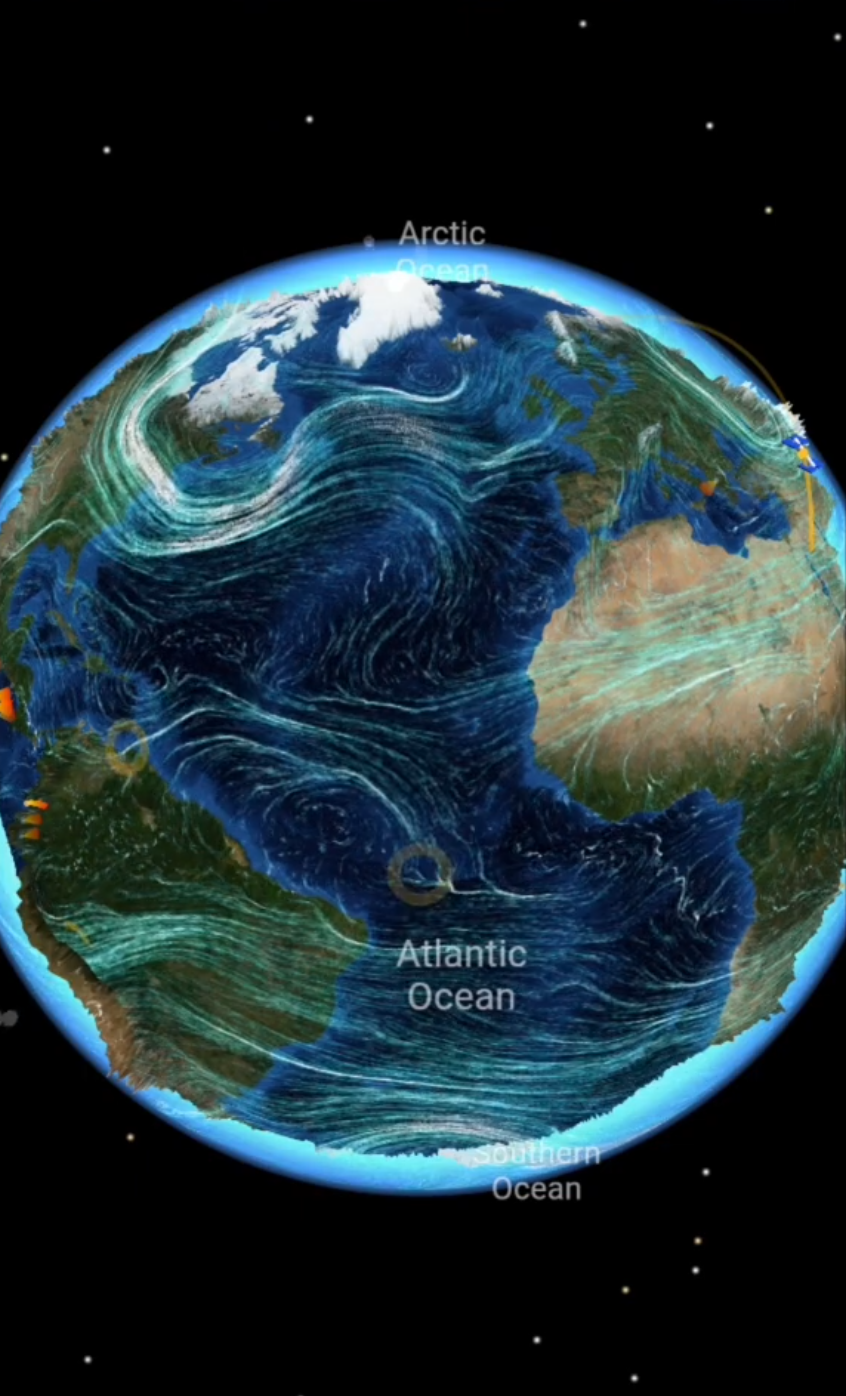
With LiveGlobe 3D, you can rotate and zoom the globe to place larger cloud patterns in relation to coastlines and continents. The cloud view in the live menu depends on external data and Premium access; the web app has a sign-in requirement.
Use that wider view alongside your own sky observations. Explaining one particular contrail would require the conditions at its flight altitude, rather than a large-scale cloud image alone.
Explore the LiveGlobe 3D views available to you. Next time you look up, ask: Is a brief cloud forming behind the aircraft, or can that ice cloud survive in the surrounding air?
Short clips
The app in motion: short, genuine glimpses straight from use.
At a glance
How the app feels on your phone.