Polar day and polar night: Why the Sun can stay up—or down—for weeks
Why can the Sun stay up or below the horizon for weeks? Understand polar day, polar night, Earth's rotation and the twilight that can brighten polar winter.
Earth keeps rotating every day. Yet in a polar region, the Sun can remain above the horizon for weeks, or fail to rise for just as long. Earth’s tilted axis makes this possible: at certain times of year, a polar location’s entire daily circular path lies within the sunlit or unlit half of Earth. Rotation does not stop.
A ball and a lamp can make the geometry much easier to picture. First, though, there is an important distinction: a Sun below the horizon does not necessarily mean a pitch-black sky.
Polar day and polar night describe the Sun’s position
During polar day, associated with the midnight Sun, the Sun does not set for at least 24 hours. During polar night, it does not rise for at least 24 hours. Depending on location and season, these periods can last days, weeks, or months (IAU OAE: polar circles).
“Day” and “night” here are not calendar dates. Hours still pass during polar day, noon still arrives, and the calendar moves on. The Sun simply stays above the horizon.
Cloud cover is not the defining condition either. Clouds may hide the Sun without creating polar night.
Why rotation does not always produce a sunset
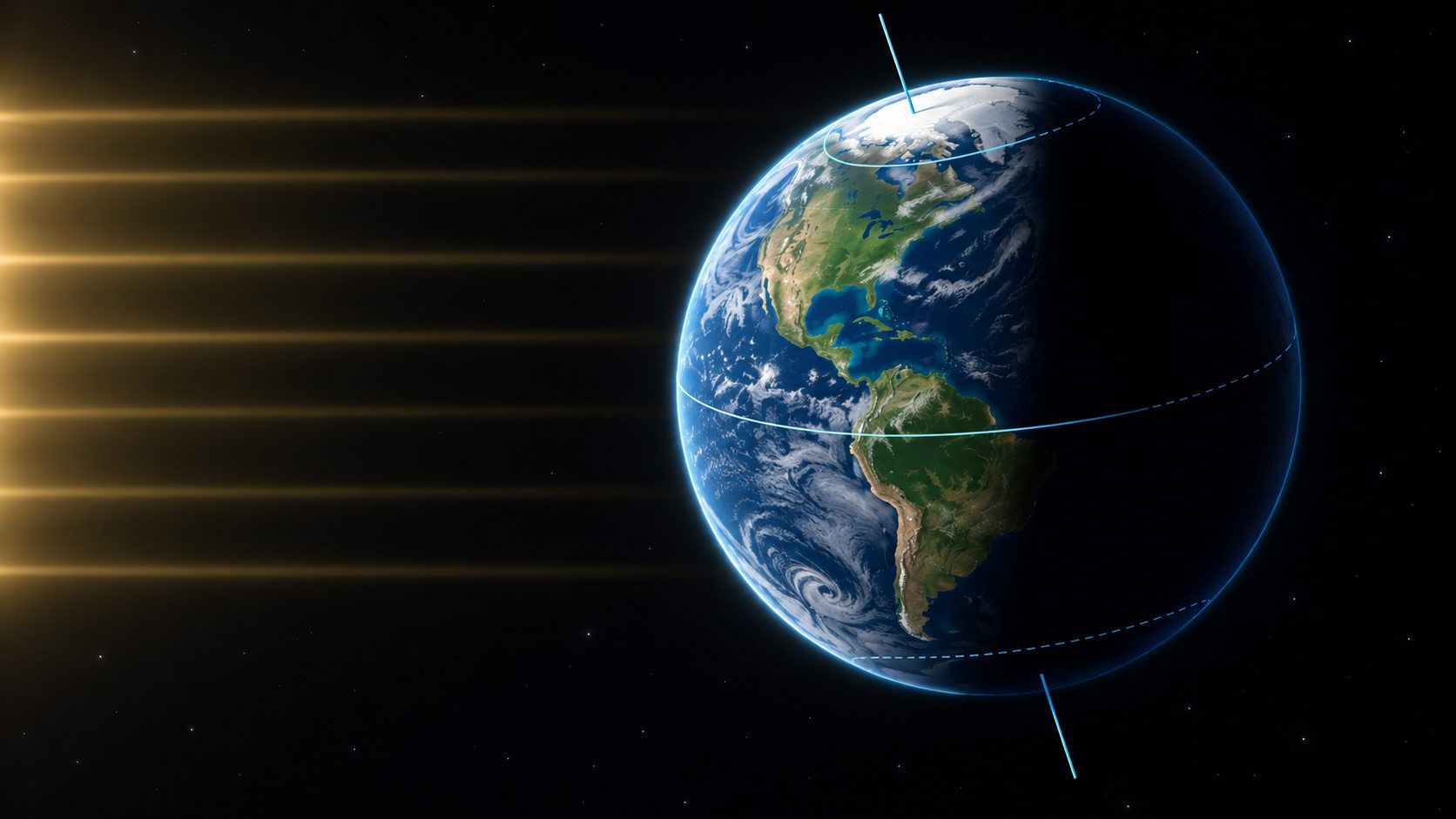
Earth’s axis tilts about 23.4 degrees away from the perpendicular to its orbital plane. In a simple model of one year, it keeps pointing in approximately the same direction in space. Around June, the North Pole leans toward the Sun; around December, the South Pole does (NOAA/NWS).
Imagine a location far north. As Earth rotates, it traces a small circle around the axis. In northern summer, that entire circle can stay on the sunlit side. The location rotates without entering Earth’s shadow: the Sun moves across the sky but never drops below the horizon.
In northern winter, the same location’s circular path can lie entirely on the side without direct sunlight. The Sun approaches the horizon during the day but does not reach it. That is polar night.
At middle latitudes, the daily circle crosses the boundary between light and shadow, so sunrise and sunset continue. For the broader seasonal picture, see What causes the seasons?.
What do the polar circles mark?
The Arctic and Antarctic Circles lie at approximately 66.6 degrees north and south latitude. In the geometric model, this is 90 degrees minus Earth’s axial tilt. They mark the transition to regions where continuous sunlight or absence of direct sunlight becomes possible around the relevant solstice.
For an observer, however, the line is not an exact cutoff. The Sun is a disk, not a point: sunrise is measured using its upper edge. Atmospheric refraction, the bending of light, also raises its apparent position. Actual rising and setting can therefore differ from the simple geometry, and the local horizon matters too (NOAA/NWS).
If you are planning a trip, use a sunrise and sunset table for the specific place and dates rather than treating the circle as a one-day guarantee.
Longer toward the poles, with opposite seasons north and south
Near the polar circles, the longest days and nights occur around the solstices. Moving toward either pole, periods without sunset or sunrise grow longer. At the poles themselves, they last roughly half a year—not at every polar location (Australian Antarctic Division).
| Time of year | Northern polar region | Southern polar region |
|---|---|---|
| Around June | Polar day at the relevant latitudes | Polar night at the relevant latitudes |
| Around December | Polar night at the relevant latitudes | Polar day at the relevant latitudes |
This shows the seasonal contrast, not exact local dates. Two places in the same hemisphere can have very different periods if one is near the polar circle and the other near the pole.
Polar night is not necessarily constant total darkness
When the Sun is only a little below the horizon, scattered sunlight can still illuminate the sky. This is twilight, like the light after an ordinary sunset, but with a different daily pattern.
The Australian Antarctic Division illustrates this at Mawson station. During a winter period without sunrise, the station can still experience several hours of twilight. No sunrise and a completely black sky are different things.
Twilight is classified by how far the Sun’s center is below the horizon:
- Civil twilight: down to 6 degrees; outdoor objects may remain visible in favorable conditions.
- Nautical twilight: 6 to 12 degrees; outlines and the horizon may still be visible.
- Astronomical twilight: 12 to 18 degrees; the contribution of sunlight continues to fade.
Which stages a place experiences during polar night depends on latitude and date. A photograph of a blue or pink sky is therefore not a contradiction (twilight definitions and Mawson example).
Try the geometry with a ball
Use a ball, a small marker, and a lamp in a dim room:
- Choose an imaginary axis. Mark a point near its upper end, but not exactly at the pole.
- Tilt the axis toward the light. Keep the lamp still, with the upper end leaning slightly toward it.
- Rotate around that axis only. Follow the marker through one full turn. Close enough to the pole, its whole circular path stays in the light.
- Compare a point farther down. A middle-latitude point crosses through light and shadow during the same rotation.
- Change the seasonal position. Move the ball to the other side of the lamp without changing the axis’s direction in the room. The upper end now leans away, and the polar marker can stay in shadow throughout a turn.
A nearby lamp does not reproduce sunlight to scale. It is enough for the principle: the circular path’s position relative to the light–shadow boundary matters, not a change in rotation speed.
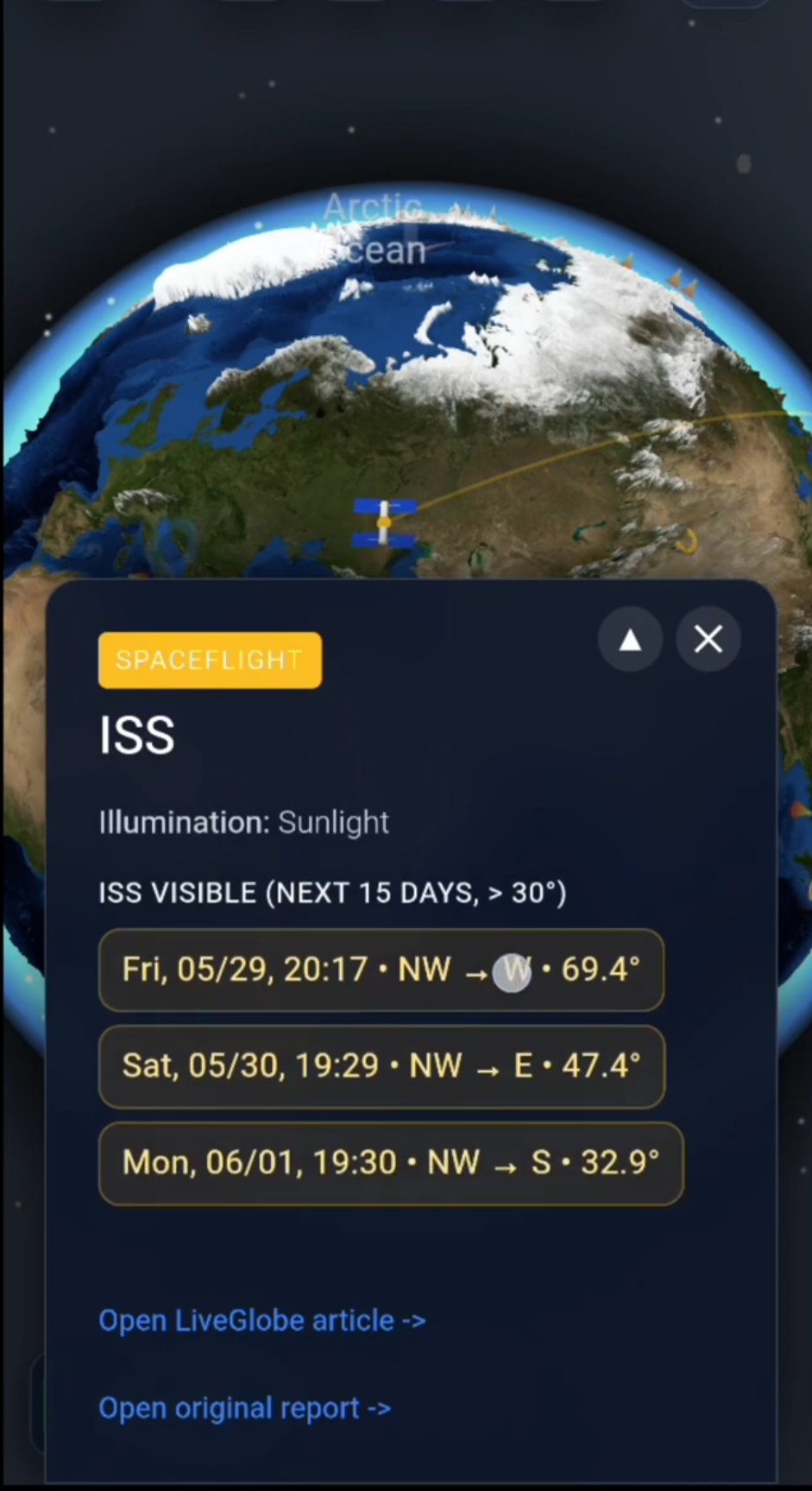
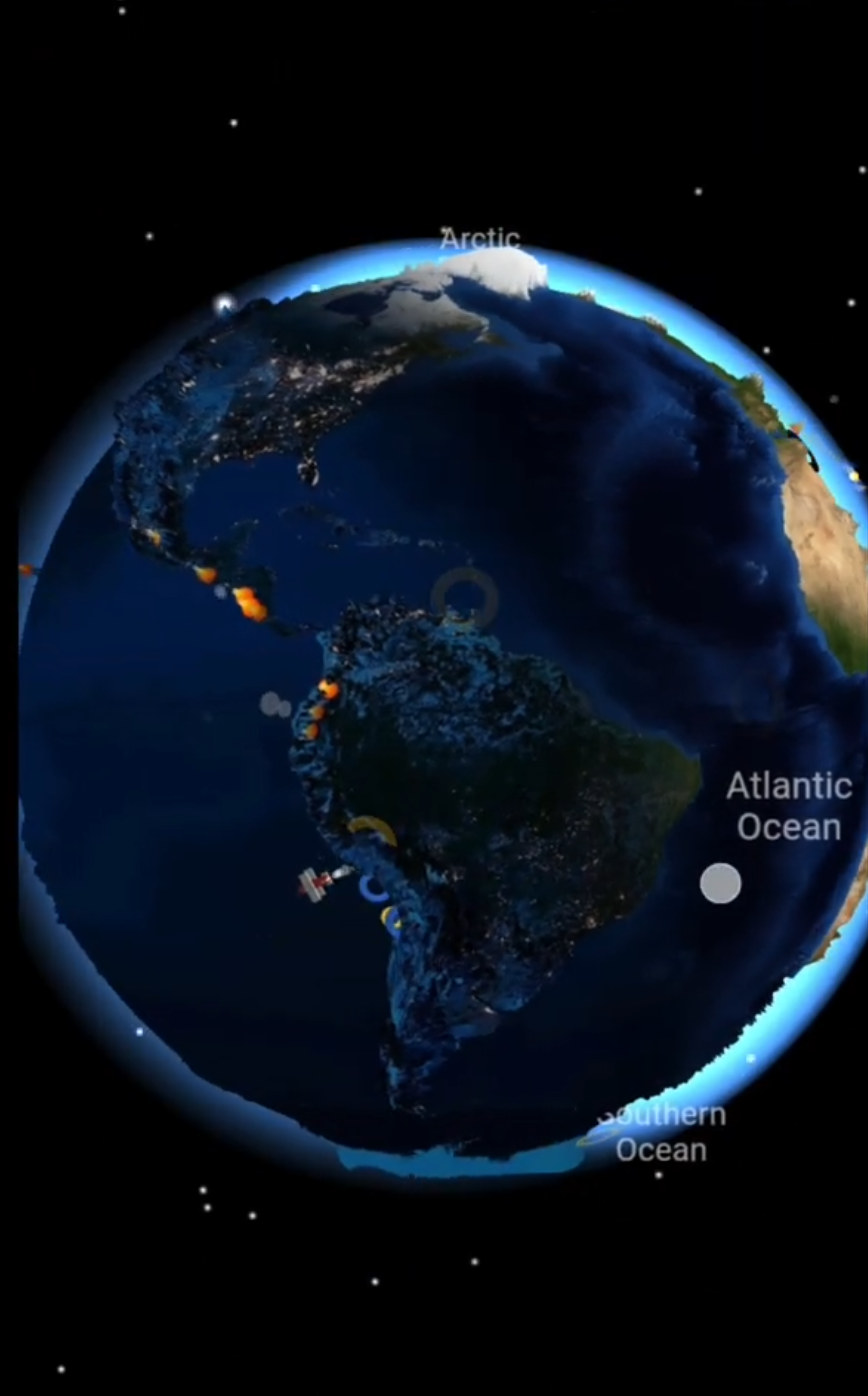
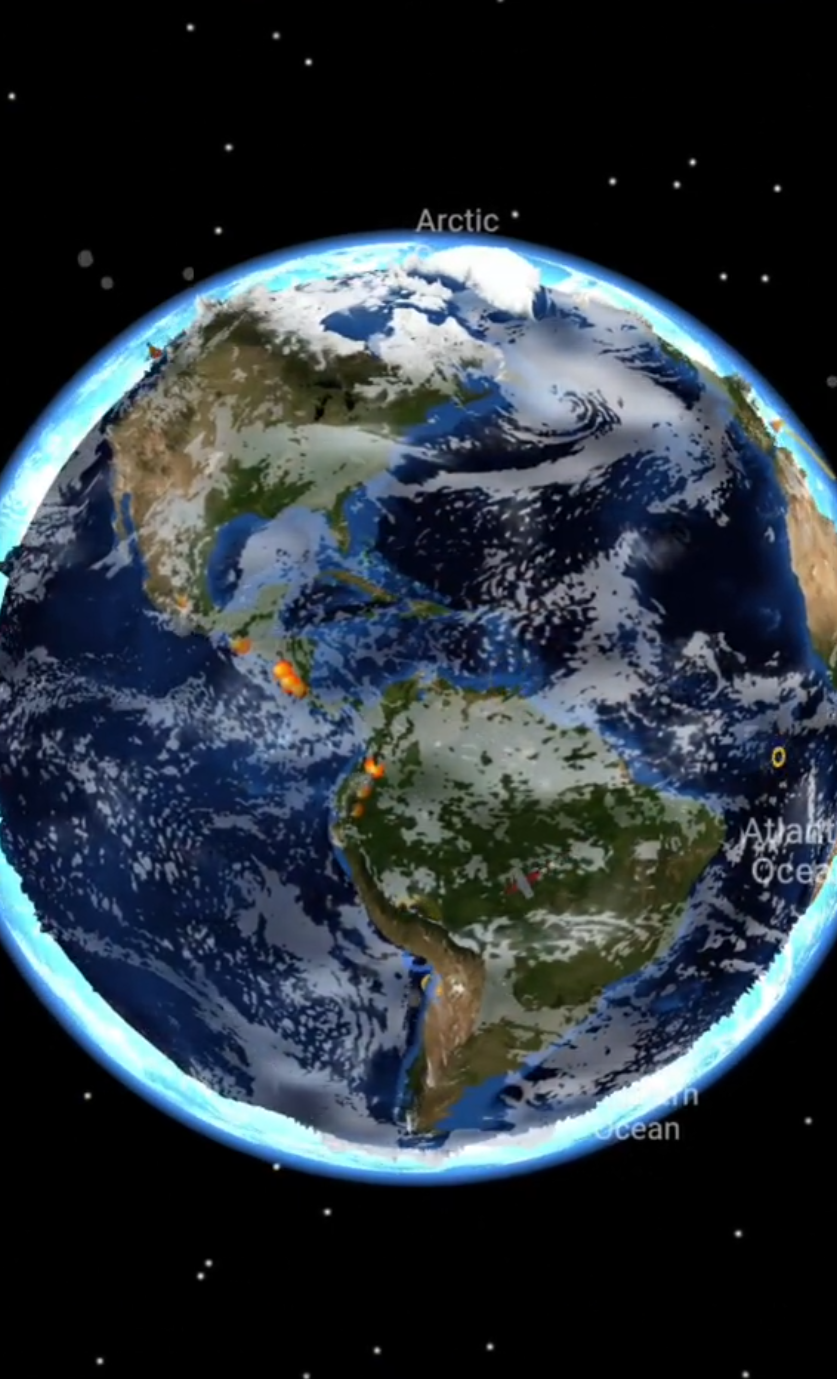
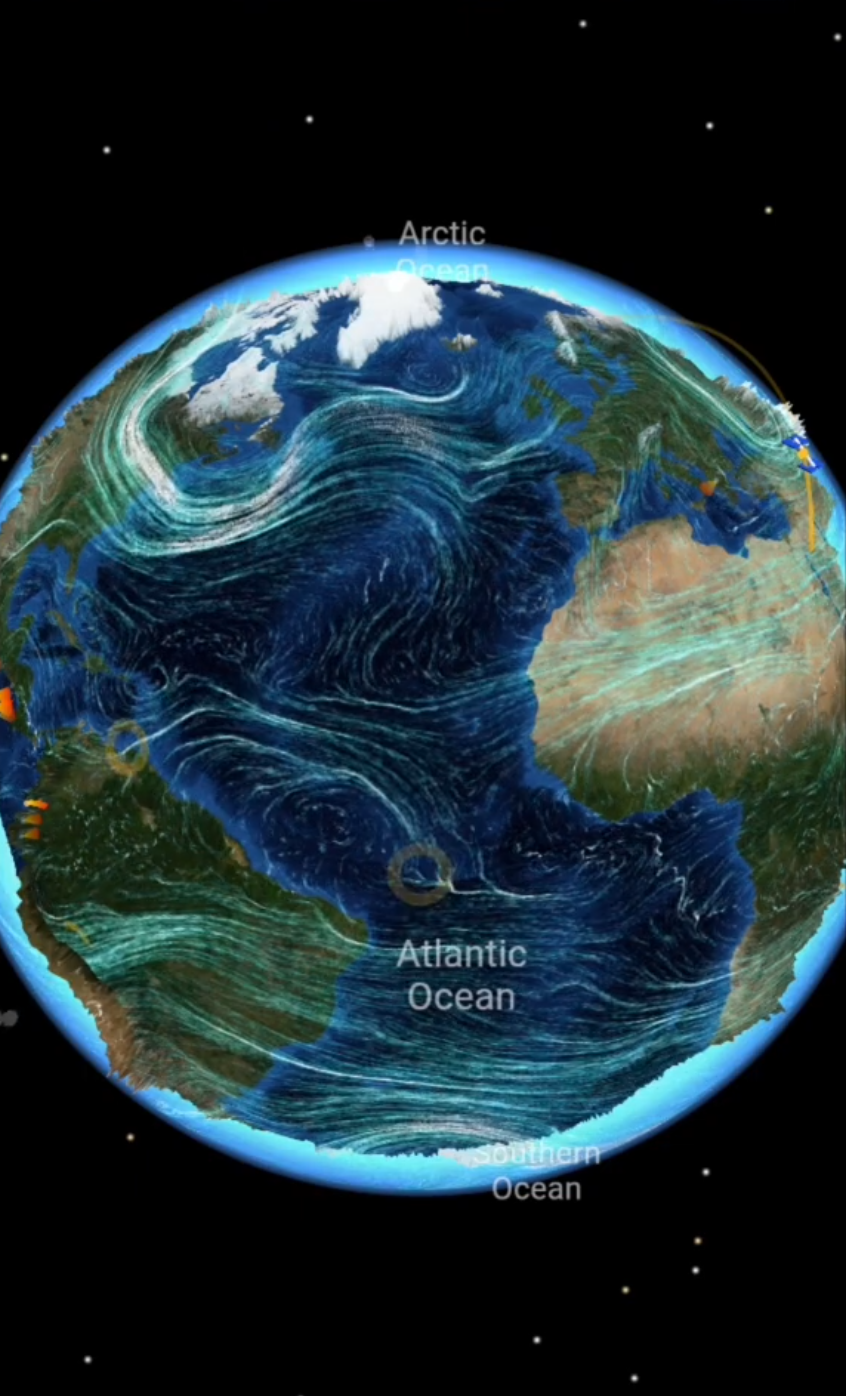
Put the polar regions in context with LiveGlobe 3D
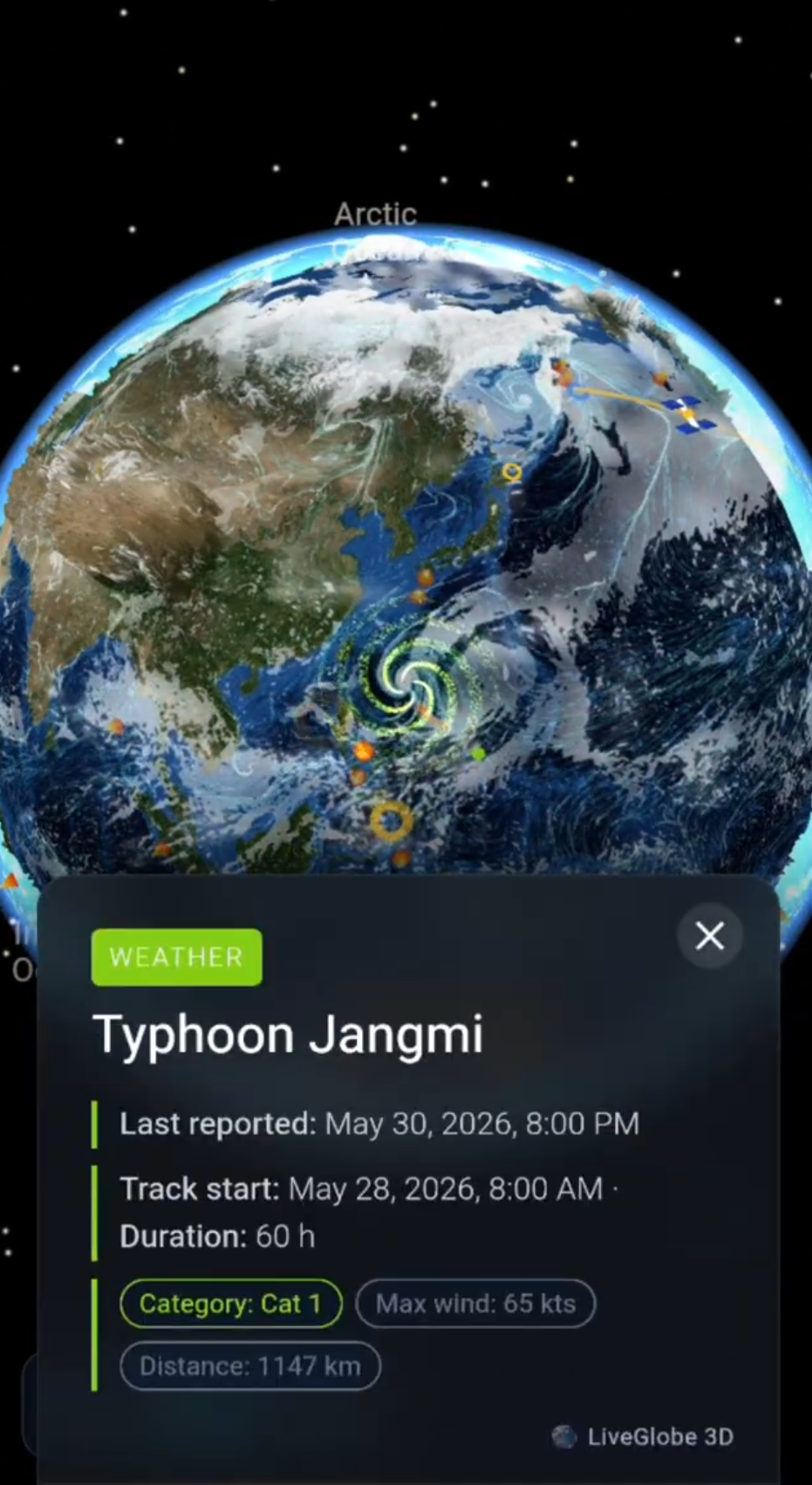
In LiveGlobe 3D, you can rotate and zoom the globe and enable the polar circles in settings. Compare northern regions with Antarctica. If useful, use place search to locate somewhere geographically. The web app is configured for sign-in, and search needs external data.
The globe helps answer “Where is this place relative to the polar circle?” The ball-and-lamp model explains its illumination. For exact travel dates, consult a local sunrise and sunset table.
Explore the available globe views with two things in mind: the hemisphere and the distance from the pole.
Common questions
Does the Sun stay in one spot during polar day?
No. Away from the geographic pole, its direction and height change through the day. What matters is that it never drops below the horizon.
Is every bright summer night a polar day?
No. Long-lasting twilight can keep the sky bright after sunset. Polar day means the Sun itself remains above the horizon for at least 24 hours.
Short clips
The app in motion: short, genuine glimpses straight from use.
At a glance
How the app feels on your phone.