The albedo effect: Why sea ice reflects more sunlight than open water
Compare how much sunlight sea ice and open ocean reflect, and see how that difference can amplify Arctic ice melt.
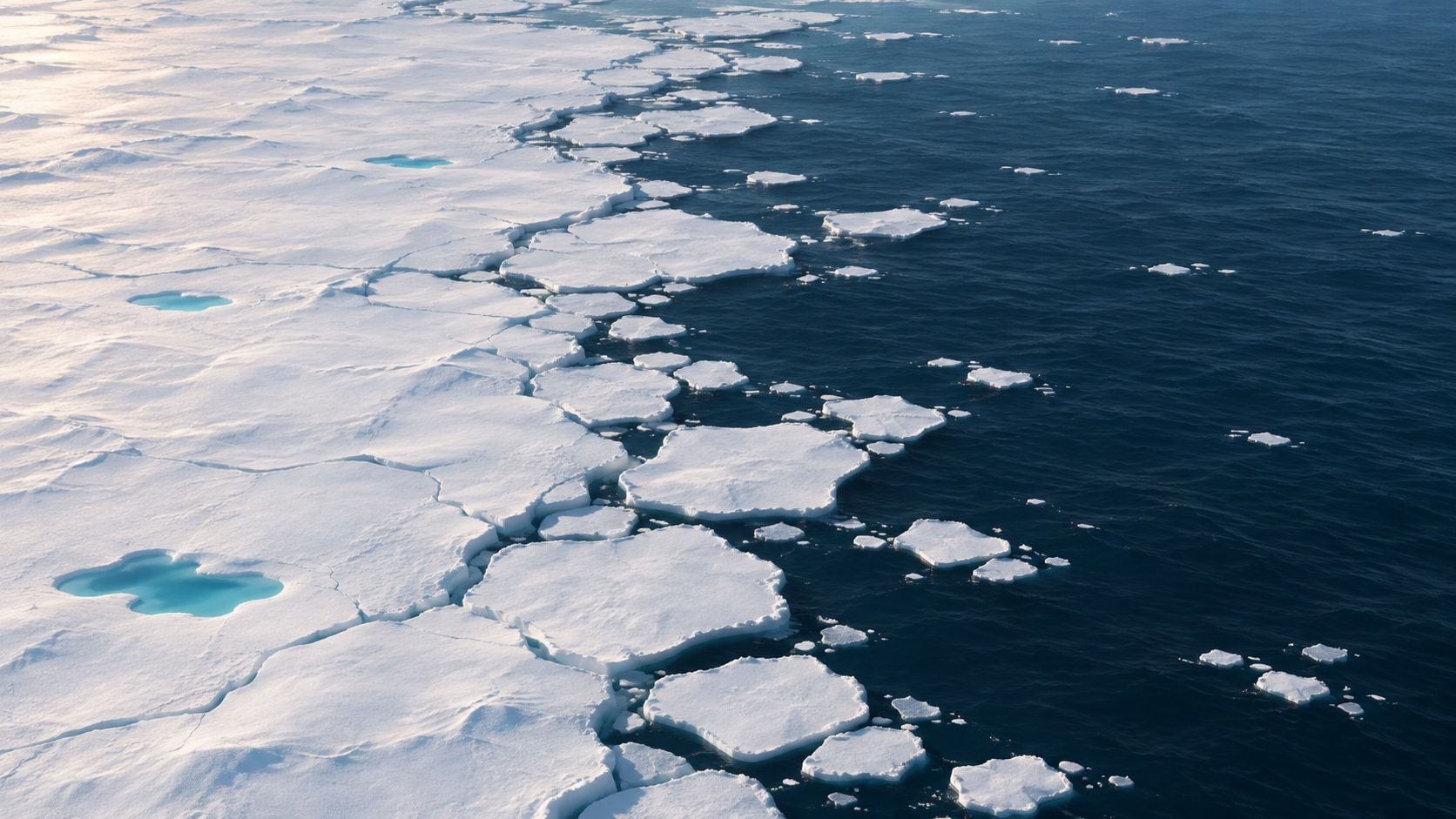
At the edge of the Arctic ice pack, sunlight falls on bright, snow-covered ice and dark open water. The ice sends much more of that energy back. When ice melts, the change is more than a shift in the outline of the ice pack: the newly exposed water can take up more solar energy.
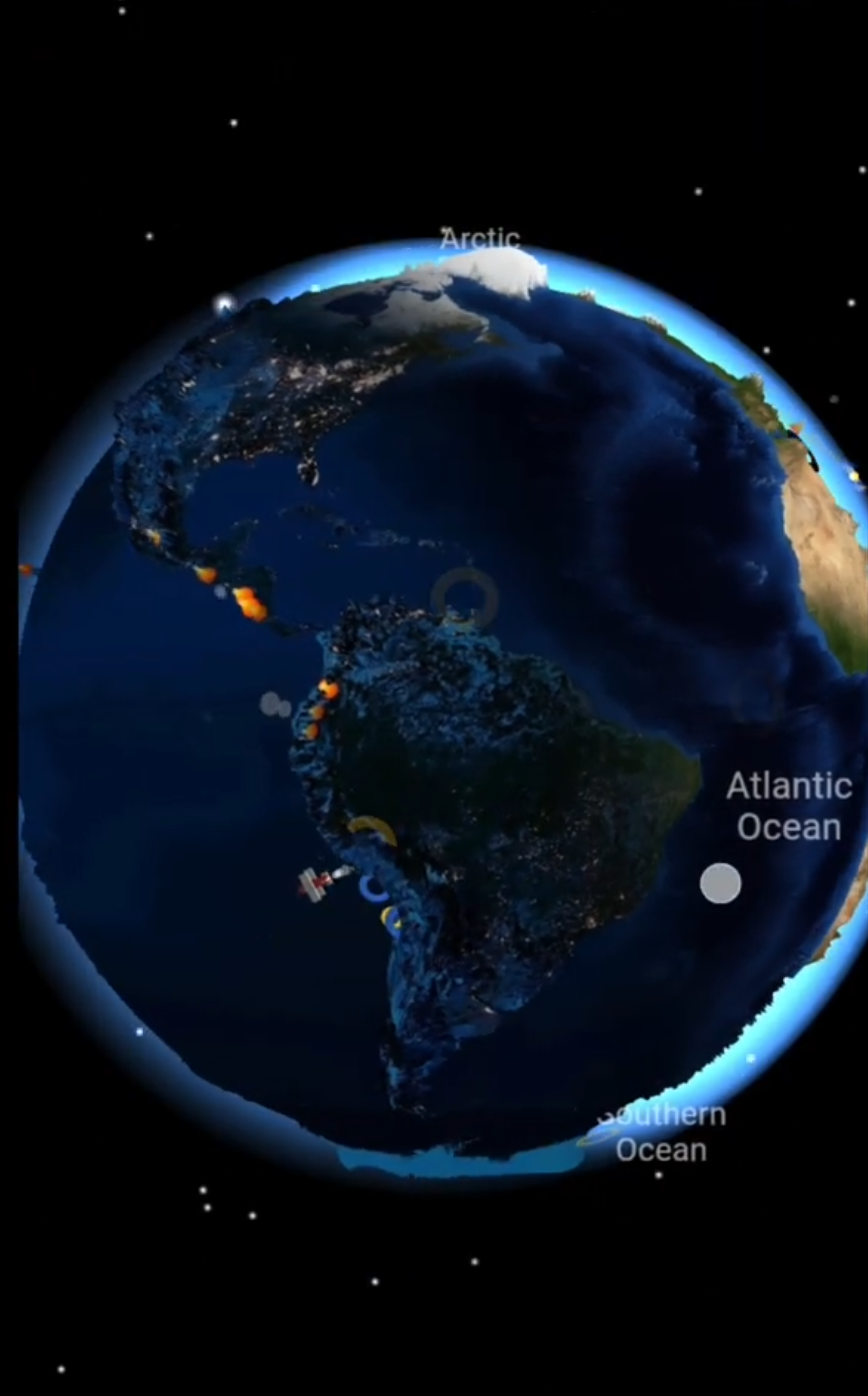
First, though, there has to be sunlight. The day–night view shows which side of Earth is lit. It does not show how much light the surface reflects.

What is albedo?
Albedo is the fraction of incoming sunlight a surface reflects. An albedo of 0.60 means it reflects 60 percent. The National Snow and Ice Data Center gives rough figures of 50 to 70 percent for bare sea ice and around 6 percent for open ocean. A layer of snow can raise the reflectivity further. These are useful comparisons, not fixed values for every patch of ice or water.
Suppose 100 units of solar energy reach each of two equal areas. Bare ice with an albedo of 0.60 reflects 60 units, while open water at 0.06 reflects just 6. That leaves 54 more units unreflected over the water. This is an energy comparison, not a temperature reading, and some of the light the ice doesn’t reflect can pass through it.
How melting can lead to more melting
The change can start while the ice is still there. As snow melts, water can collect in shallow depressions on a floe. These melt ponds reflect less sunlight than the surrounding snow. Where the ice disappears altogether, the exposed ocean absorbs more solar energy.
This is the ice–albedo feedback: less ice can mean greater absorption, which can in turn favor more melting. Scientists call it a positive feedback because it amplifies a change. The NSIDC describes a separate effect too: sea ice insulates the ocean from the air above it.
Why the season matters
During polar night there is no direct sunlight. A darker surface doesn’t automatically gain extra solar heat then, although the ocean and air can still exchange heat. Once sunlight returns, the fraction reflected matters again. See what causes polar day and polar night for the geometry behind that shift.
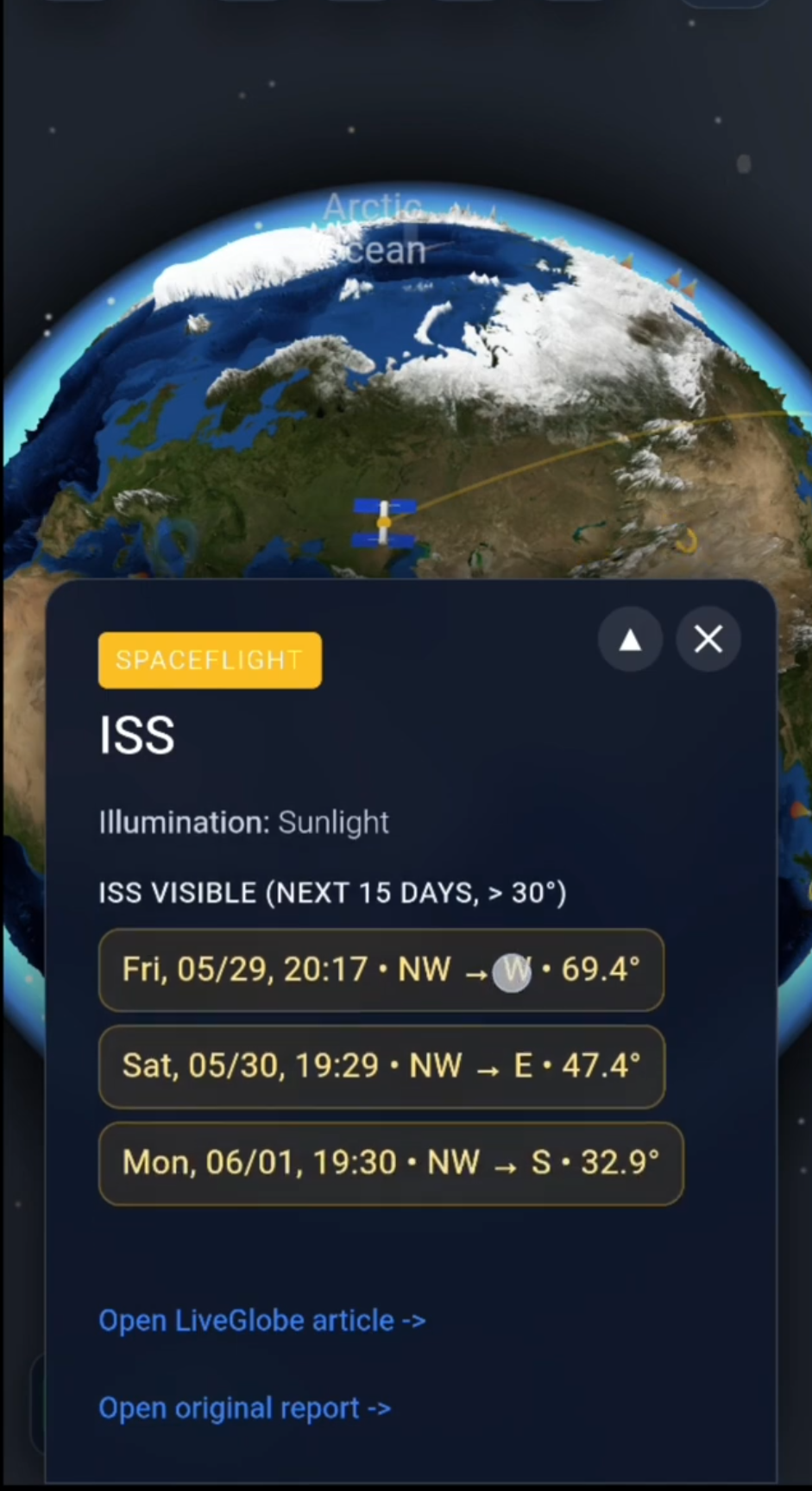
To get your bearings, turn the globe toward the North Pole in LiveGlobe 3D and look at how the continents surround the Arctic Ocean. The color of a spot on the globe isn’t an albedo measurement: what matters is how much of the incoming solar energy the actual surface reflects.
Short clips
The app in motion: short, genuine glimpses straight from use.
At a glance
How the app feels on your phone.