What causes auroras—and why are they green or red?
What causes northern and southern lights? Understand solar wind, Earth's magnetic field, oxygen and nitrogen colors, and what makes an aurora visible.
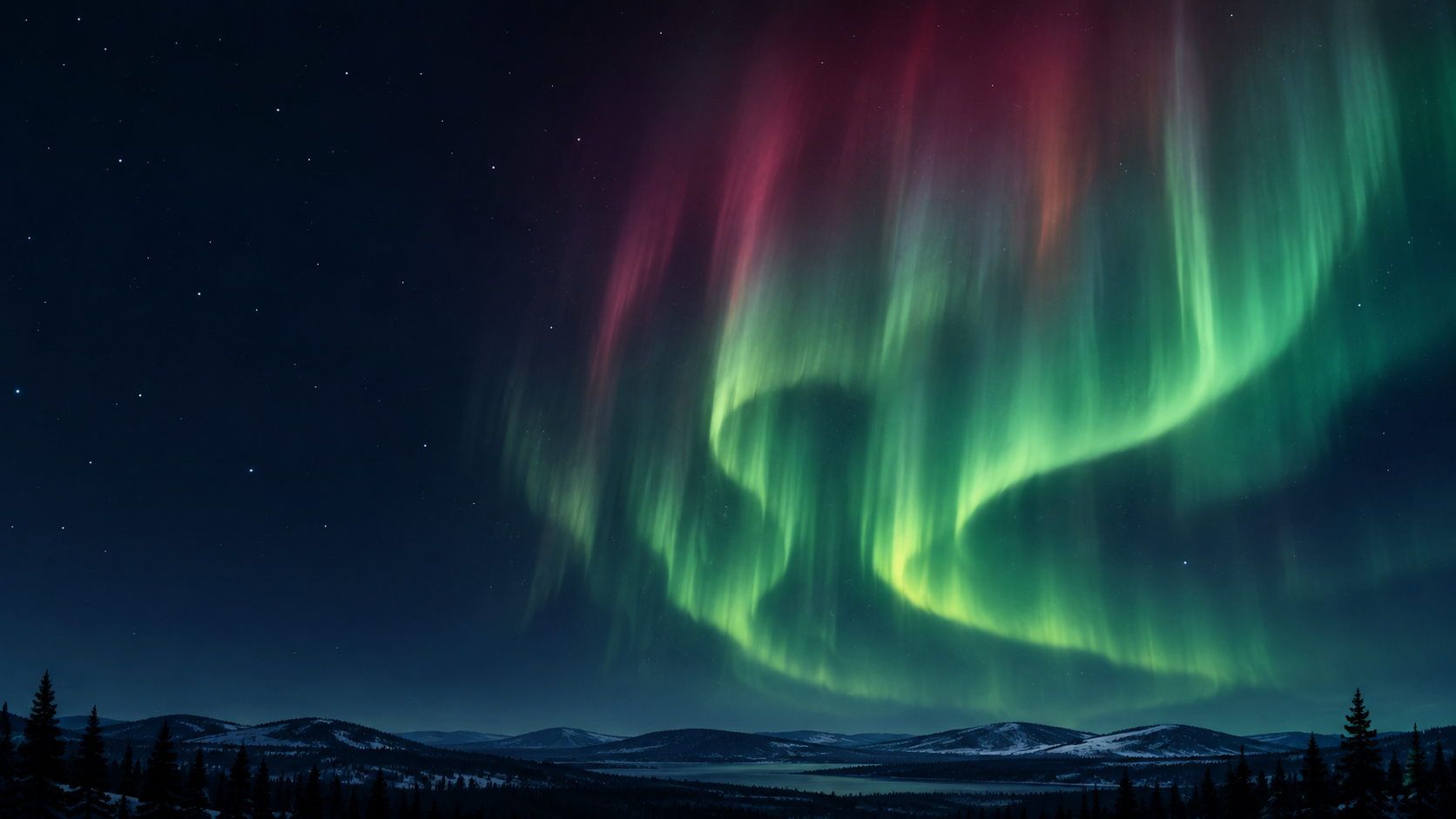
A green arc stretches across the night sky, with a faint red glow above it. What looks like an illuminated veil is light from our own atmosphere: Energetic particles, mainly electrons, excite oxygen and nitrogen high above Earth. When those excited atoms and molecules release energy, they produce an aurora.
The Sun supplies the energy that powers this process. The colors, however, do not come from the Sun’s color. They depend on the gases involved, their energy states, and altitude. Even the same element can produce both green and red light.
From the Sun to a glowing sky: four steps
There is more to an aurora than particles flying straight from the Sun into Earth’s air. Follow the energy through four stages:
- The Sun releases a stream of particles. The solar wind consists of electrically charged particles and carries a magnetic field. It is not a wind made of air like the winds we feel on the ground.
- The solar wind interacts with the magnetosphere. This is the region around Earth shaped by our planet’s magnetic field. Energy can be transferred into this system, stored, and released later.
- Electrons are accelerated. They travel along magnetic field lines toward the upper atmosphere. Those lines describe the magnetic field’s structure; they are not visible wires in the sky.
- Atmospheric gases emit light. Collisions transfer energy from electrons to atoms and molecules, putting them into higher-energy, or “excited,” states. As they return to lower-energy states, they release light (NOAA: Aurora).
Keep this distinction in mind: The energy ultimately comes from the Sun, but the glowing material belongs to Earth’s atmosphere. An aurora is not burning air or a colorful cloud drifting over from the Sun.
Why auroras favor polar regions
Earth’s magnetic field guides electrons so that the displays tend to concentrate in two ring-shaped regions around the magnetic poles. These regions are called auroral ovals. In the Northern Hemisphere, the display is the northern lights, or aurora borealis. In the Southern Hemisphere, it is the southern lights, or aurora australis.
Rather than a tiny glowing cap directly over each geographic pole, picture a broad oval that changes with geomagnetic activity. During strong geomagnetic storms, it can expand toward lower latitudes, allowing auroras to appear much farther from polar regions (NOAA).
The Arctic and Antarctic Circles are not auroral ovals. The geographic circles are defined by Earth’s axial tilt and patterns of sunlight. Auroral ovals are linked to the magnetic field. A line at roughly 66.5 degrees latitude is therefore not a fixed boundary for seeing the lights.
Which gases produce the colors?
It is tempting to assume that green must come from one gas and red from another. In fact, atomic oxygen can produce both colors. Different excited states lead to different emissions of light.
| Color | Typical connection | Approximate location |
|---|---|---|
| Green | Light from excited atomic oxygen | Often about 100–200 kilometers above Earth’s surface |
| Red | A different emission from atomic oxygen | Mainly higher up, above roughly 200 kilometers |
| Blue, violet, or pink components | Nitrogen emissions and overlapping colors | Depends on the process; pink fringes can appear below a green curtain |
These are typical relationships, not sharply separated floors of color. NASA describes the range of colors as a result of the gas, altitude, and particle energy involved (NASA: Auroras).
A photograph can also combine several emissions along the same line of sight. A purple appearance is not, on its own, a precise measurement of altitude or solar-storm strength.
Why red oxygen light usually forms higher up
Receiving energy is only part of the story. An excited atom also needs time to release that energy as light.
The excited state responsible for red oxygen light lasts relatively long. In denser air, further collisions can remove its energy before red light is emitted. Higher up, in thinner air, those collisions happen less often, giving the red emission a better chance. Green oxygen light is emitted more quickly and can therefore stand out at lower altitudes (NPS: The Colors of the Aurora).
A useful takeaway is: The same element can glow in different ways, and air density helps determine which emission becomes visible. “Red means more energy than green” is not a reliable general rule.
What creates arcs, rays, and curtains?
Auroras are not fixed lamps overhead. The distribution of incoming electrons and the processes in the magnetosphere change, producing arcs, narrow rays, folds, and moving curtains. The orientation of many structures is linked to the magnetic field.
The glow occurs far above ordinary weather clouds. NOAA gives a typical overall altitude range of about 80–500 kilometers. A dark cloud bank can therefore pass in front of an aurora and hide it while the light continues above.
An aurora forming is not the same as seeing it
An aurora may occur without being visible from your location. Keep three separate checks in mind:
- Space weather: Is there evidence of increased auroral activity relevant to your region? Consult a specialist service such as the NOAA Space Weather Prediction Center, rather than relying on a colorful picture from somewhere else.
- Sky conditions: Is it dark and reasonably clear? Daylight can overwhelm the faint glow. Long winter nights help observers at high latitudes; cold itself does not cause auroras.
- Your observation: Record the location, time, viewing direction, shape, and color. Distinguish what you saw with your eyes from what only appeared in a photograph. Cameras can detect faint auroras that your eyes miss (NASA).
That last distinction keeps expectations realistic. A vivid green photograph does not mean every view on the ground will look equally colorful. A promising forecast cannot replace clear skies or an actual sighting.
Put the polar regions in context on a globe
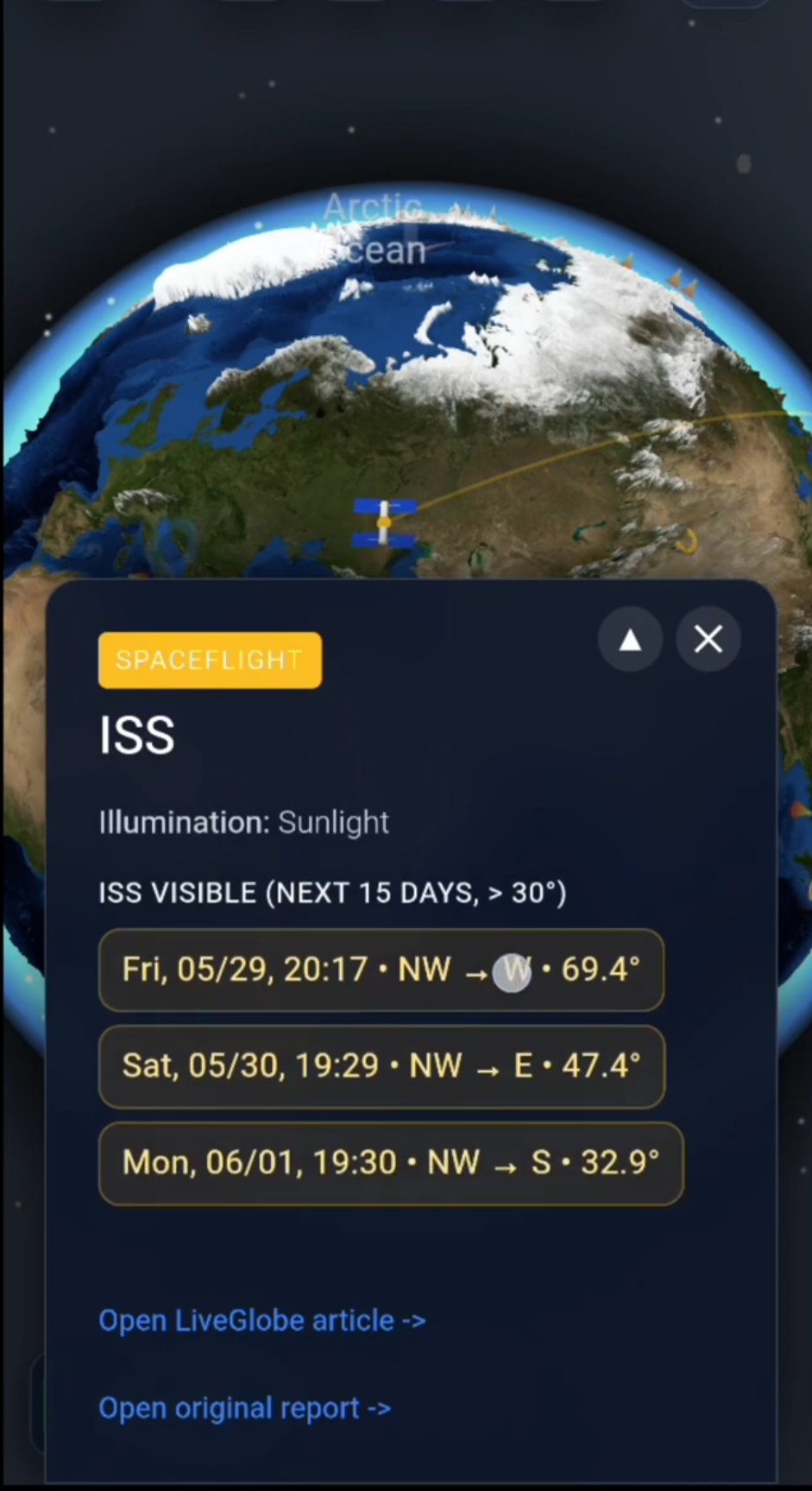
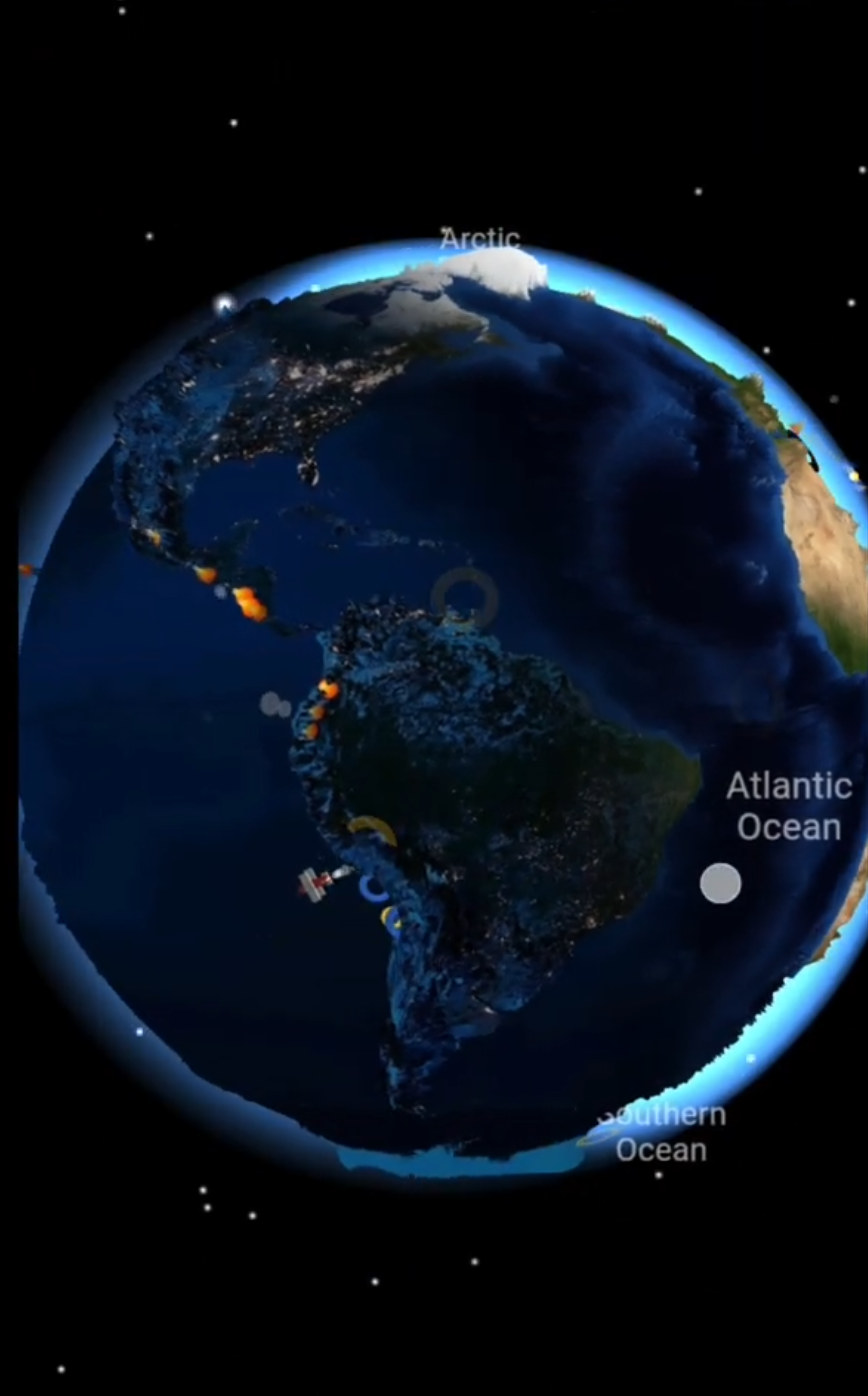
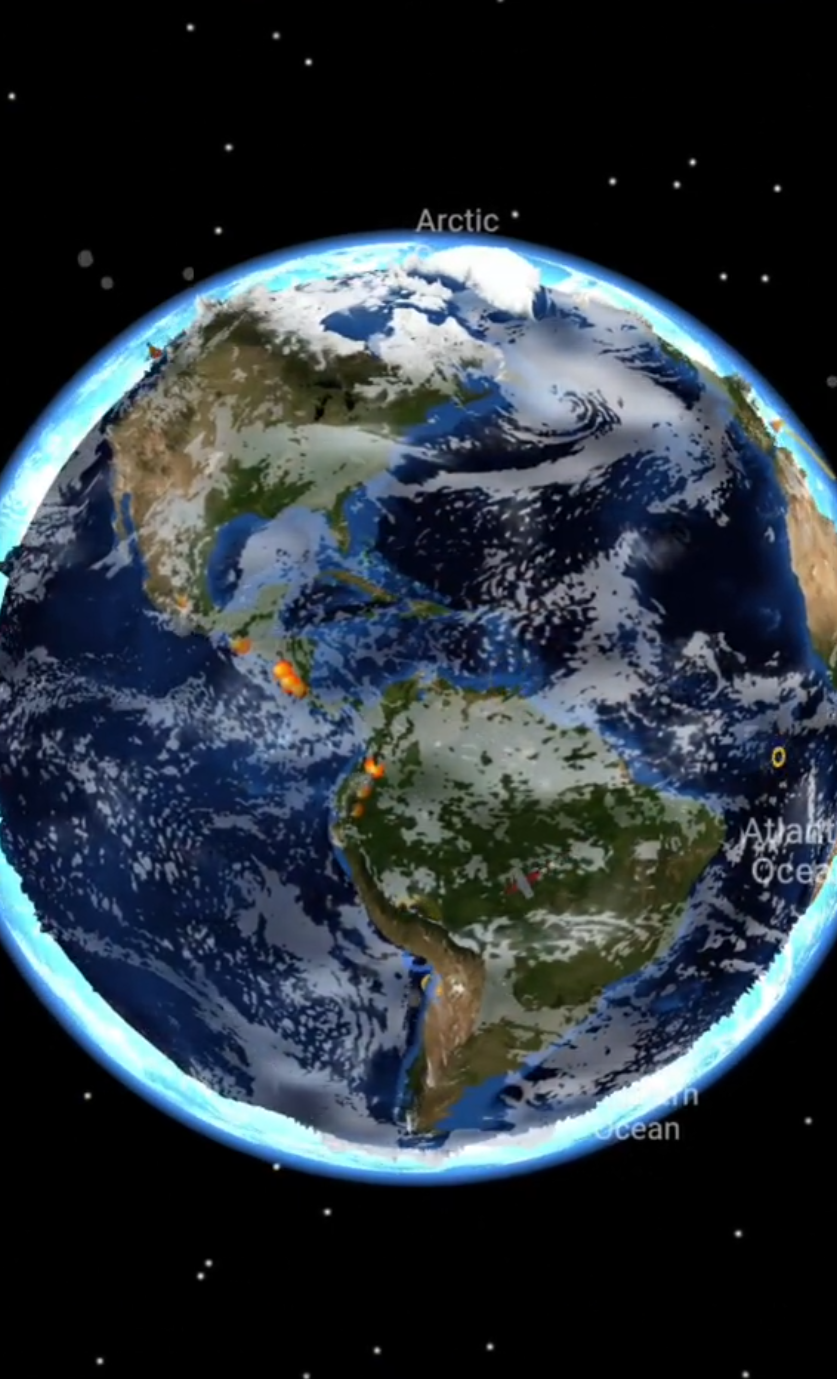
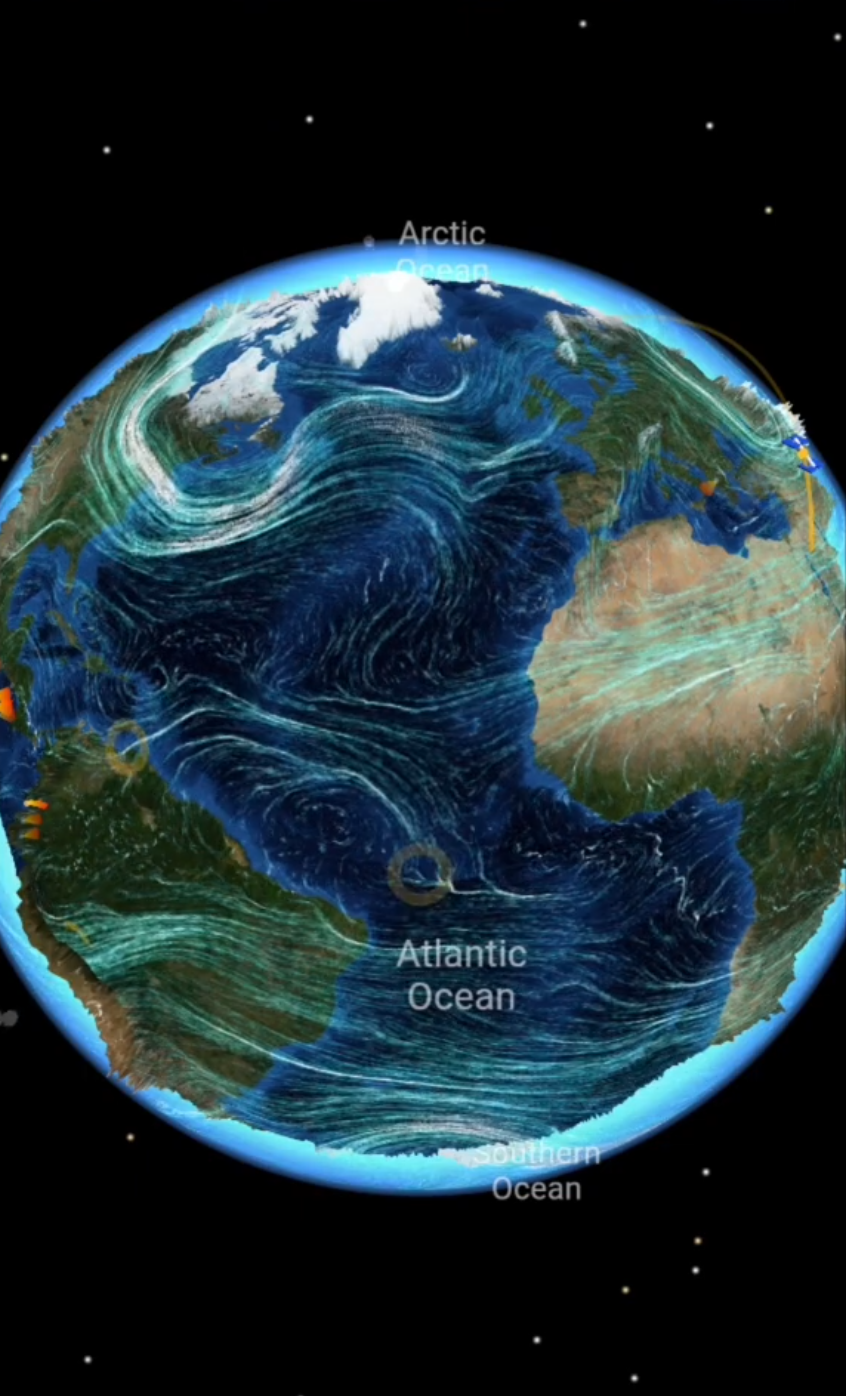
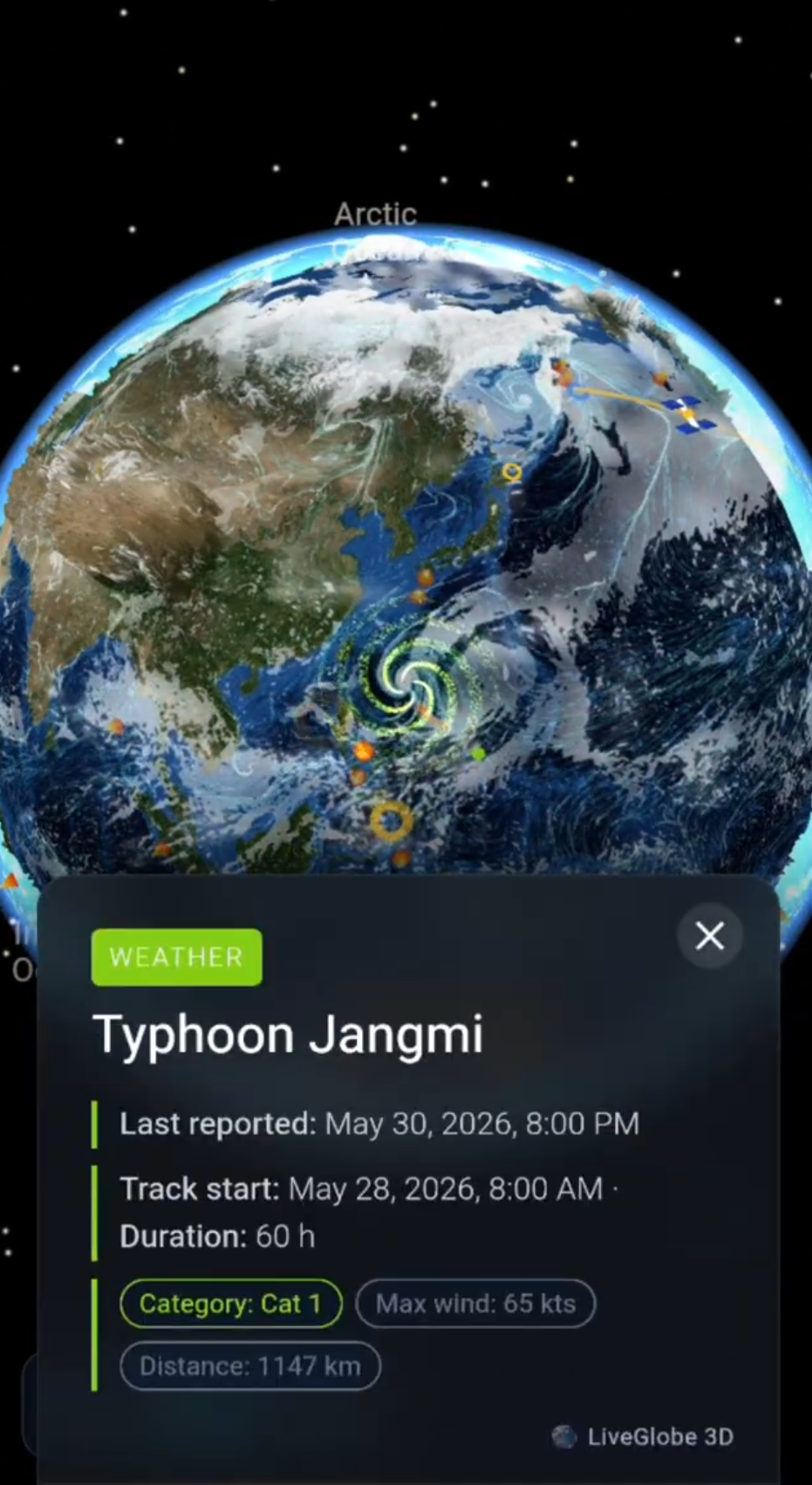
With LiveGlobe 3D, you can rotate and zoom the globe, search for places, and display the geographic polar circles. Compare northern Scandinavia with central Europe, for example, while remembering that a geographic polar circle is not an auroral oval. Web access requires a login; place search relies on external services.
For a different atmospheric color mechanism, read Why is the sky blue—and why are sunsets often red?. There, existing sunlight is scattered. In an aurora, excited gases emit light themselves.
Explore the polar regions with LiveGlobe 3D and keep this chain in mind: Sun → magnetosphere → energetic electrons → excited atmospheric gases → light.
Short clips
The app in motion: short, genuine glimpses straight from use.
At a glance
How the app feels on your phone.