Why is the sky blue—and why are sunsets often red?
Why is the sky blue and a sunset often red? Understand Rayleigh scattering, sunlight’s path through the atmosphere, and how to observe sky colors.
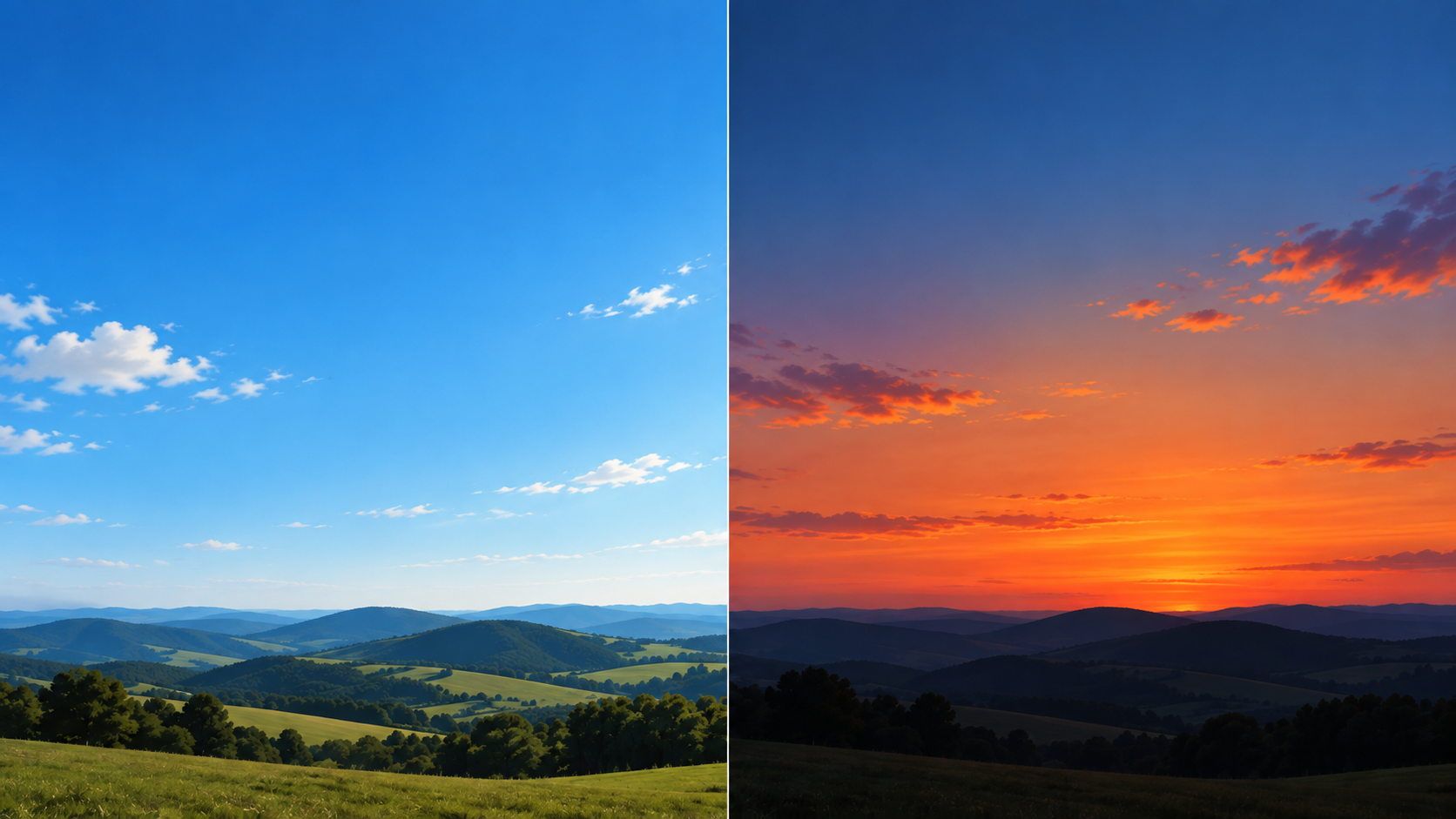
At midday, the sky is blue. By evening, the horizon may glow orange or red. The Sun has not swapped one set of colors for another. Earth’s atmosphere scatters different colors of sunlight by different amounts. The color that reaches us also depends on the path the light takes through the air.
The key is to distinguish light coming from a blue patch of sky from light arriving from the direction of the low Sun. They take different routes to your eyes, but both observations arise from the same process.
Sunlight contains many colors
Sunlight usually looks whitish, yet it is a mixture of visible colors. A prism can separate that mixture into a spectrum, from short-wavelength violet and blue to longer-wavelength red.
Wavelength is the distance between successive peaks of a light wave. You only need one comparison here: blue light has a shorter wavelength than red light. That difference affects how strongly the atmosphere scatters it (NASA Space Place).
Scattering means redirecting light in different directions. The air is not simply a blue pane of glass that we look through.
How air molecules make the sky look blue
Sunlight encounters gas molecules in the atmosphere, mainly nitrogen and oxygen. They are much smaller than the wavelengths of visible light. In these conditions, shorter wavelengths scatter more strongly than longer ones: blue light is redirected more strongly than red light. This is called Rayleigh scattering (Met Office).
Look at a clear patch of sky away from the Sun. The light reaching you has been scattered toward you by air molecules along the way. Its blue component stands out, so the sky looks blue.
The molecules do not create a new blue light source. They redirect some of the sunlight already present. The same explanation works above dry land: the sky is not blue because it reflects the ocean.
Blue sky and red sunset: two paths for light
The apparent contradiction disappears when you separate scattered light from light arriving from the Sun’s direction.
| What you see | Which light reaches you? | Why does it look that way? |
|---|---|---|
| Blue daytime sky away from the Sun | Sunlight scattered toward you by the air | The blue component scatters especially strongly |
| Warm colors toward the low Sun | Light that has traveled a long atmospheric path | Much of the short-wavelength light has scattered out of that path; reds and oranges become more prominent |
The atmosphere does not “make blue” at noon and “make red” in the evening. We see different parts of the same mixture after different journeys.
Why sunsets often look orange or red
When the Sun is high, its light follows a relatively short path through the atmosphere to the ground. When it is low, the path cuts diagonally through much more air. Picture a thin shell around a ball: a route straight into it is short, while one nearly along its edge is much longer.
On the longer route, more blue and violet light scatters out of the direct path. The light that still reaches us from the Sun’s direction therefore contains a relatively larger share of longer-wavelength reds and oranges. The same basic explanation applies at sunrise (NASA, Met Office).
Earth’s atmosphere does not suddenly get thicker every evening. What changes is the distance traveled through the existing layer of air. Nor does every sunset turn the entire sky red: viewing direction, clouds, and particles influence which colors appear where.
Why the horizon often looks paler
A clear sky is often a richer blue overhead than near the horizon. The longer light path matters here too. Light undergoes scattering and re-scattering along the way, producing a paler mixture with less intense blue.
Dust and other fine particles, known as aerosols, can also change how light is distributed. That helps explain why evenings differ. An orange horizon alone, however, is neither an air-quality measurement nor a reliable weather forecast.
Three common questions
Why isn’t the sky violet?
Violet light scatters even more strongly than blue. But scattering is only part of color perception. There is less violet in sunlight, and our eyes are more sensitive to blue. Together, these factors explain why the daytime sky usually looks blue rather than violet (Met Office).
Would the sky still be blue without the ocean?
Yes. Sunlight and its scattering in the atmosphere explain the blue sky. A body of water underneath is not required.
Are sunrise colors different from sunset colors?
The underlying geometry is similar: the Sun is low, and its light passes through a long atmospheric path. The actual colors can differ because the air and cloud conditions are not identical.
A simple way to observe the difference
You do not need a measuring instrument or a special location. Choose a day with some open sky and compare two times:
- During the day: Look near the horizon and farther overhead, away from the Sun. Where is the blue richer, and where is it paler?
- Toward evening: Observe the sky in the sunset direction without looking directly at the Sun. Which areas become warm-colored, and which stay blue?
- Separate observation from explanation: First note the colors, viewing direction, and clouds. Then connect them with shorter or longer light paths.
- Try another day: Different colors remind you that atmospheric conditions matter alongside the basic geometry.
For the clouds in your view, see how clouds form—and why they disappear. That article follows droplets and ice crystals; this one follows light.
Picture the atmosphere around a globe
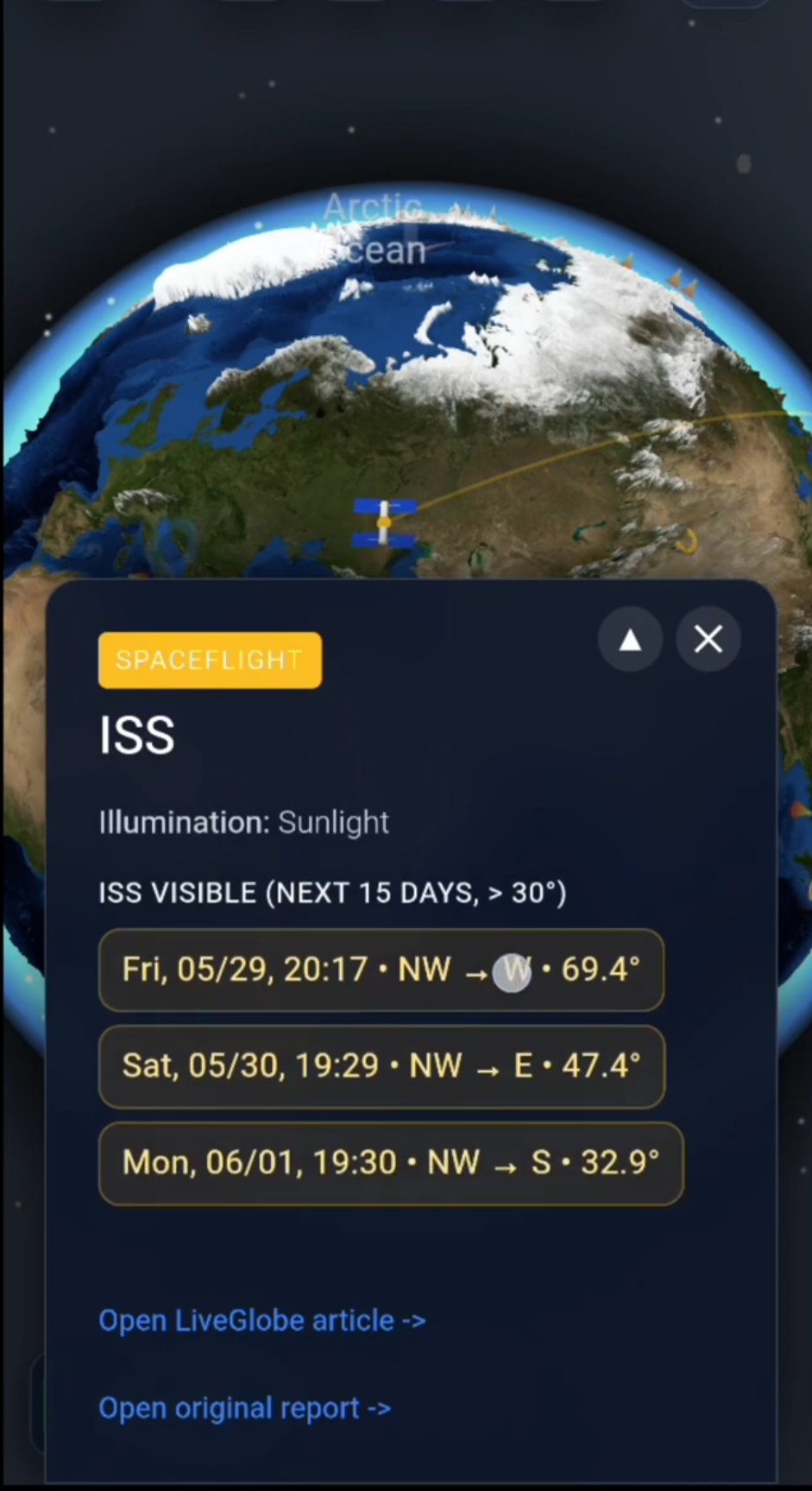
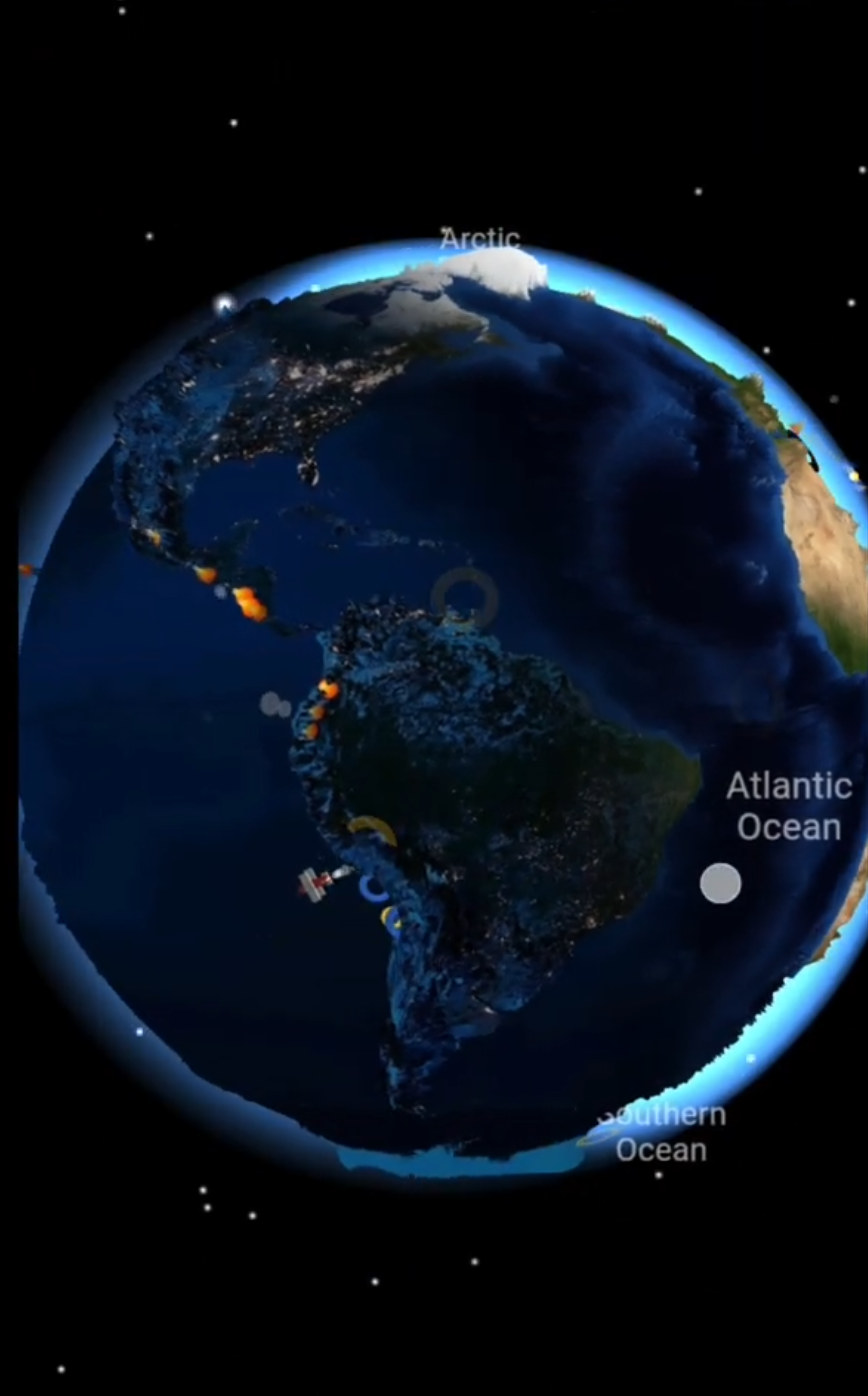
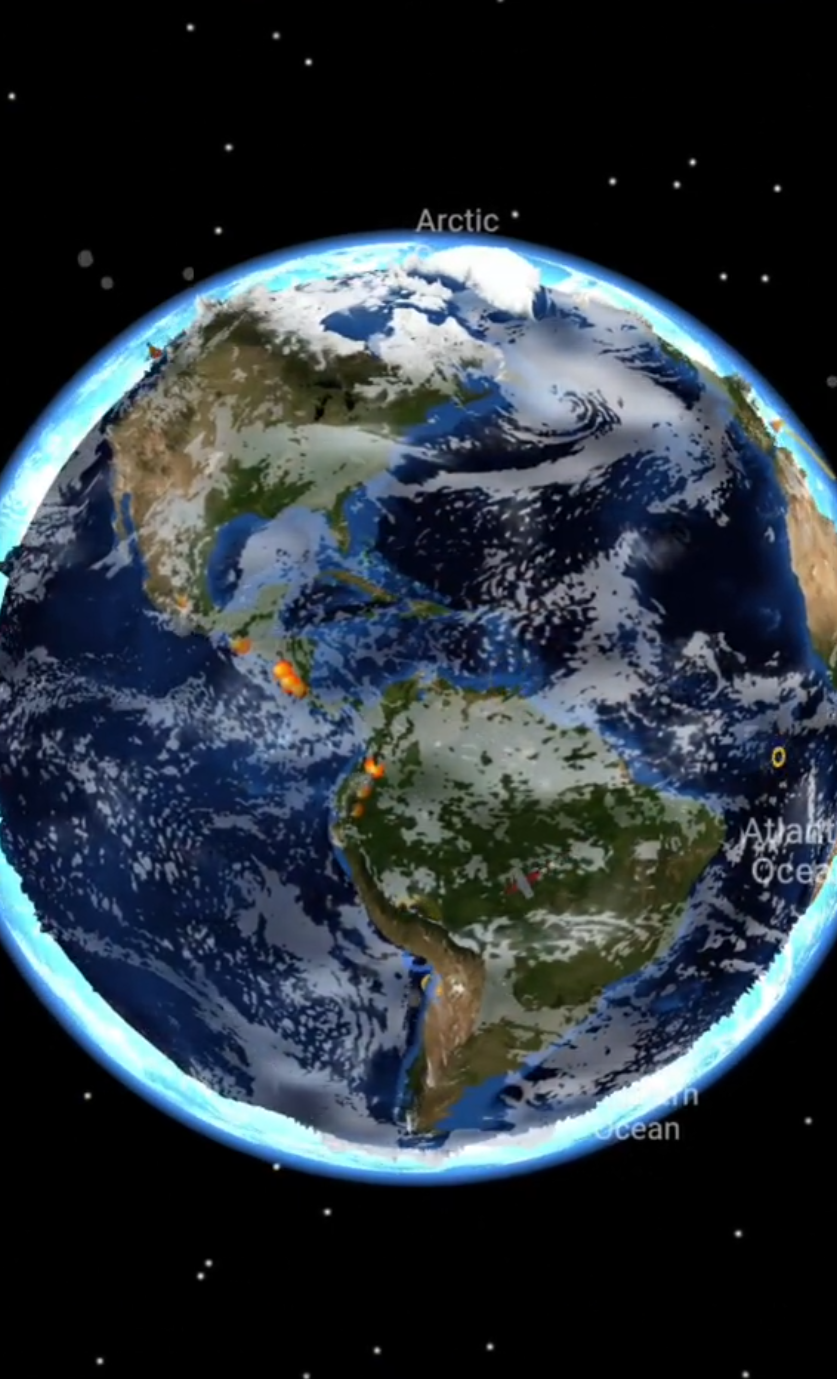
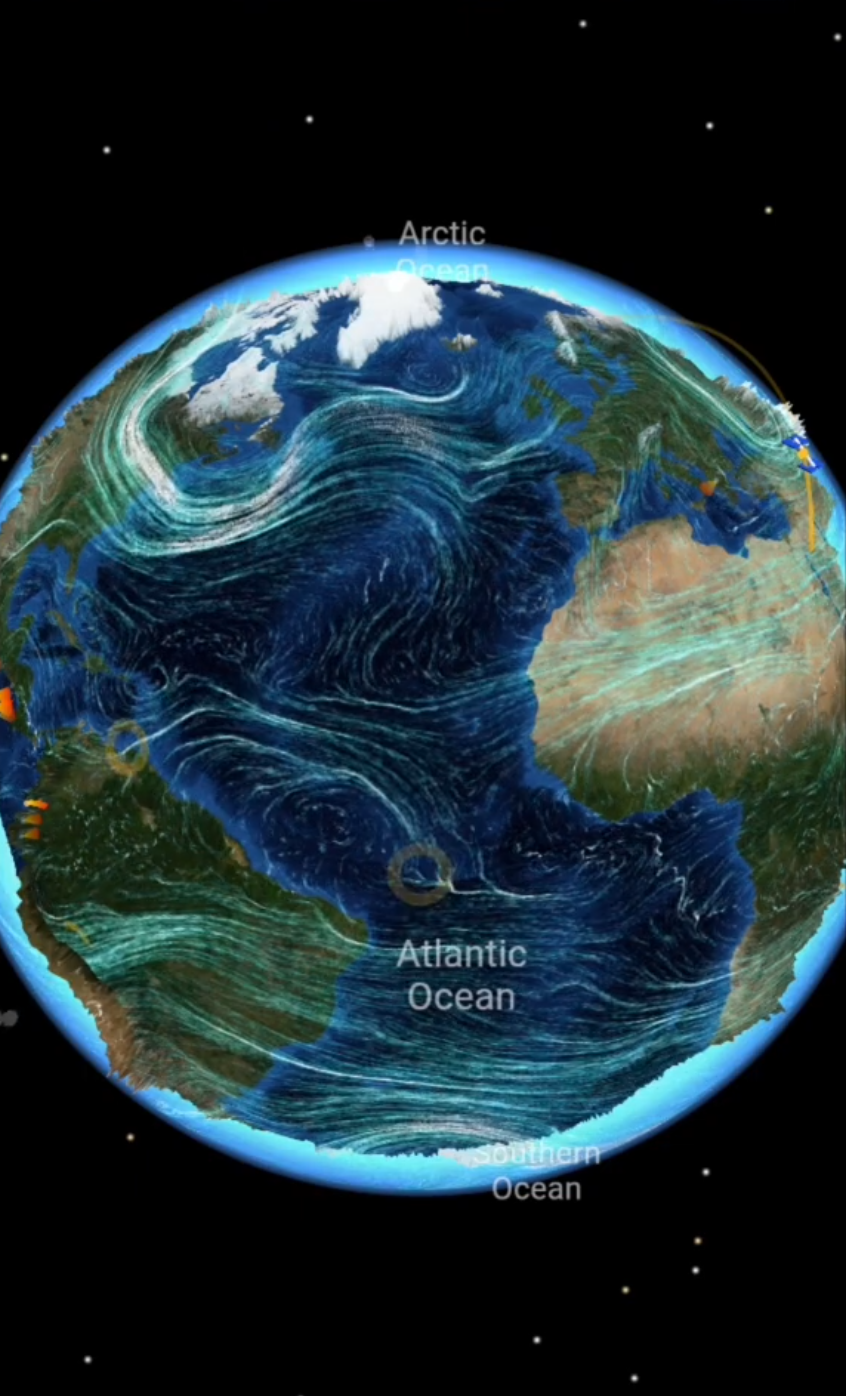
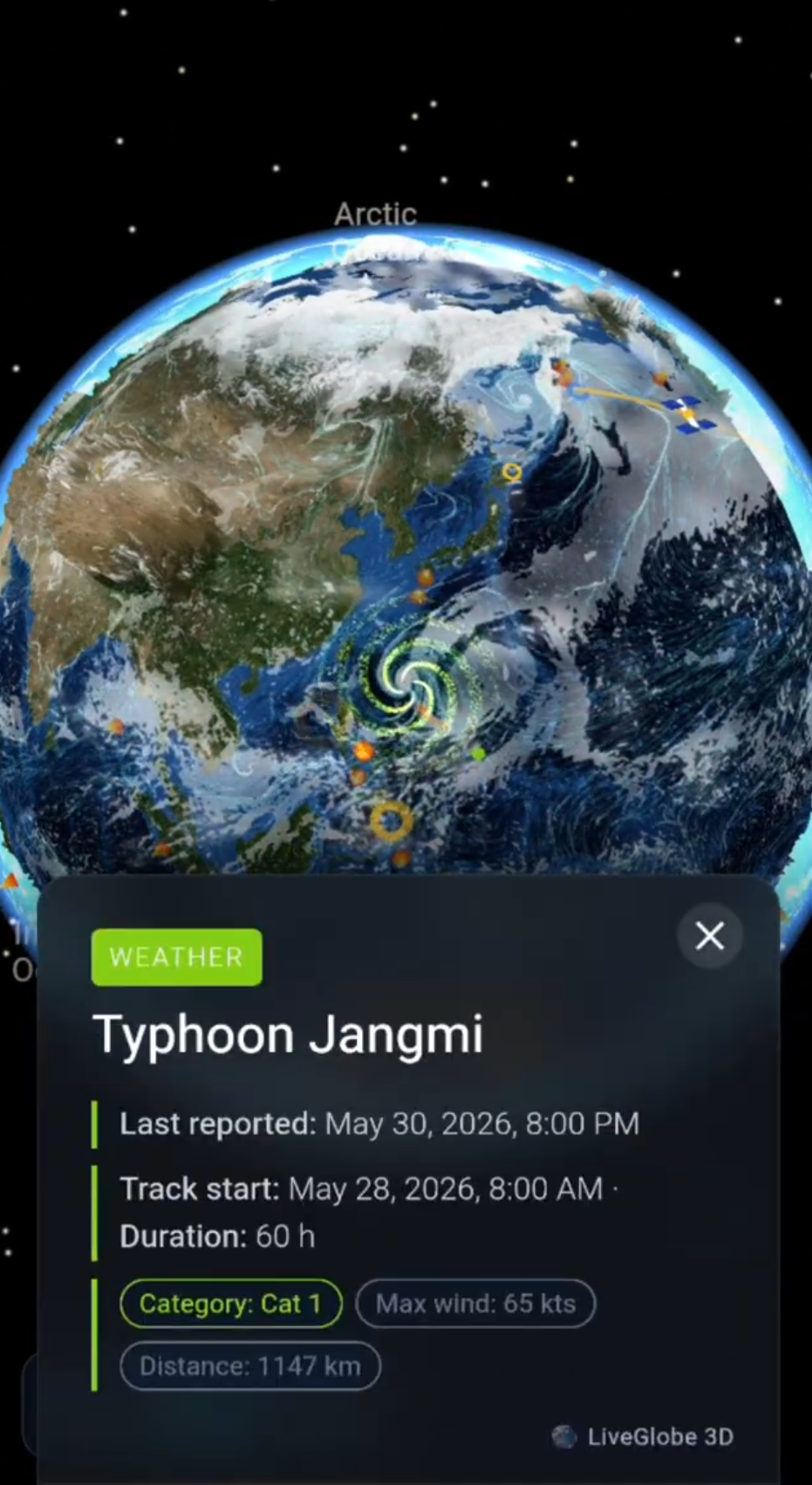
With LiveGlobe 3D, you can rotate and zoom the globe and enable the atmosphere effect in the settings. Use the view to picture a layer of air around a spherical Earth. Web access includes a sign-in step.
The ball-and-air-layer model provides the explanation: with a high Sun, the light takes a comparatively direct route through the air; with a low Sun, it follows a long route along Earth’s curvature. The globe helps you picture that geometry. The actual colors are there to observe outdoors.
Explore the globe views in LiveGlobe 3D and keep one question in mind next time you look up: Am I mainly seeing light scattered toward me—or light arriving after a long journey from the Sun’s direction?
Short clips
The app in motion: short, genuine glimpses straight from use.
At a glance
How the app feels on your phone.