Why does a compass point north? Magnetic declination explained
Learn why a compass follows Earth's magnetic field, how true north differs from magnetic north, and how to correct bearings with two declination examples.
Set a compass on a level surface and turn its case. The needle settles back toward roughly the same direction. It aligns with Earth’s magnetic field. Its north-seeking end usually points approximately north, but not necessarily straight toward the geographic North Pole.
The difference is called magnetic declination, sometimes magnetic variation. Understanding it makes a compass and a map much easier to compare. You don’t need to calculate Earth’s entire magnetic field or memorize a confusing rhyme.
The needle follows the field where you are
A compass needle is a small magnet mounted so that it can turn freely. The surrounding magnetic field applies a turning force, bringing the needle into alignment.
For a magnetic compass held level, the key is the field’s horizontal component. As NOAA explains, the compass follows the local horizontal field direction, rather than pointing at one particular place. “It points straight at the magnetic North Pole” is a useful first picture, but not an accurate general rule.
Earth’s main field is generated by movements of electrically conducting fluid in the outer core. Earth is not a fixed bar magnet. A bar magnet provides a simple model, but cannot fully represent the field’s regional differences and changes over time (NOAA’s geomagnetism FAQ).
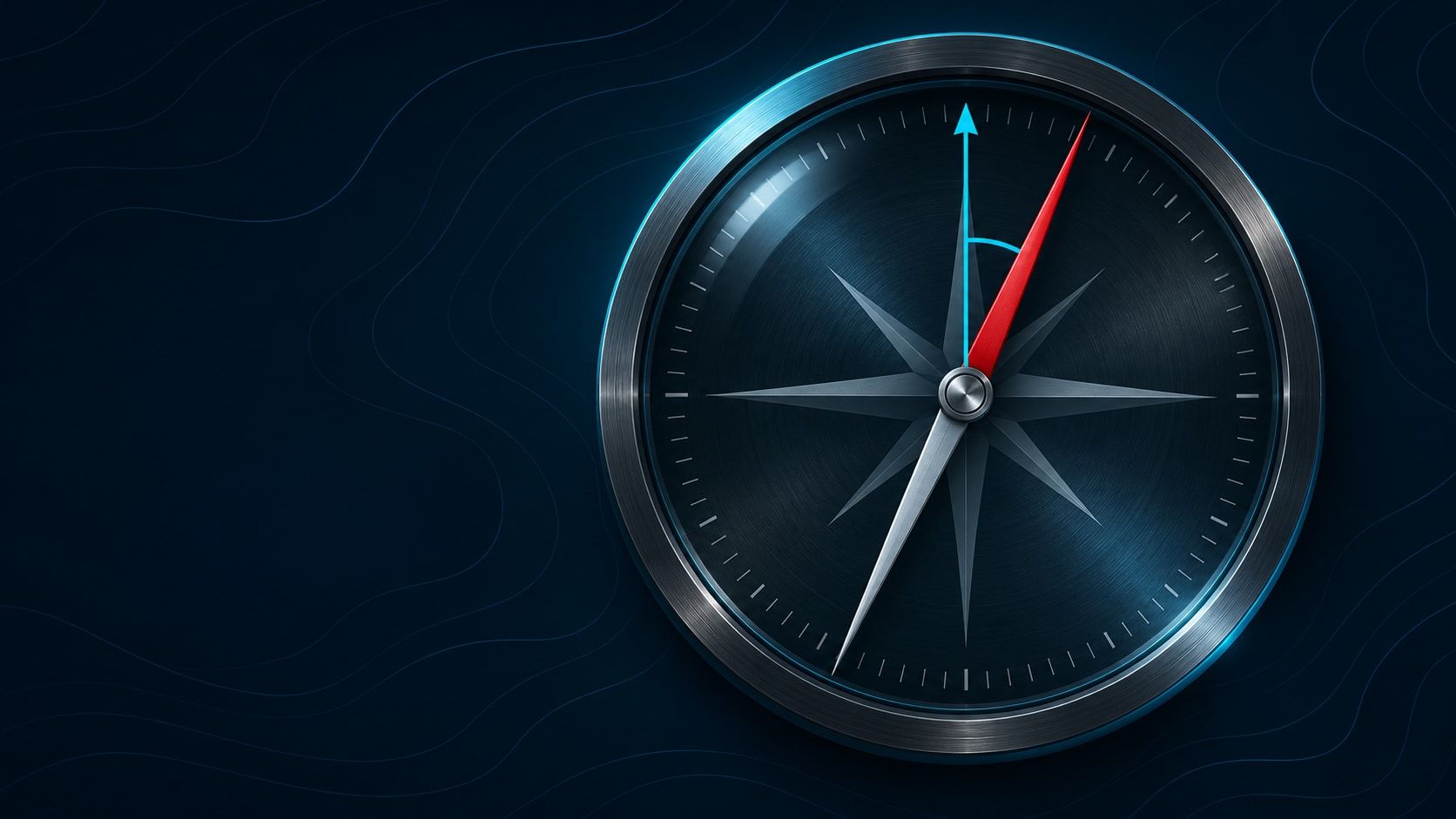
True north, magnetic north and declination
Keep these three ideas separate:
| Term | Meaning |
|---|---|
| True north | The direction along your local meridian toward the geographic North Pole, defined by Earth’s rotation axis |
| Magnetic north | The direction of the needle’s north-seeking end in the local horizontal magnetic field |
| Declination | The angle between true north and magnetic north at a particular place and time |
When magnetic north lies east of true north, declination is positive. When it lies west, declination is negative. This is an angle in the horizontal plane. The field’s downward or upward tilt is a different quantity: inclination, or magnetic dip.
Check a map’s legend as well. Its top edge or coordinate grid does not necessarily represent true north exactly. Grid north can differ because of the map projection. The examples below compare magnetic bearings with true bearings specifically.
Two examples of correcting a compass bearing
For bearings measured clockwise from north, NOAA uses this sign convention:
True bearing = magnetic bearing + declination.
Suppose your compass gives a bearing of 60° to a landmark. These declinations are made-up practice values, not current values for real locations:
| Practice case | Calculation | True bearing to the landmark |
|---|---|---|
| 8° east, or +8° | 60° + 8° | 68° |
| 8° west, or −8° | 60° + (−8°) | 52° |
To go the other way, from a true map bearing to a magnetic compass setting, rearrange the equation: magnetic = true − declination. A true bearing of 68° with +8° declination therefore becomes 60° magnetic.
If a result runs outside a full turn, add or subtract 360° to bring it back into the usual range. Apply the correction only once: an adjustable compass or electronic device may already be accounting for declination.
Why both location and date matter
Earth’s magnetic field varies from place to place and changes over time. There is no single correction that works worldwide, and a value printed on an old map is not automatically valid today.
The NOAA declination page links to calculators where you can specify your location and date. These use models such as the World Magnetic Model. A model represents the large-scale main field; a nearby steel railing or a magnet attached to your equipment can introduce an additional local effect.
A needle changing direction beside a car does not mean the magnetic pole has suddenly jumped. First compare readings away from the likely source of interference.
Does a compass work in the Southern Hemisphere?
In principle, yes. Its north-seeking end does not simply become a south-seeking end. However, the field also has a vertical component, pulling different ends of the needle downward in different regions.
Some compass needles are balanced for particular regions; other designs work across a wider range. An unsuitable balance can cause the needle to rub against the housing. That is separate from horizontal declination (NOAA’s compass questions).
Near the magnetic poles, the horizontal field component becomes very small. An ordinary magnetic compass cannot provide a reliable horizontal heading there. At a magnetic pole, the compass does not point especially clearly “toward the pole”; it loses the horizontal information it needs.
A simple observation routine
- Hold a suitable compass level and let the needle settle.
- Compare readings at nearby spots away from metal and magnets.
- Look up declination for your location and date with a scientific source, including its sign.
- When comparing with a map, establish whether the reference is true north or grid north, and whether a correction has already been applied.
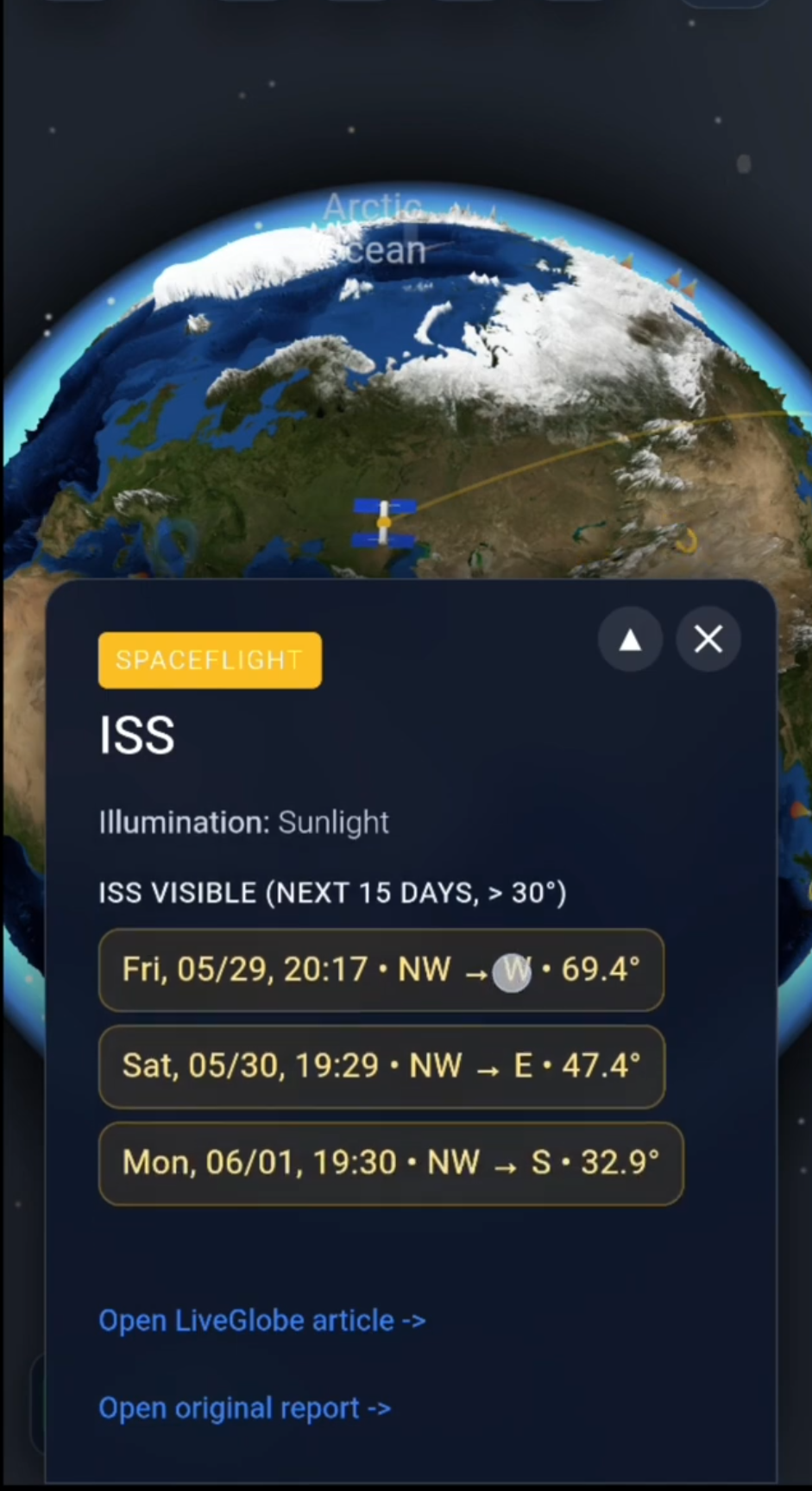
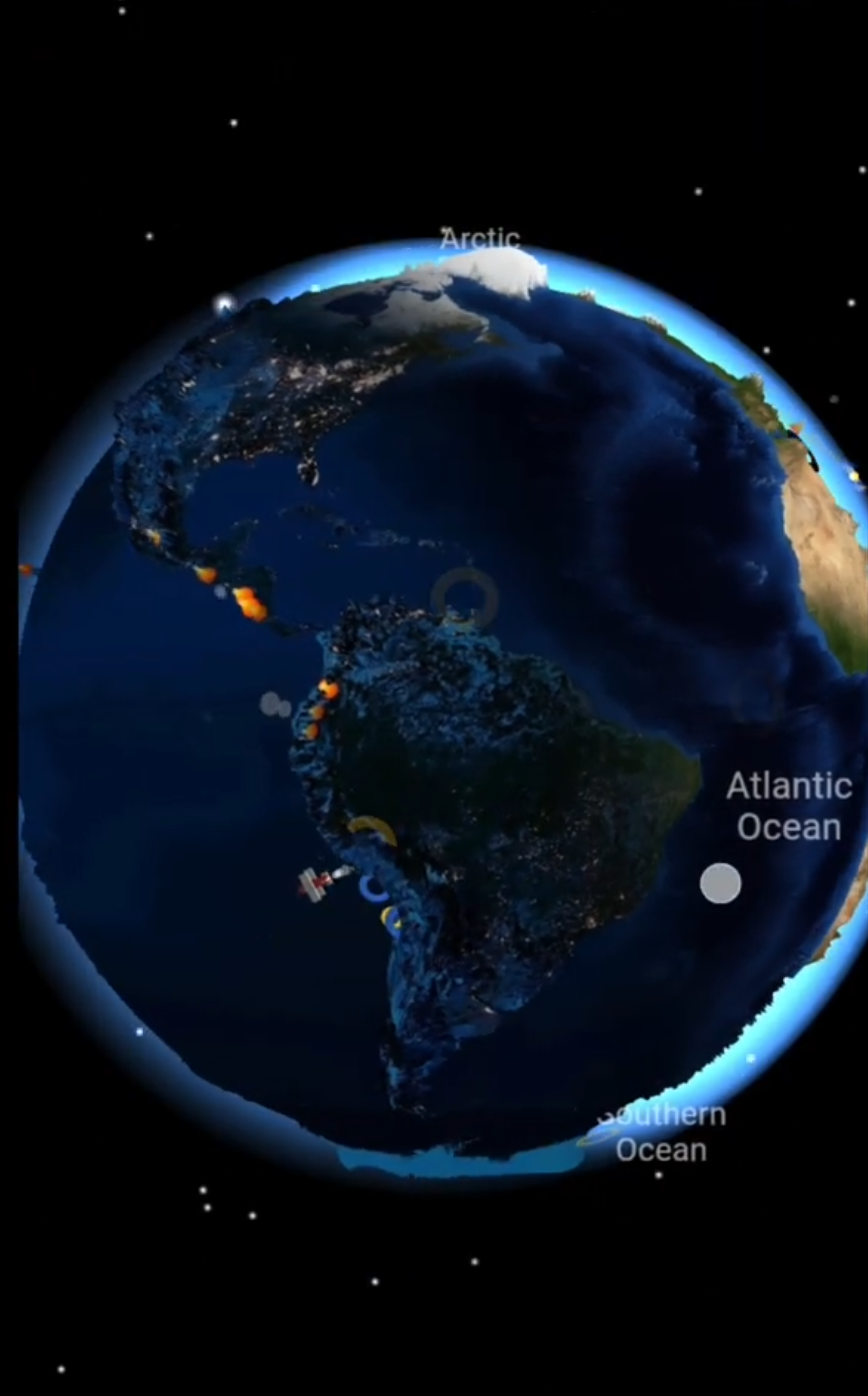
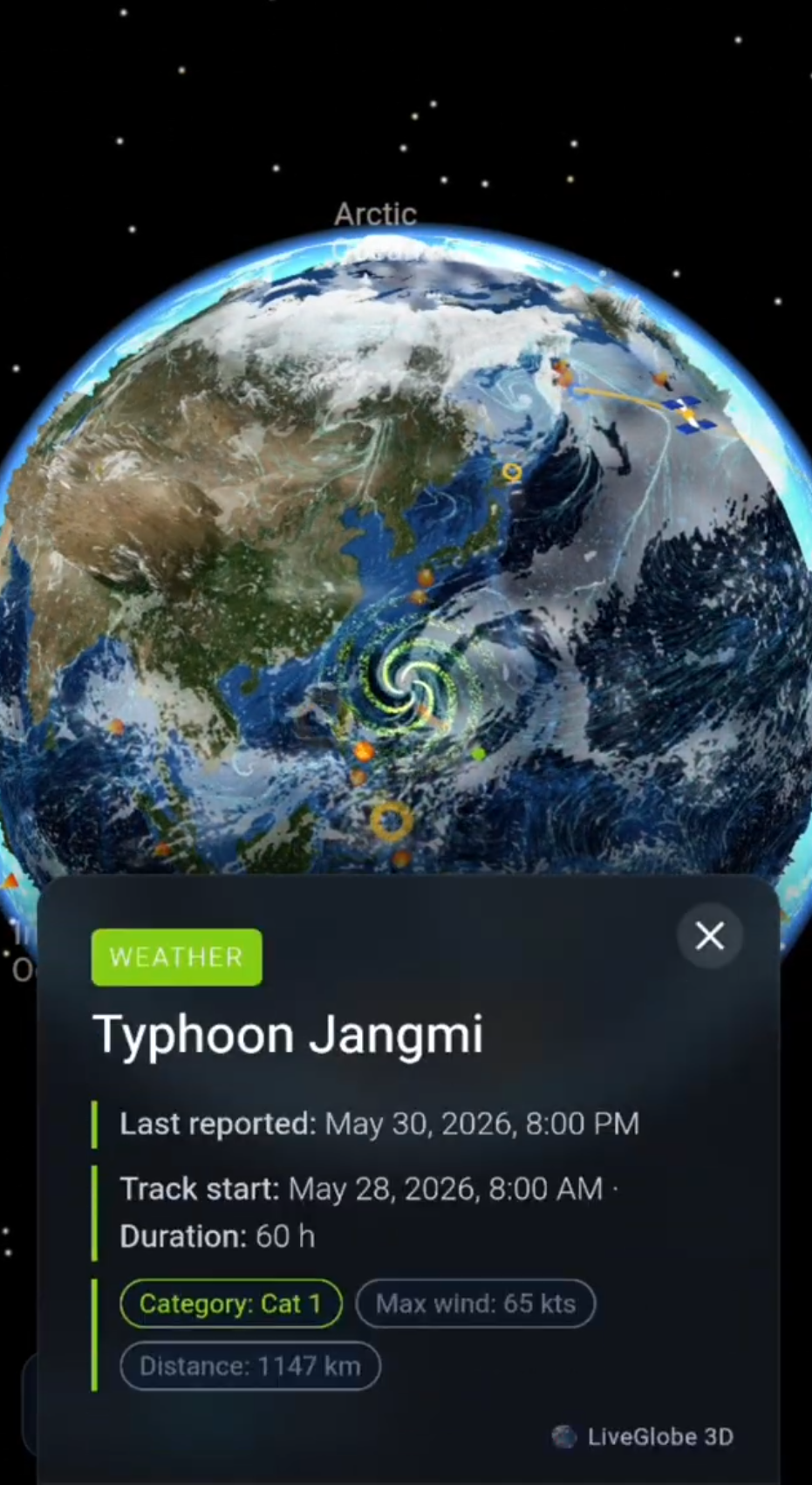
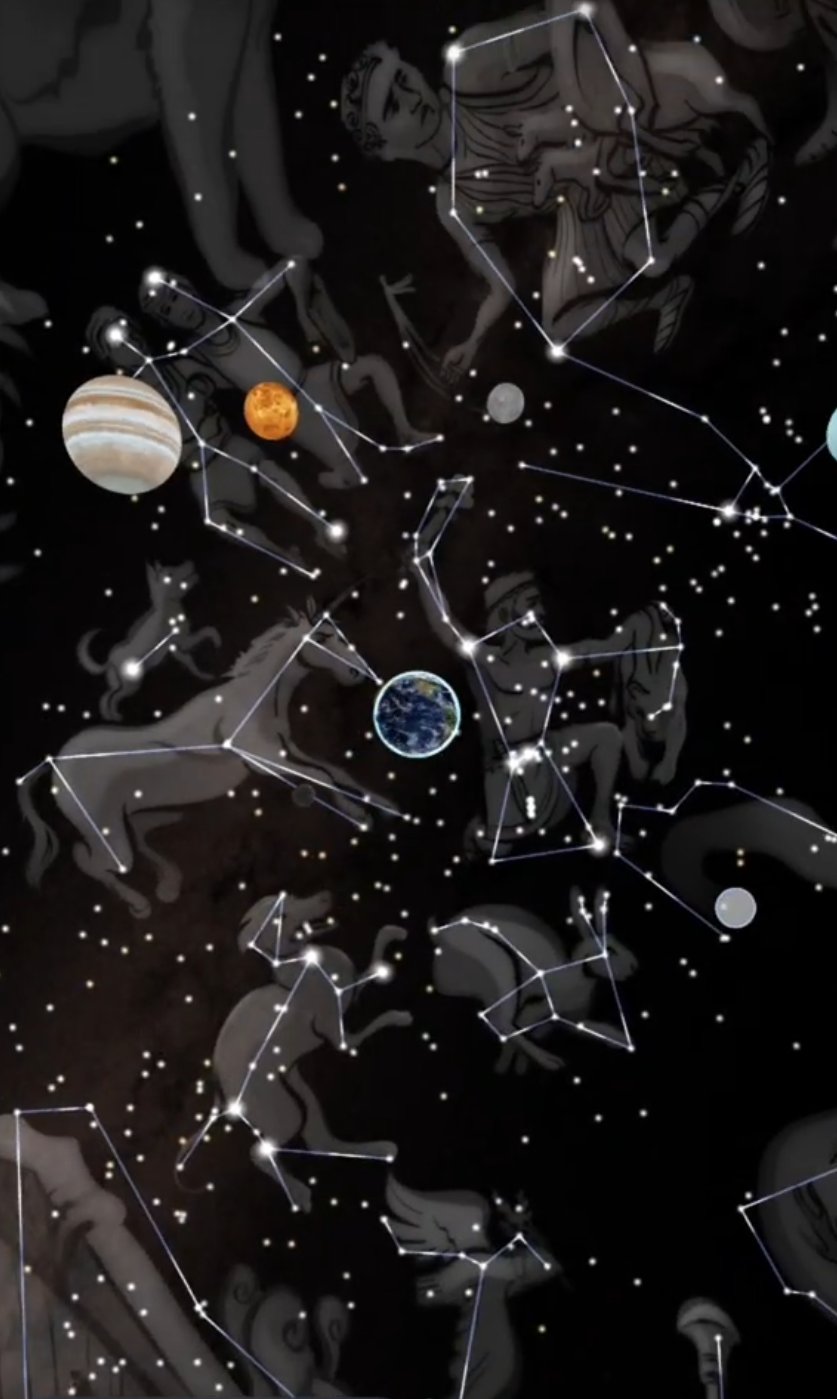
In LiveGlobe 3D, you can rotate and zoom the globe and search for places using the magnifying glass. Use those views to put your location and the polar regions into geographic context. The web app uses sign-in, and place search depends on an external service being available. Get the declination for your calculation from the scientific source.
For another way to think about north, read how to find the North Star. Its position near the extended rotation axis provides a different reference from the local magnetic field.
Explore LiveGlobe 3D and, next time you look at a compass, separate two questions: Where is true north—and which way does the magnetic field point here?
Short clips
The app in motion: short, genuine glimpses straight from use.
At a glance
How the app feels on your phone.