Why doesn't the ISS fall to Earth—and why do astronauts float?
Discover why the ISS stays in orbit, why astronauts float, and how sideways speed and shared free fall work despite strong gravity at station altitude.
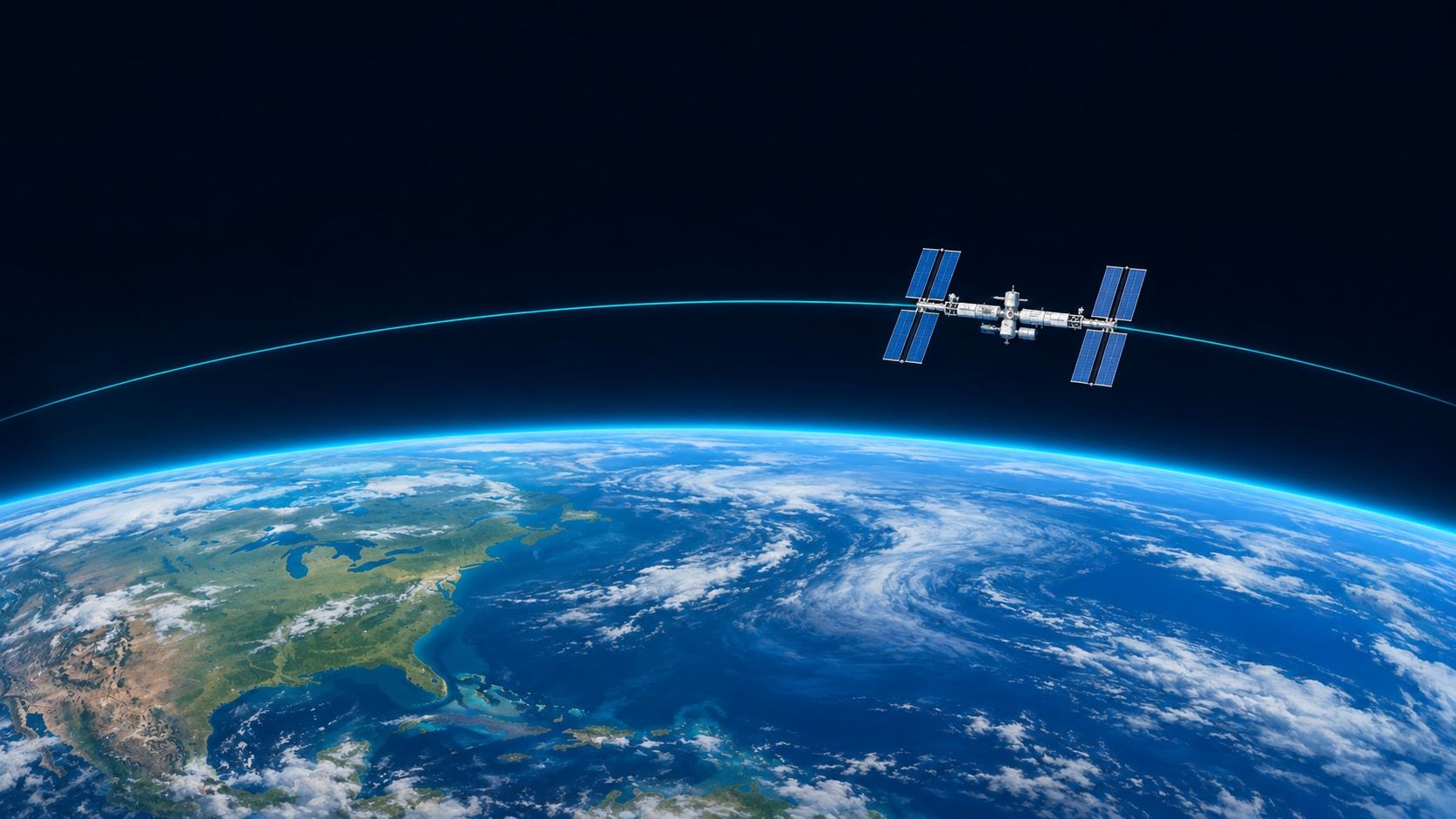
The International Space Station does not stay up because gravity has disappeared. It is continuously falling around Earth. Gravity bends its motion inward, while its high sideways speed carries it around the planet. The people and loose objects inside fall along with it, so they float relative to the station even though Earth’s pull remains strong.
That explains two things that can seem contradictory: gravity keeps a spacecraft in orbit, yet the people inside can experience weightlessness.
Is there still gravity at the station’s altitude?
Yes—plenty of it. The ISS travels in low Earth orbit, at an altitude on the order of 400 kilometers. NASA’s explanation of microgravity puts Earth’s gravitational pull there at roughly 90 percent of its surface value. The precise fraction depends on altitude.
Gravity does not switch off at a boundary between the atmosphere and space. It weakens with distance. The station’s height is still a relatively small addition to the distance from Earth’s center.
If you could somehow hold a platform stationary at that height, distance alone would not make its occupants weightless. What matters is the station’s motion, not simply how high it is.
An orbit is a very fast kind of falling
Imagine throwing a ball horizontally. It moves forward while gravity pulls it downward. Throw it faster and it travels farther before hitting the ground.
Now turn that into a thought experiment with no air resistance or mountains in the way. At the right sideways speed, the ball’s falling path curves as Earth’s surface curves away beneath it. It keeps falling toward the planet without reaching the ground. That is an orbit.
NASA uses Newton’s thought experiment to explain this idea. It is a model for understanding orbit, not a practical method for launching a spacecraft. The ISS moves at around 28,000 kilometers per hour, completing a lap in roughly 90 minutes. Those are useful approximate scales, not live telemetry.
Gravity supplies the ongoing change in direction. Without it, the station would initially carry on along a tangent rather than follow its curved orbit. Think “moving sideways fast enough to fall around Earth,” rather than “too far away for Earth to pull on it.”
Why do astronauts and objects float together?
Standing on Earth, you are pulled downward by gravity and supported upward by the floor. That support force is what you feel as weight. A bathroom scale measures the force you exert on it.
In the ISS, the station, its crew and a gently released object are all falling together to a close approximation. The station’s floor does not have to support a freely floating astronaut as a floor does on Earth. A released pen does not suddenly start falling on its own: it already shares the station’s motion and continues falling with it.
A freely falling cabin makes a useful simplified comparison. If the cabin, a person and a pen all fall together, the pen appears to float inside. In orbit, that shared fall continues because the motion carries everything around the curved Earth. NASA explains this shared free fall as the reason objects float.
Weightlessness does not mean losing mass. A massive piece of equipment may float, but changing its speed or stopping it still takes force. An ideal scale falling with the astronaut would read zero; the astronaut’s mass would remain the same.
What does “microgravity” mean here?
Microgravity describes the nearly weightless conditions aboard the station. It does not mean that Earth’s gravitational pull has dwindled to a tiny fraction of its surface strength. The key is the shared free fall. A real station is not a perfectly undisturbed environment, so “no gravity” is particularly misleading.
Short periods of weightlessness can also be produced on Earth, using parabolic flights or drop towers. You do not need to travel far from the planet to experience the effect.
Do the engines have to run all the time?
An orbit does not require continuous thrust in the way an aircraft needs propulsion to overcome air resistance. But the real ISS orbit is not permanently unchanging. Even at its altitude, a very thin residual atmosphere creates drag, and its orbit gradually drops.
Periodic reboost maneuvers raise the orbit again. NASA’s ISS reference describes these corrections. They help compensate for drag; they are not a continuous effort to hover against gravity.
Picture the motion on a globe
Try a sketch: draw Earth as a circle and add a short orbital arc above it. At one point, draw an arrow along the path for the instantaneous direction of motion, then another toward Earth’s center for gravitational acceleration. The arrows represent different quantities, so they do not need to cancel each other.
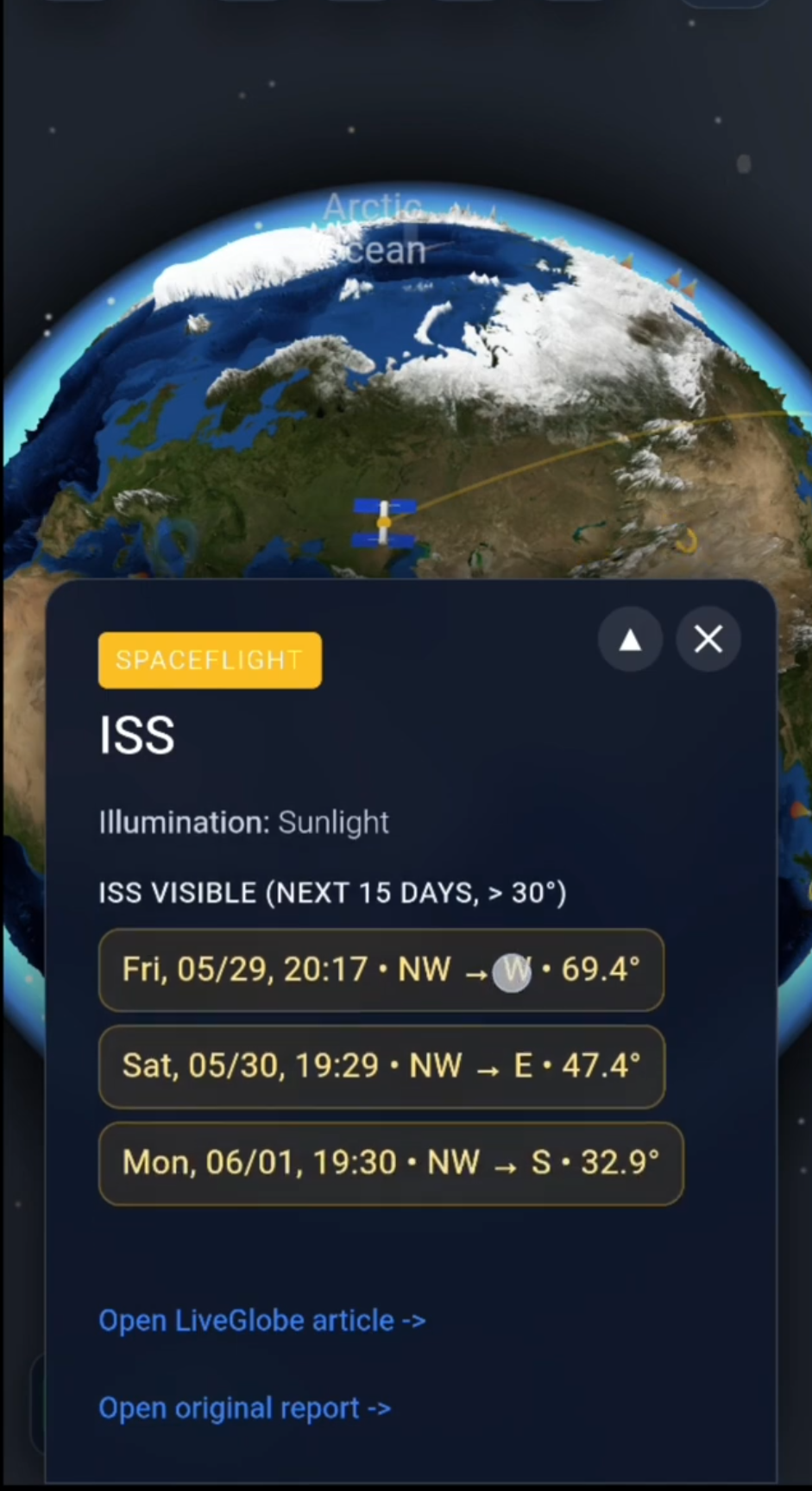
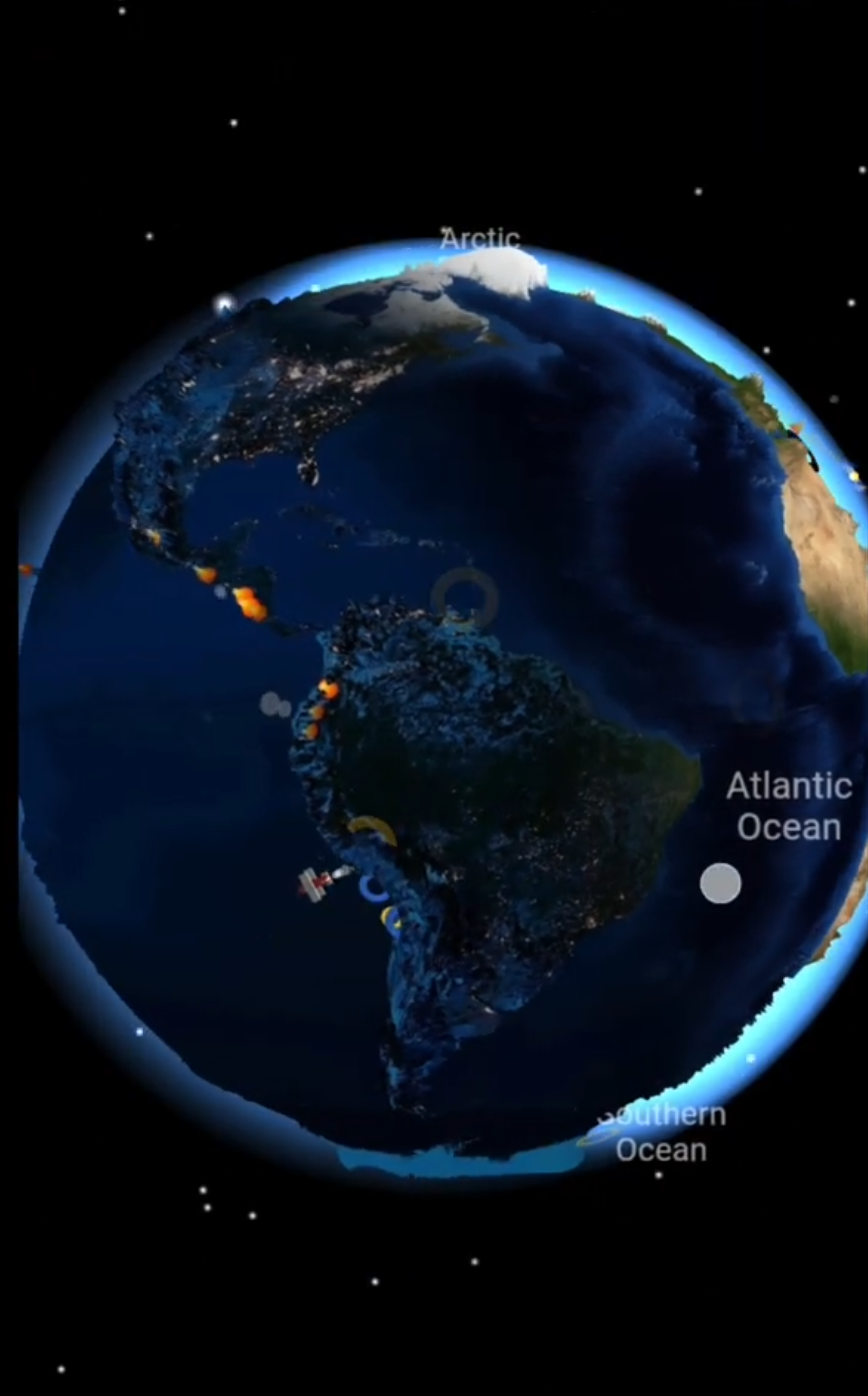
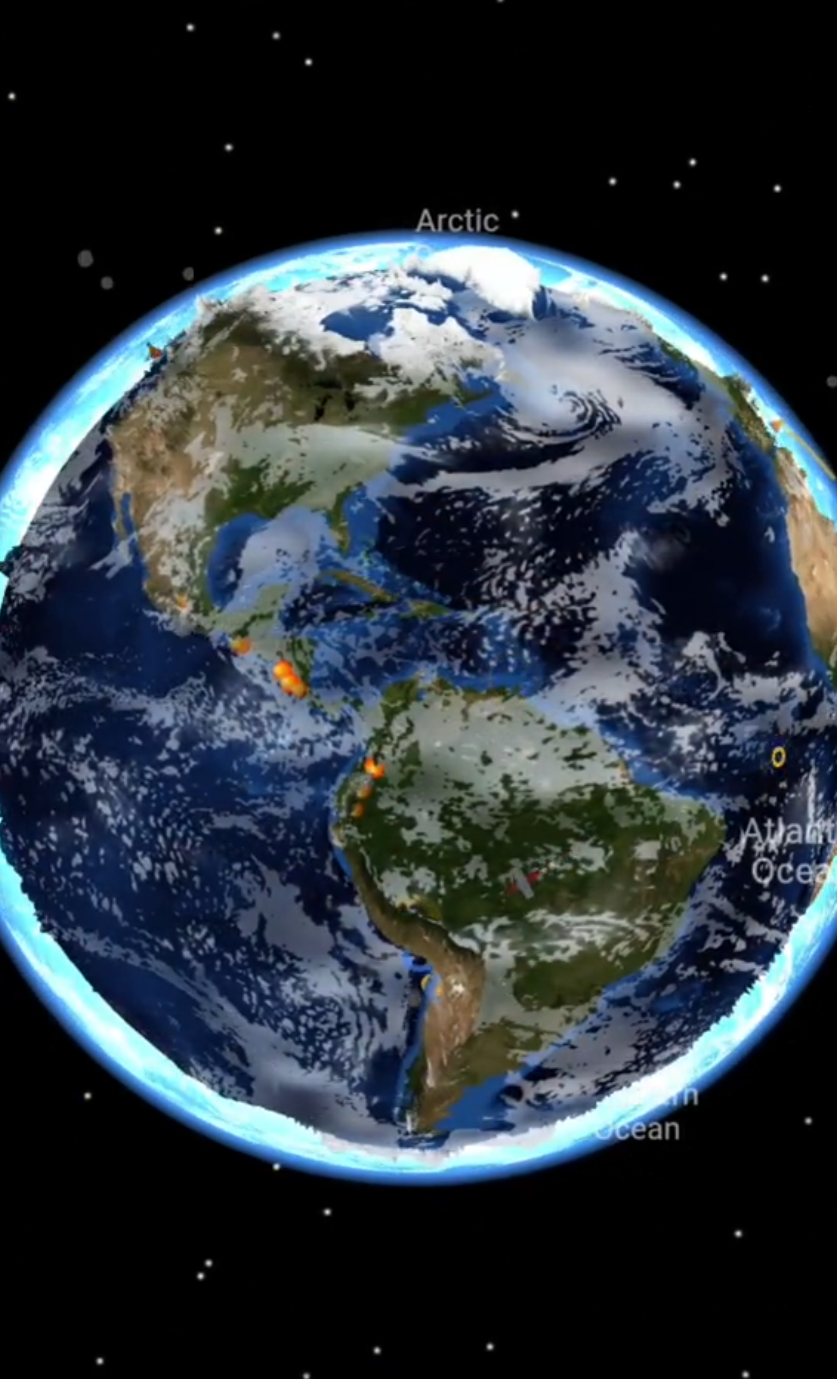
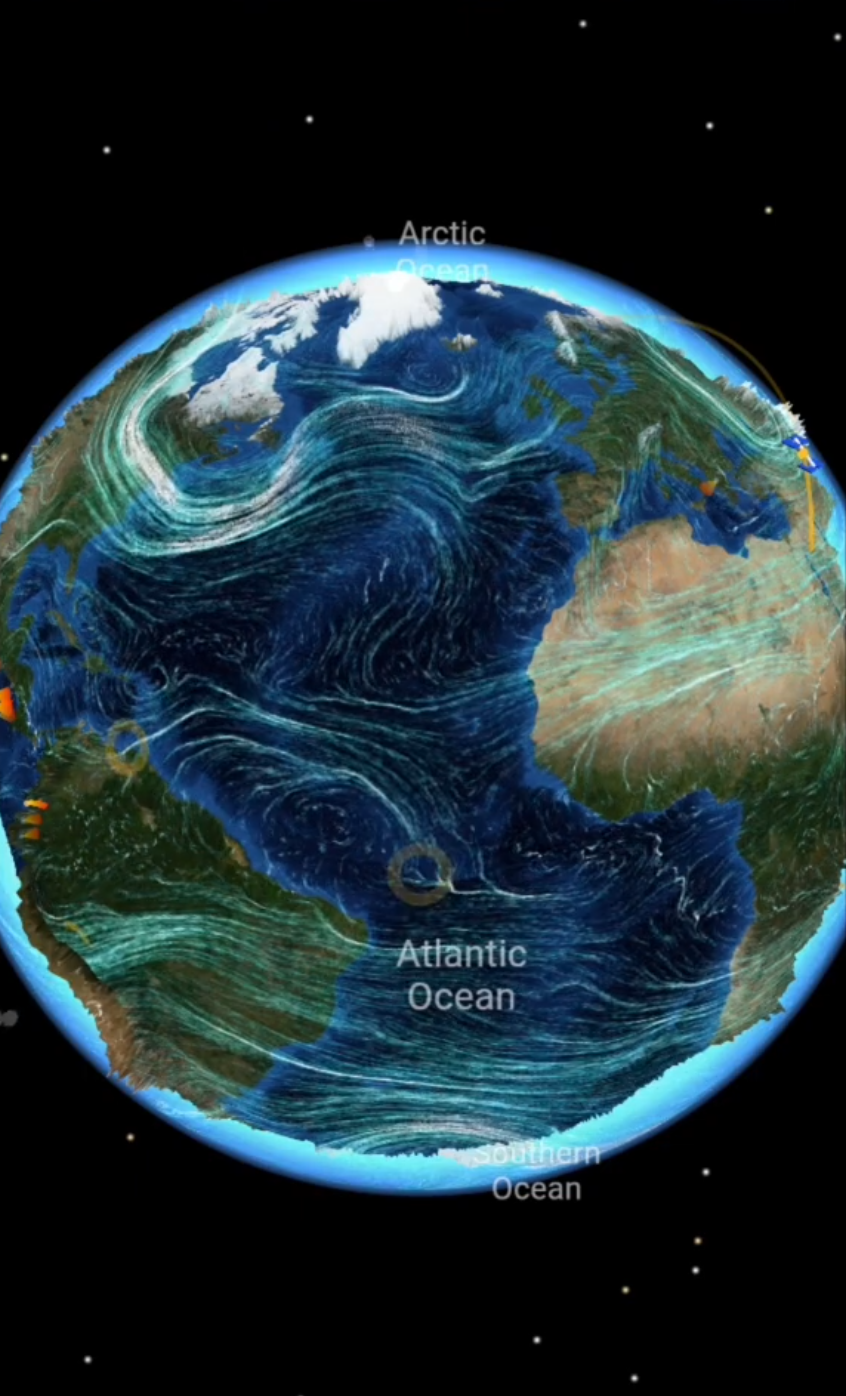
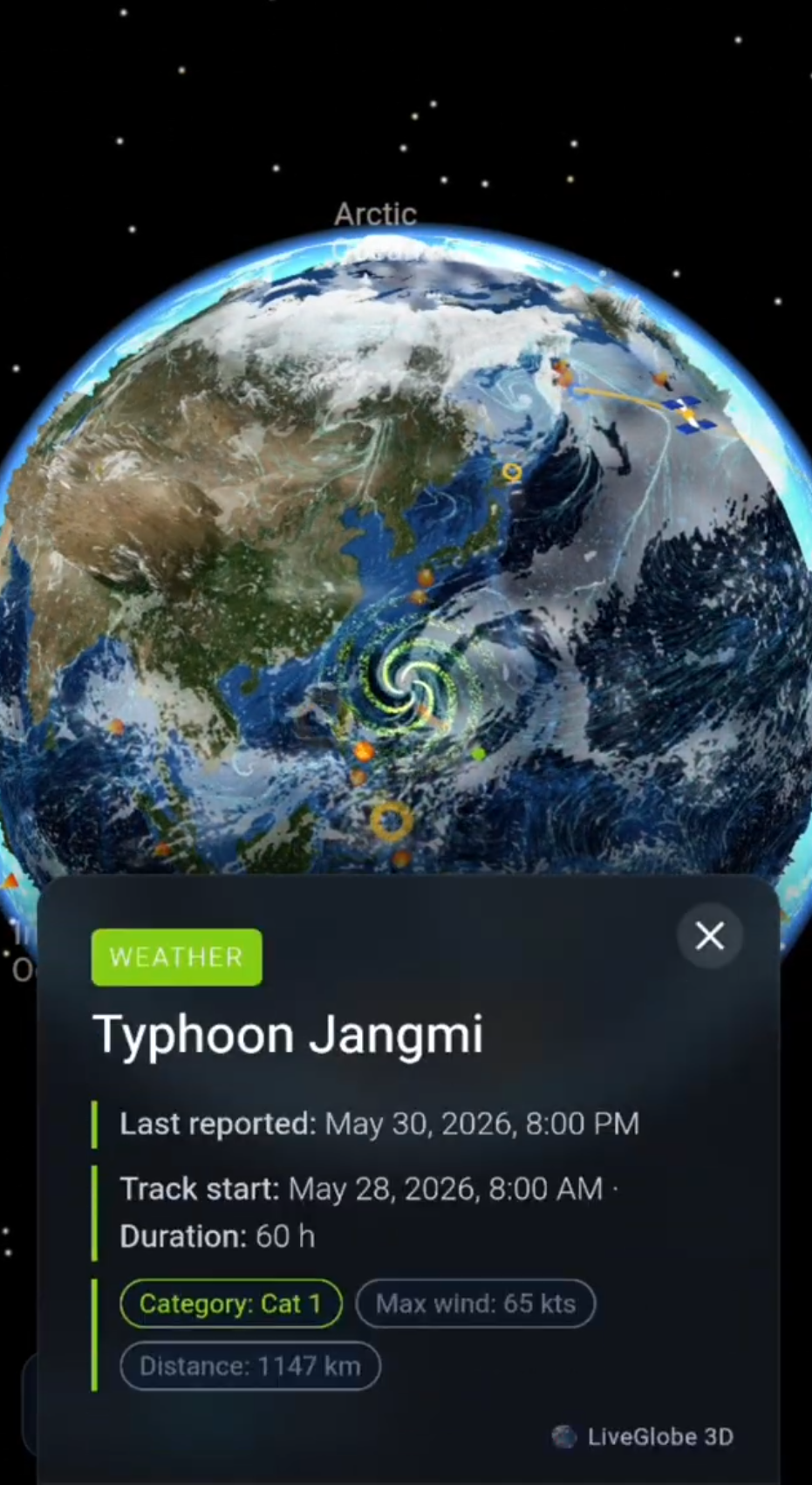
With LiveGlobe 3D, you can rotate the globe and enable the ISS in the space menu when your access and external orbital data allow. The curved-Earth view can help with the spatial picture. The arrow sketch is a separate learning exercise.
Seeing the station in the sky is a different question: sunlight, location and viewing conditions must line up. Our guide to visible ISS passes explains that next step.
The central idea is simple: the ISS does not escape gravity. Its sideways motion keeps it in free fall around Earth. Explore the spatial view in LiveGlobe and compare it with your sketch.
Short clips
The app in motion: short, genuine glimpses straight from use.
At a glance
How the app feels on your phone.