Why is Mars red? Iron minerals, dust and the Red Planet's colors
Why is Mars red when not every rock is red? Understand oxidized iron, Martian dust and surface colors, with a simple comparison using real NASA images.
Mars gets its reddish appearance from oxidized iron minerals in its rocks and, especially, its fine dust. In everyday terms, some of the material on Mars is rusty. That does not mean the entire planet is made of rust, or that every rock on its surface is red.
The explanation has two parts: what the surface material contains, and how wind spreads that material around. Together, they explain why a world that looks mostly reddish from a distance can reveal many different colors close up.
What does “rust on Mars” mean?
Iron occurs in minerals. When its chemical state changes through oxidation, it can form compounds with reddish or brownish colors. NASA explicitly connects the Red Planet’s nickname with iron minerals oxidizing, or rusting, in Martian material (NASA: Mars Facts).
A rusty garden tool offers a useful starting comparison: iron-bearing material can change color when it changes chemically. But Mars is not a giant iron ball with a single rusty shell. The explanation concerns minerals within rocks and the loose material covering the ground.
That loose surface material is called regolith. It includes broken rock fragments, sand and fine dust. Here, “soil” does not mean fertile garden soil containing humus.
“Because of iron oxide” is therefore a useful short answer, rather than a complete account of every mineral and its formation. Keep three things separate: the rock, the chemically altered iron minerals, and the fine dust that contains or accompanies them. You do not need to assume one particular mineral or one formation process to understand the broad color explanation.
Why fine dust makes such a difference
A dark rock with a pale coating of dust can look quite different from a freshly exposed patch. When you look at a surface, you may be seeing the material resting on it as much as the rock beneath it.
NASA explains that oxidized iron in rocks, regolith and dust contributes to Mars’ reddish appearance. Dust lifted into the atmosphere also makes the planet look mostly red from a distance. Wind spreads fine material over large areas, and some dust storms affect much of the planet.
There are two distinct questions here:
- Why is the material rust-colored? Its mineral composition and chemical alteration matter.
- Why does that color appear across such large areas? Fine dust and its distribution play an important role.
Wind does not turn a gray mineral red simply by moving it. It transports material whose properties already determine its color.
Is the whole surface red?
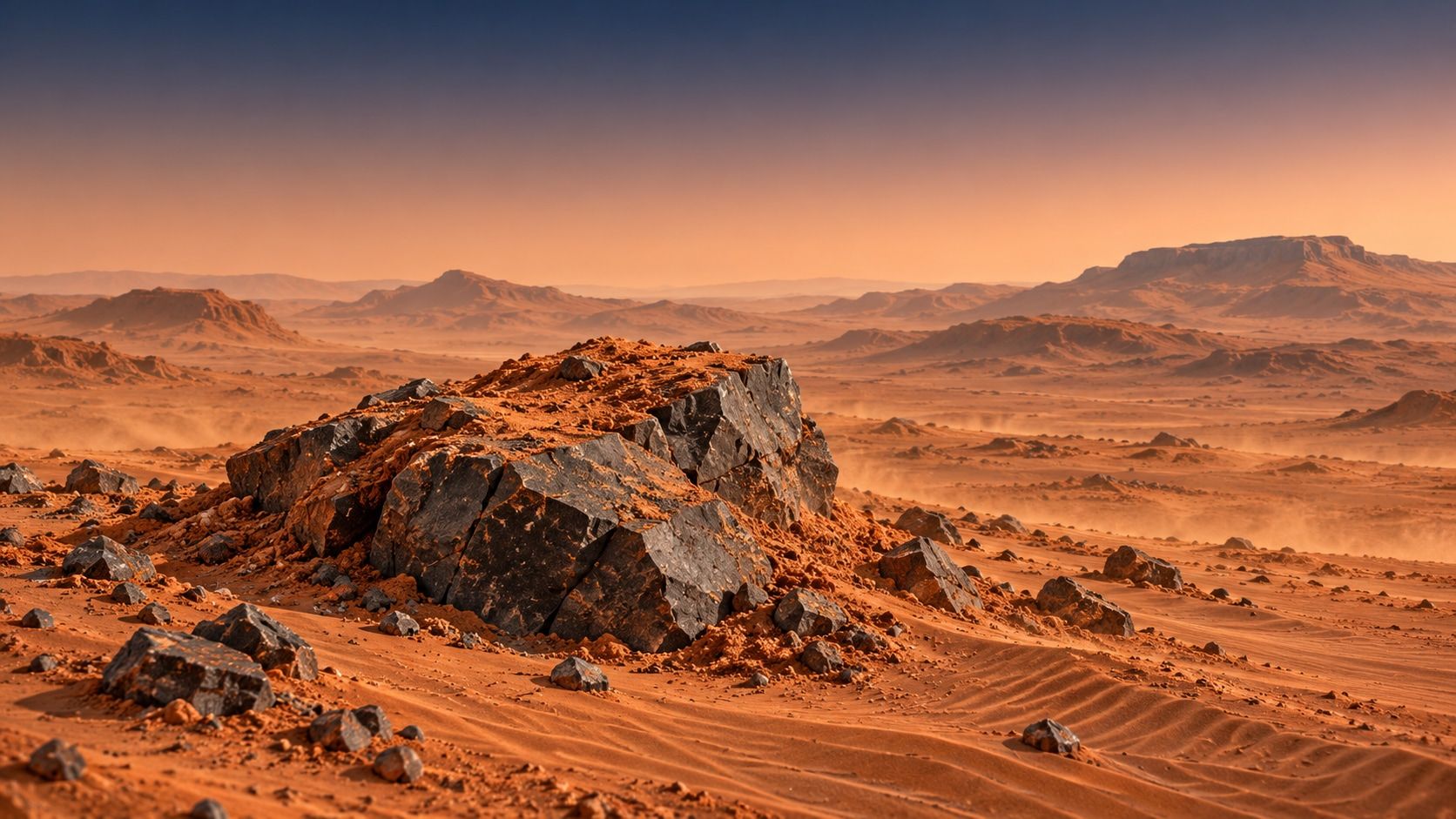
No. NASA also describes brown, gold and tan colors. “Red Planet” is a memorable description of the overall impression, not a complete color map.
| View of Mars | What becomes noticeable |
|---|---|
| The whole planet from far away | Its widespread reddish appearance |
| A close view of a landscape | Differences between dust, sand and rock |
| An exposed patch of rock | A color that can differ from the neighboring dust coating |
Imagine a dark paved surface covered by windblown ochre dust. From far away, the dusty area dominates. Closer up, you can distinguish dark patches between the grains. This is an analogy, not a model of a named Martian location or a particular dust thickness.
Red does not mean hot
Red often suggests glowing embers, but that association is misleading on Mars. Here, the color tells you about material properties, not a glowing surface.
NASA Space Place describes Mars as a cold desert world. Its atmosphere is very thin, and NASA explains that heat from the Sun escapes easily. Rust-colored ground can therefore be extremely cold. You cannot read a temperature from redness any more than you can from the brown color of a stone.
Try a comparison using real Mars images
Open NASA’s Mars facts and images and compare a whole-planet view with a closer landscape image:
- Read the caption. Does the image show the whole planet, a landscape or one object? Does it specify a particular color treatment?
- Separate the surfaces. Where can you identify dust or sand, and where do you see solid rocks? Describe the differences before explaining them.
- List the colors. Is “red” enough, or do brown, ochre, tan and gray help too?
- Connect observation and explanation. Which differences fit the idea that dust can coat another surface?
This exercise helps you notice material and scale. It is not a mineralogical measurement: a color on a screen alone cannot identify a rock’s exact composition.
Common questions
Is Mars made of iron?
Mars is a rocky planet. Iron-bearing minerals in its surface material are important to its reddish appearance; the nickname does not mean the whole planet is made of iron.
Is Martian dust red because it is hot?
No. Oxidized iron minerals explain the color. Mars is a cold desert world overall, rather than a glowing landscape.
Why do some pictures of Mars look brown?
The surface genuinely has several colors, and images show different areas and scales. A dusty plain and an individual rock need not have the same hue. Read the caption to understand the particular image.
Put planets in context with LiveGlobe 3D
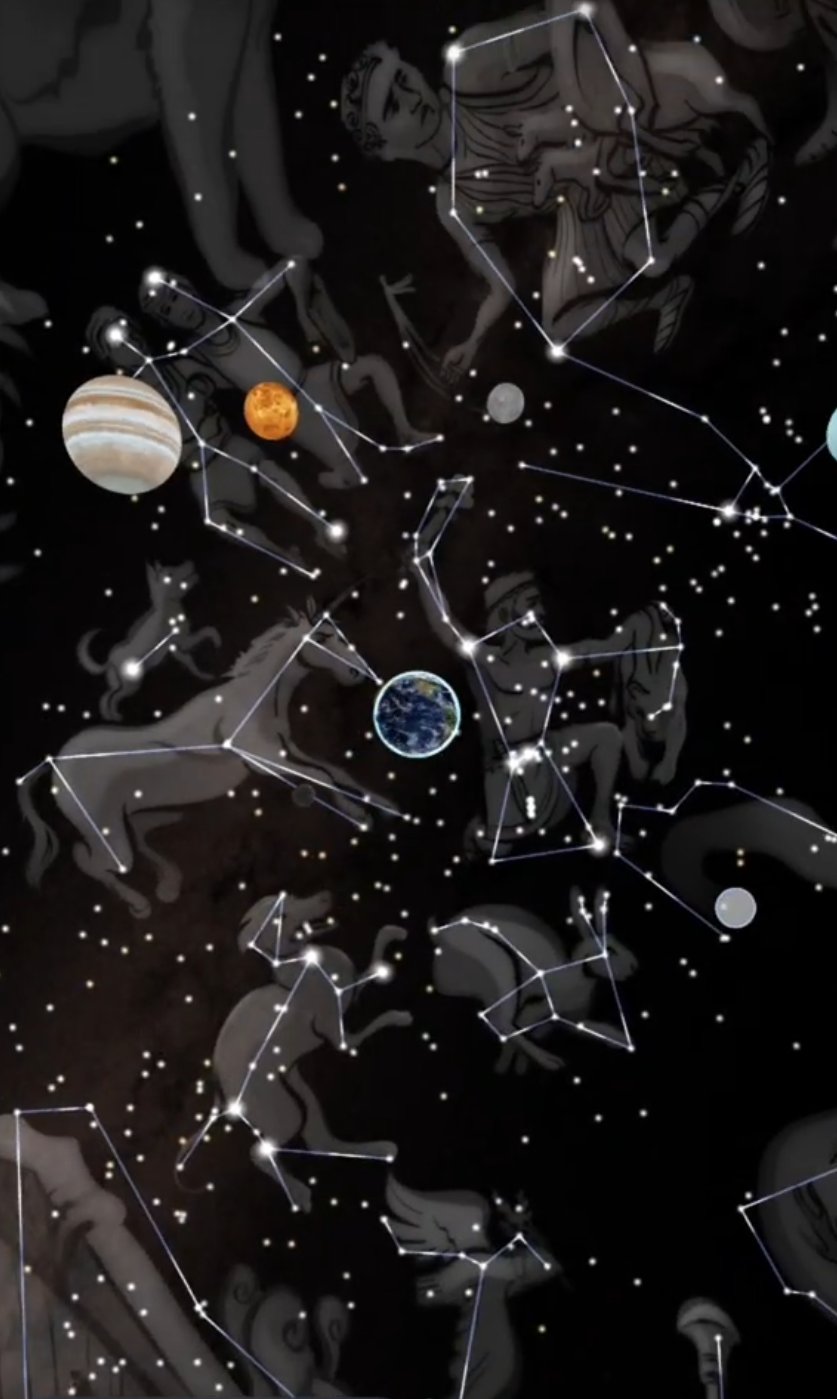
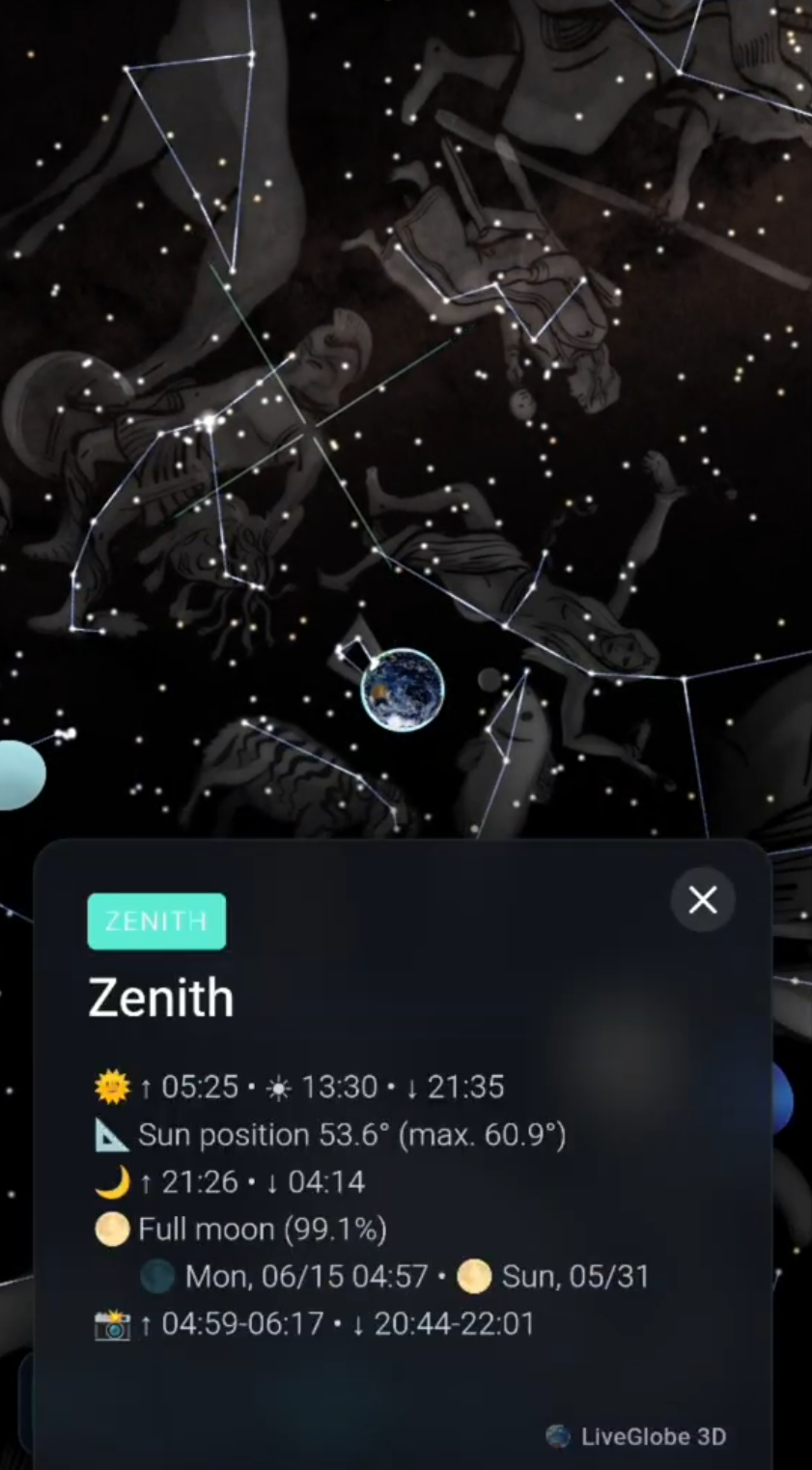
In LiveGlobe 3D, you can switch between Earth and Sky views and explore planets through the space menu. The web app is set up to require sign-in, and planet data depends on external services. Use the sky view for spatial context and NASA’s images for a closer look at surface materials.
For another useful distinction, read Why do stars twinkle while planets usually shine more steadily?. Explore LiveGlobe 3D and the views available to you—and next time you see a planet image, ask what material you are looking at as well as what color it is.
Short clips
The app in motion: short, genuine glimpses straight from use.
At a glance
How the app feels on your phone.