Why Are Stars Different Colors?
Learn why blue stars are hotter than red stars, what color reveals about surface temperature, and how to compare Betelgeuse and Rigel in the night sky.
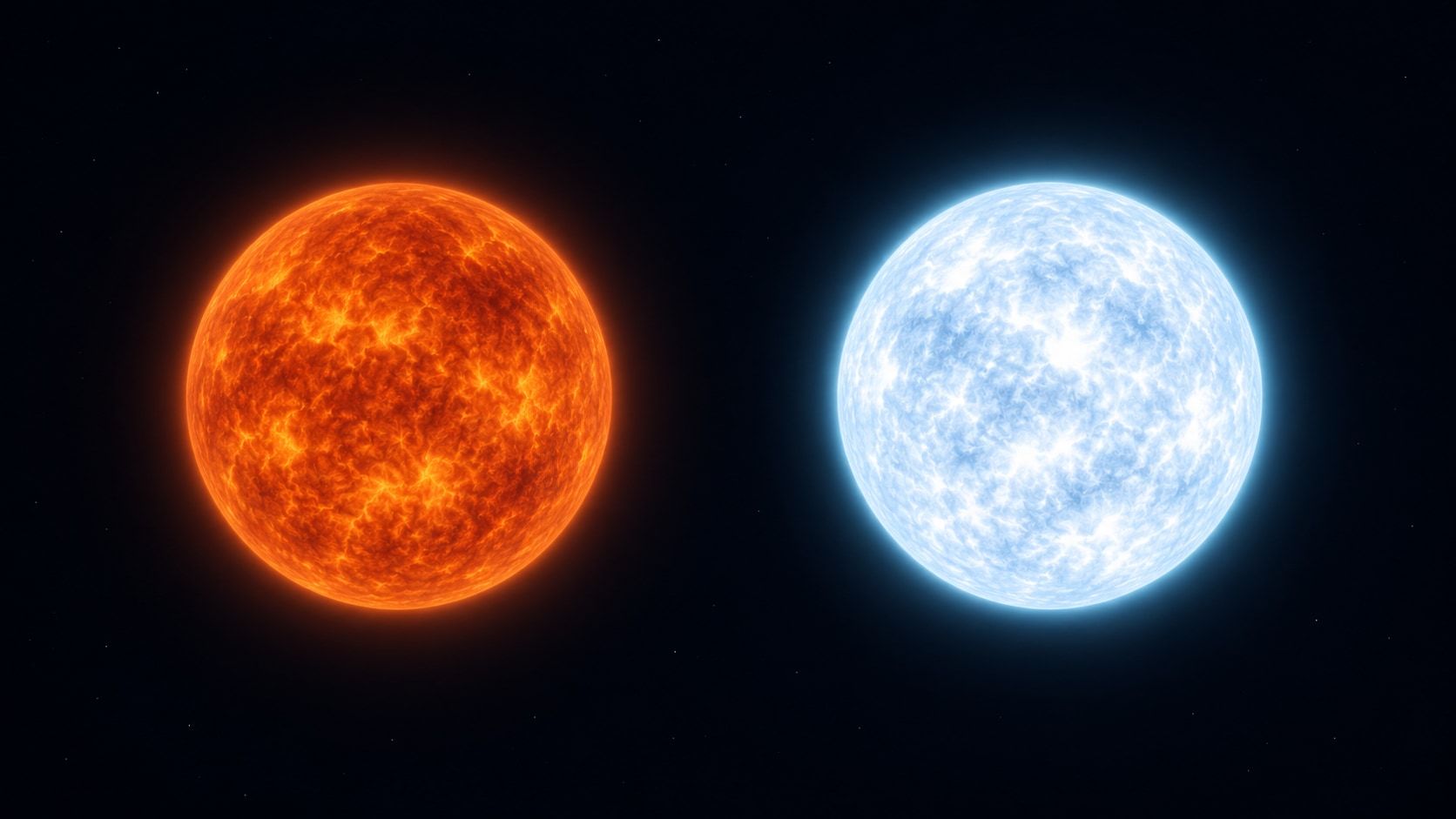
Stars do not all shine the same shade of white. Some look bluish; others have an orange or reddish tint. A star’s intrinsic color mainly reflects the temperature of its visible outer layers: blue-white stars have hotter surfaces than orange-red stars. That can feel backwards when everyday color schemes use red for hot and blue for cold.
Color offers a first clue to a star’s physics. It does not, by itself, tell you its size or give you a precise temperature reading with the naked eye. The key is to separate the light the star emits from the changes that happen before it reaches your eyes.
Why does blue mean hotter?
Hot objects emit thermal radiation. As their temperature rises, the distribution of that radiation across different wavelengths changes. An object being heated can glow dull red, then orange, then whitish. At still higher temperatures, shorter-wavelength radiation becomes increasingly important.
Stars are not perfect ideal radiators, but this relationship explains their broad color differences. CSIRO’s guide to star colors connects bluish stars with higher effective temperatures and orange-red stars with lower ones.
A blue star does not emit only blue light. It radiates across a broad range of wavelengths, and we see the combined result. A red star also emits more than one color, in different proportions. A single color in a rainbow is not the same thing as the overall color of a star.
Here, temperature means surface temperature, more precisely the effective temperature of the radiating outer layers. Conditions deep inside are very different. NASA’s introduction to stars explains how nuclear fusion in the hot core supplies energy.
Does color reveal size and brightness too?
Not on its own. Keep these three properties separate:
| Property | What determines it |
|---|---|
| Intrinsic color | Mainly effective surface temperature |
| Total power radiated | Temperature and emitting surface area |
| Brightness in our sky | Also distance and dimming along the light’s path |
A large star with a cooler surface can give off an enormous amount of light overall. A hot star can look faint simply because it is far away. “Bluer” therefore does not automatically mean “brighter from Earth.”
Nor does “red” automatically mean “old.” Small, cool red dwarfs and expanded red giants have different structures and evolutionary histories. NASA’s star types guide shows why color alone cannot identify a star’s diameter or life stage.
Why do so many stars look white?
Our eyes are not very good at seeing color in dim light. The retina’s sensitive rod cells do not provide color vision; cone cells need more light to distinguish colors. Stars also remain tiny points to the unaided eye. Their colors usually look much subtler than those in an illustration.
The journey through space matters too. Dust between stars can weaken blue light more strongly than red light, making a star appear redder than its intrinsic color would suggest. CSIRO explains this interstellar reddening, which astronomers must account for in measurements.
Rapid red and blue flashes from a star low in the sky are another effect. Earth’s atmosphere can produce these changes; the star is not heating and cooling every second. Read why stars twinkle for that part of the story.
Try comparing Betelgeuse and Rigel
Orion offers a useful contrast: Betelgeuse looks orange-red, while Rigel looks blue-white. CSIRO uses this pair to illustrate stellar colors. Whether Orion is visible depends on your location, the season, and the time of night.
On a clear evening:
- Identify both stars using a sky chart set to your location and observing time.
- If possible, wait until they are well above the horizon and avoid looking through thin cloud.
- Compare the lasting color impression rather than individual colorful flashes.
- Write down two separate observations: which looks brighter, and which has a warmer tint?
- Repeat on another night. A photograph can help, but white balance and overexposed star images can change the colors it records.
You do not need to see vivid colors for the comparison to be worthwhile. A faint orange or blue tint is enough to notice a difference; it is not a precise temperature measurement.
How do astronomers measure a star’s color?
Instead of relying on an observer’s impression, astronomers measure brightness through defined filters. The familiar B–V color index is the difference between magnitudes measured in the blue B band and the visual V band. Under comparable conditions, smaller or more negative values generally indicate bluer, hotter stars.
Turning that measurement into a temperature requires suitable calibration and, where necessary, corrections for effects such as dust. The basic idea is straightforward: compare how much light arrives in different parts of the spectrum.
Explore the pattern of the sky
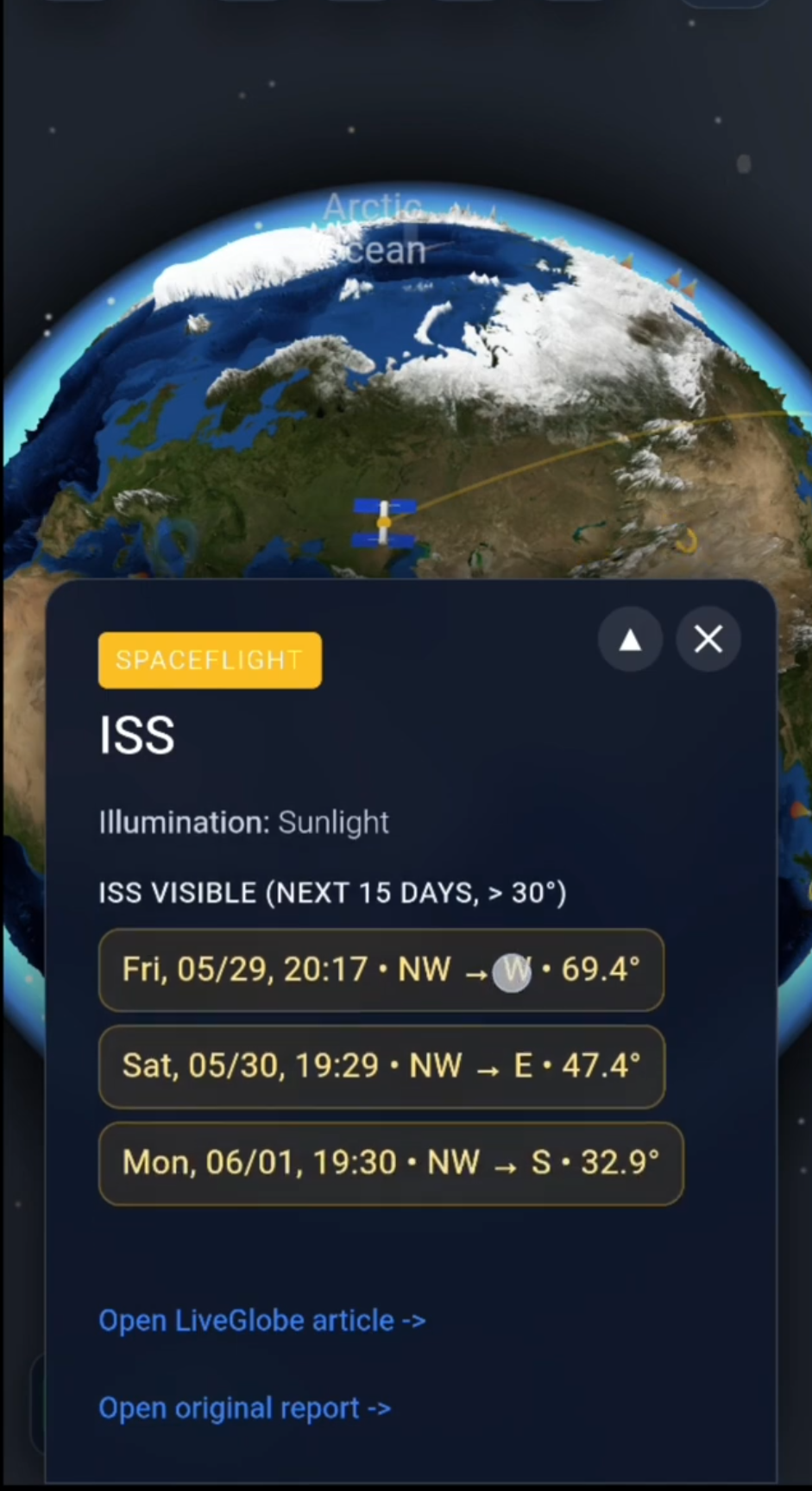
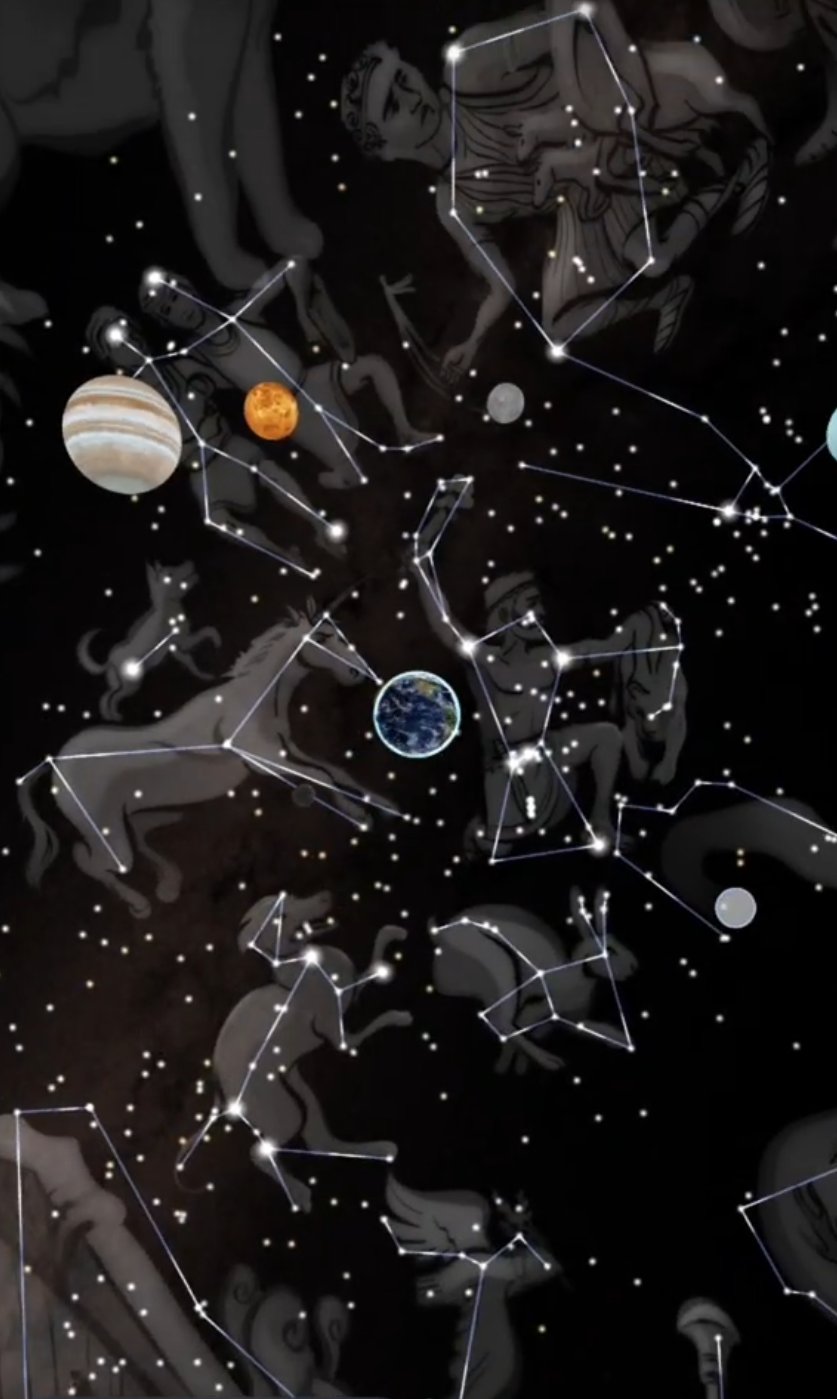
In LiveGlobe 3D, you can switch between Earth and sky views and explore constellation lines through the space menu. Use the view to get oriented among sky patterns, then compare them with the real night sky. The web app is configured to require sign-in.
Take a look at LiveGlobe 3D and the views available with your access. Next time the sky is clear, ask a small but revealing question: Is that star simply brighter, or is its color different too?
Short clips
The app in motion: short, genuine glimpses straight from use.
At a glance
How the app feels on your phone.