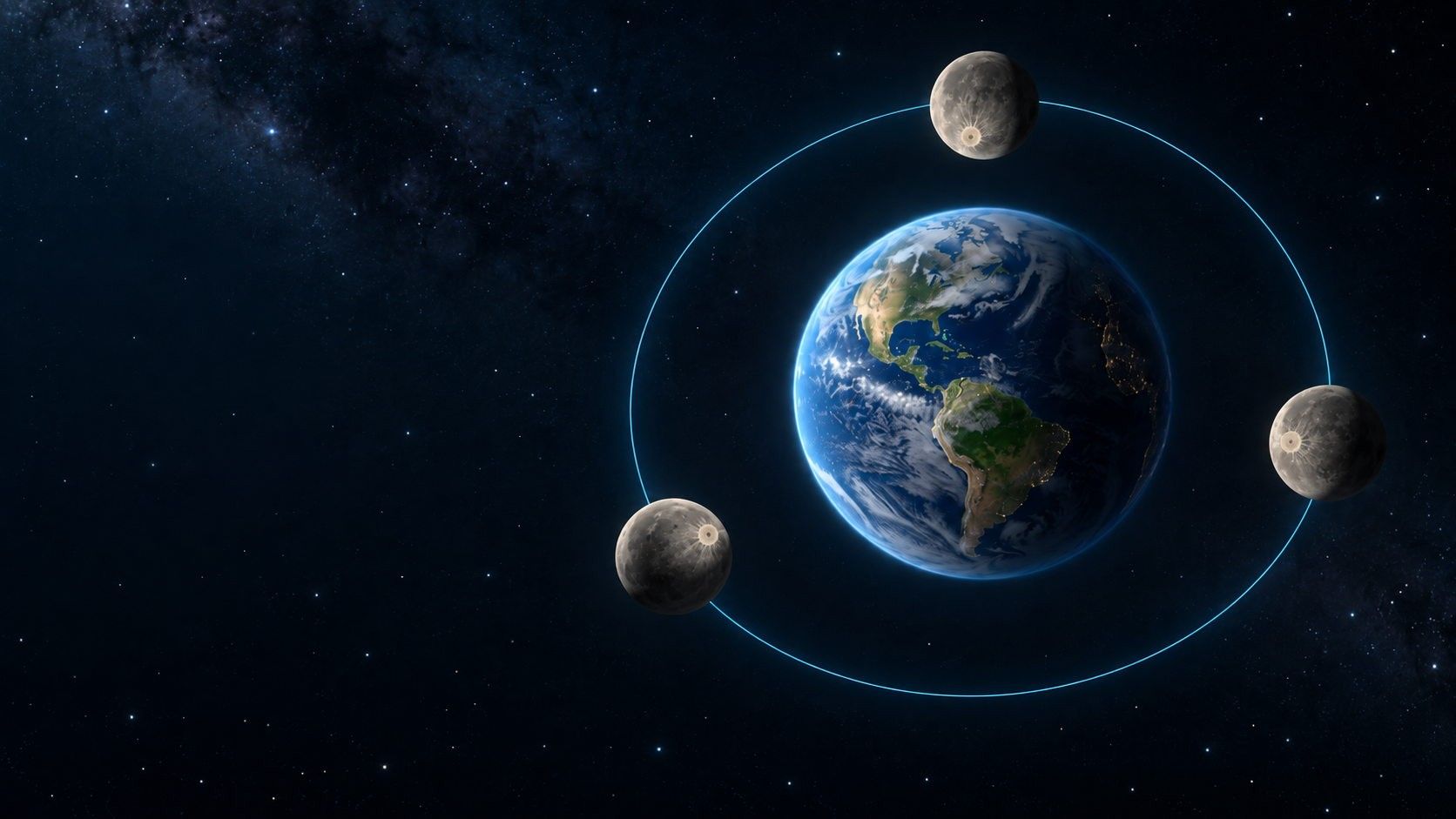
Why do we almost always see the same side of the Moon?
Does the Moon rotate? A chair-and-ball experiment explains tidal locking, the Moon's far side, and why we can glimpse beyond its familiar face.
Short clips
The app in motion: short, genuine glimpses straight from use.
At a glance
How the app feels on your phone.
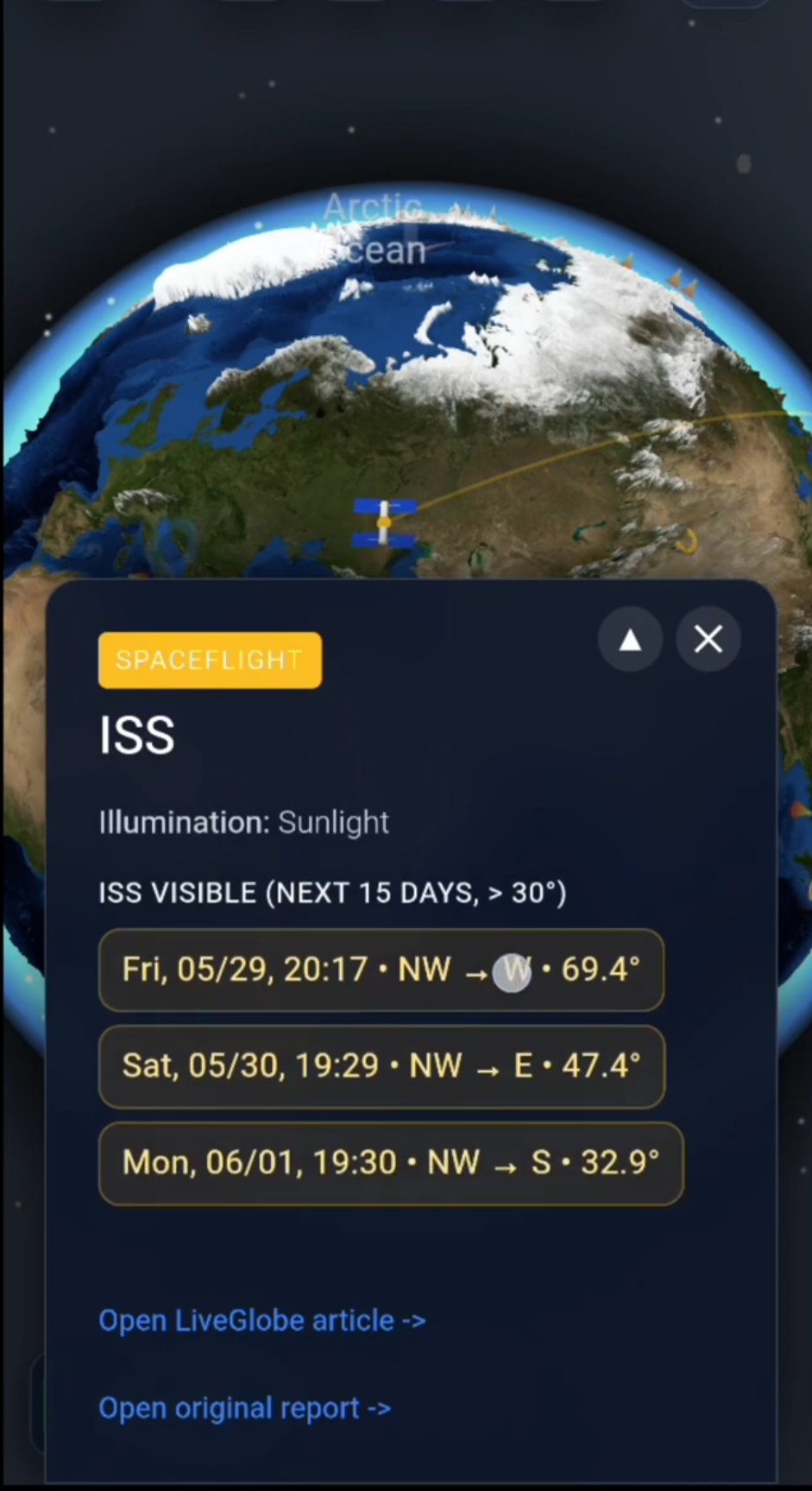
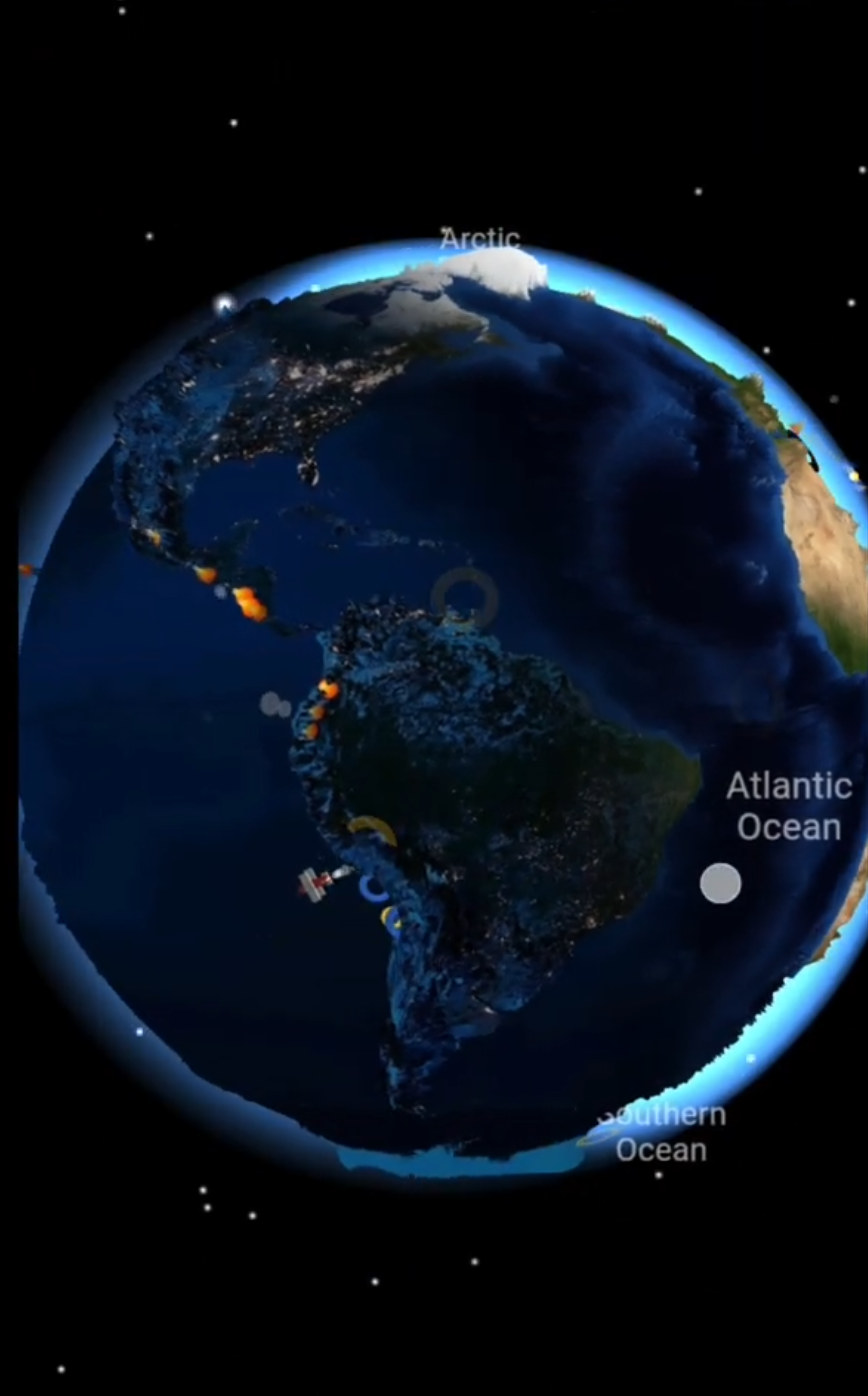
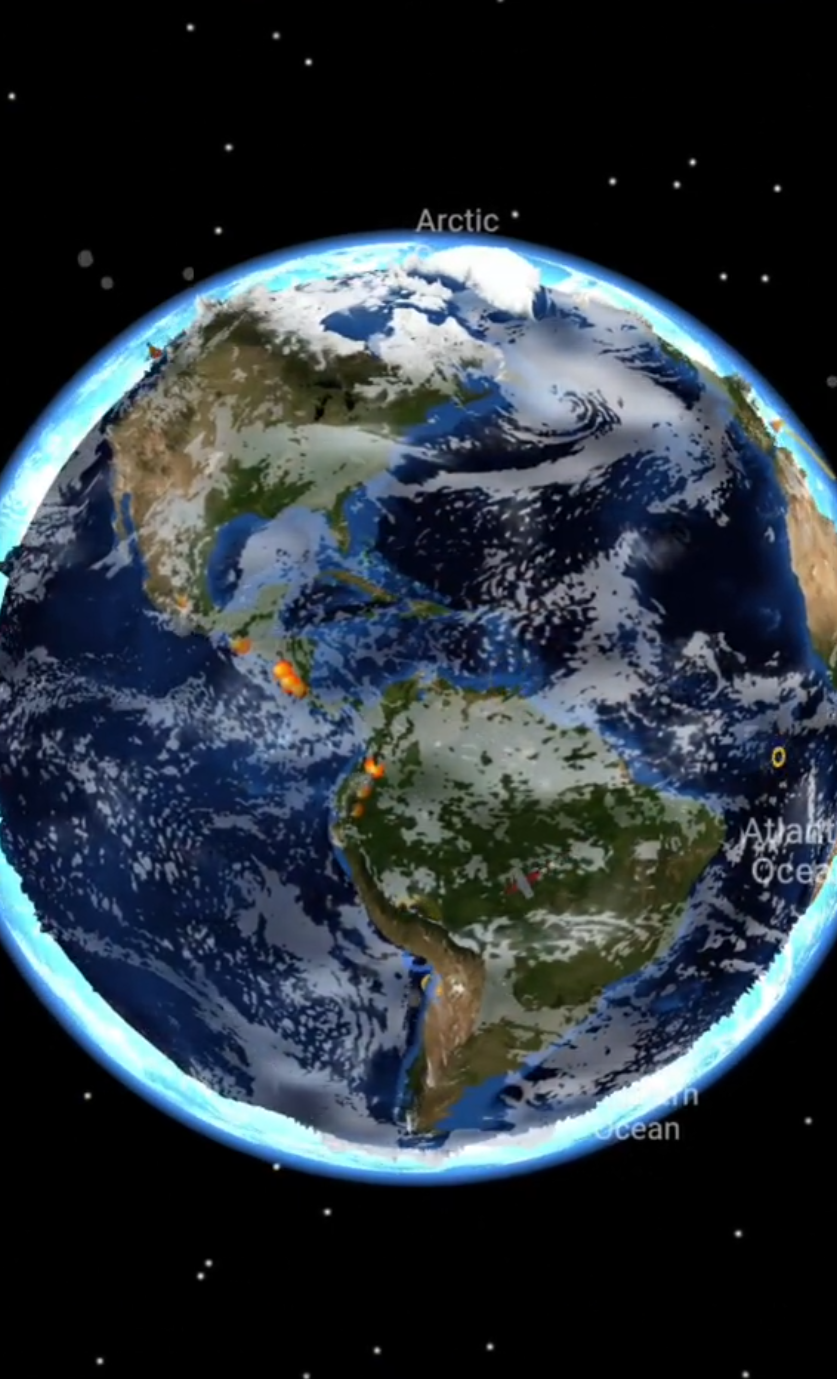
The Moon travels around Earth, yet the familiar light and dark markings seem to stay put. Does that mean the Moon doesn’t rotate? Quite the opposite: it spins once on its axis in roughly the time it takes to orbit Earth once. The same side therefore remains broadly turned towards us. This is called tidal locking, or synchronous rotation (NASA Science: Tidal Locking).
Try it with a chair and a ball
Put a chair in the middle of a room to represent Earth. Mark a spot on a ball for the Moon. Walk around the chair, continually keeping the mark pointed at it. A quarter of the way round, the mark still faces the chair, but the ball has already changed its orientation relative to the room. By the time you complete the circuit, the ball has also turned once relative to the room.
Now try keeping the mark pointed at the same wall as you walk round the chair. From the chair, you would gradually see different sides of the ball. If the Moon did not turn on its axis during an orbit, we would likewise see different parts of it over time. What looks stationary from Earth is a carefully matched pair of movements.
The reference point matters: against the distant stars the Moon rotates, while from Earth its near side stays approximately in view. It is not motionless; its spin and orbit keep pace.
How did those movements become synchronized?
Earth’s gravity slightly distorted the young Moon. As it spun at a different rate, that distortion lagged behind the pull of gravity, and repeated flexing dissipated energy as heat. Over long periods, the Moon’s spin changed until one turn took about as long as one orbit. This process is tidal locking: it synchronized the rotation rather than stopping it (NASA Science: Tidal Locking).
Is it exactly the same half every time?
Not quite. The Moon’s orbit is elliptical, so its orbital speed varies while its axial rotation is comparatively steady. The tilt of its orbit matters too. From Earth, the Moon appears to rock and nod slightly: this effect, libration, lets us glimpse a little beyond the edges of the familiar near side over time (NASA Science: Moon Phases, “Our Wobbly Moon”). “Always the same side” is a useful approximation, not a literal unchanging photograph.
Nor is the far side permanently dark. Sunlight reaches it too. The ordinary phases of the Moon describe how much of its sunlit half is visible to us from Earth, not a monthly tour of different faces or a shadow cast by Earth. Earth’s shadow is relevant to a lunar eclipse, not to the usual cycle of phases (NASA Science: Moon Phases).
Put Earth and Moon in perspective
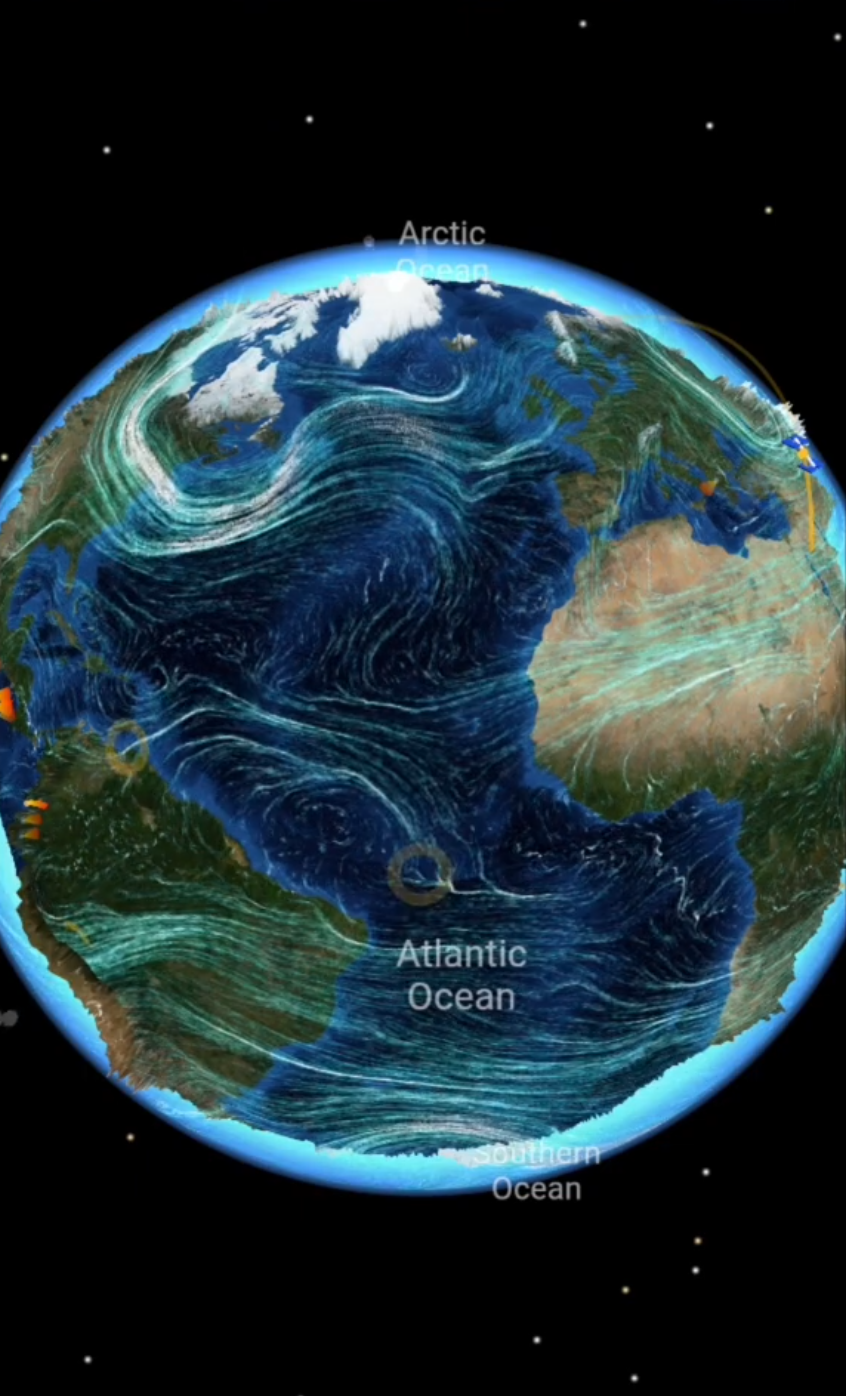
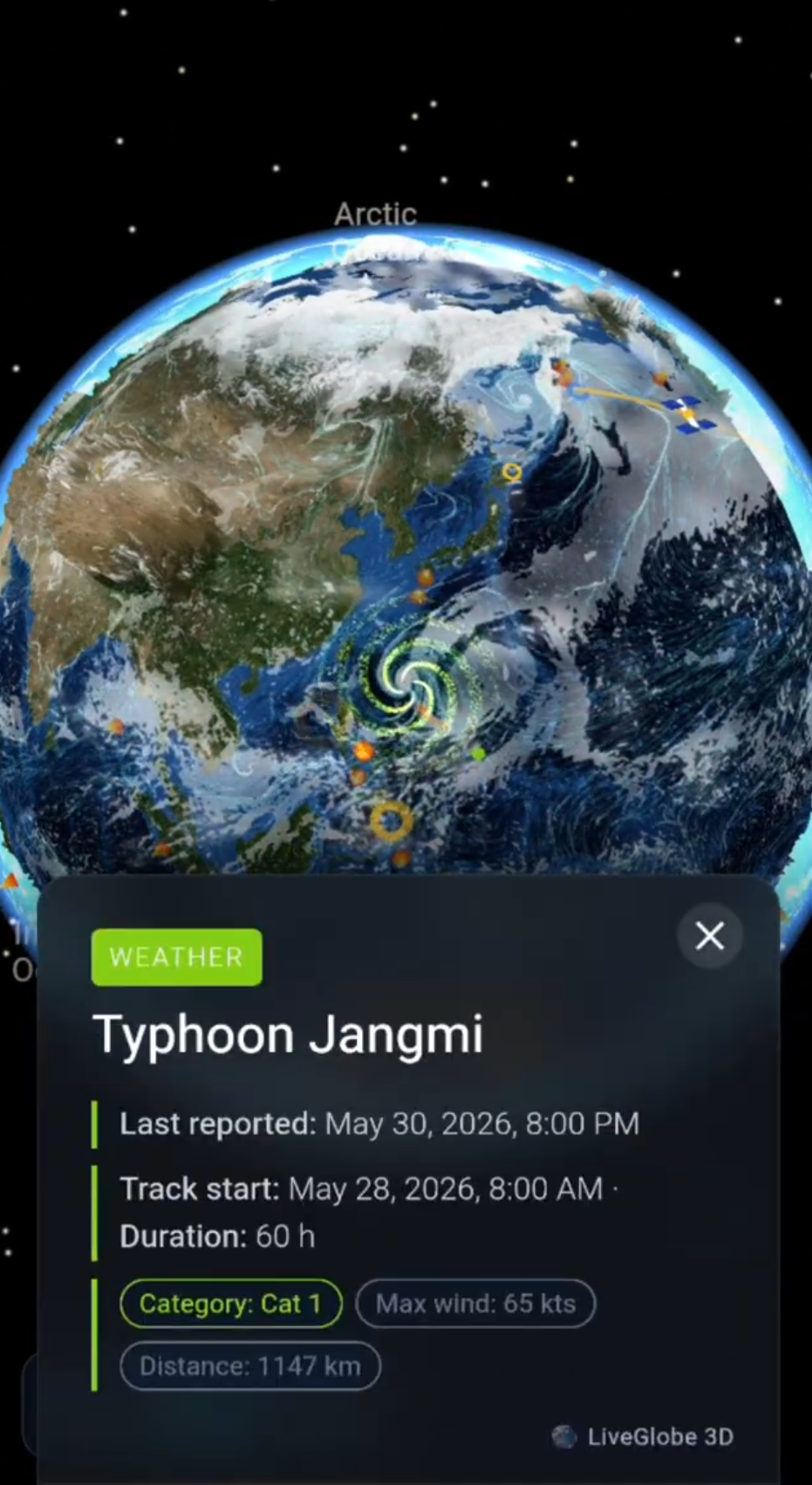
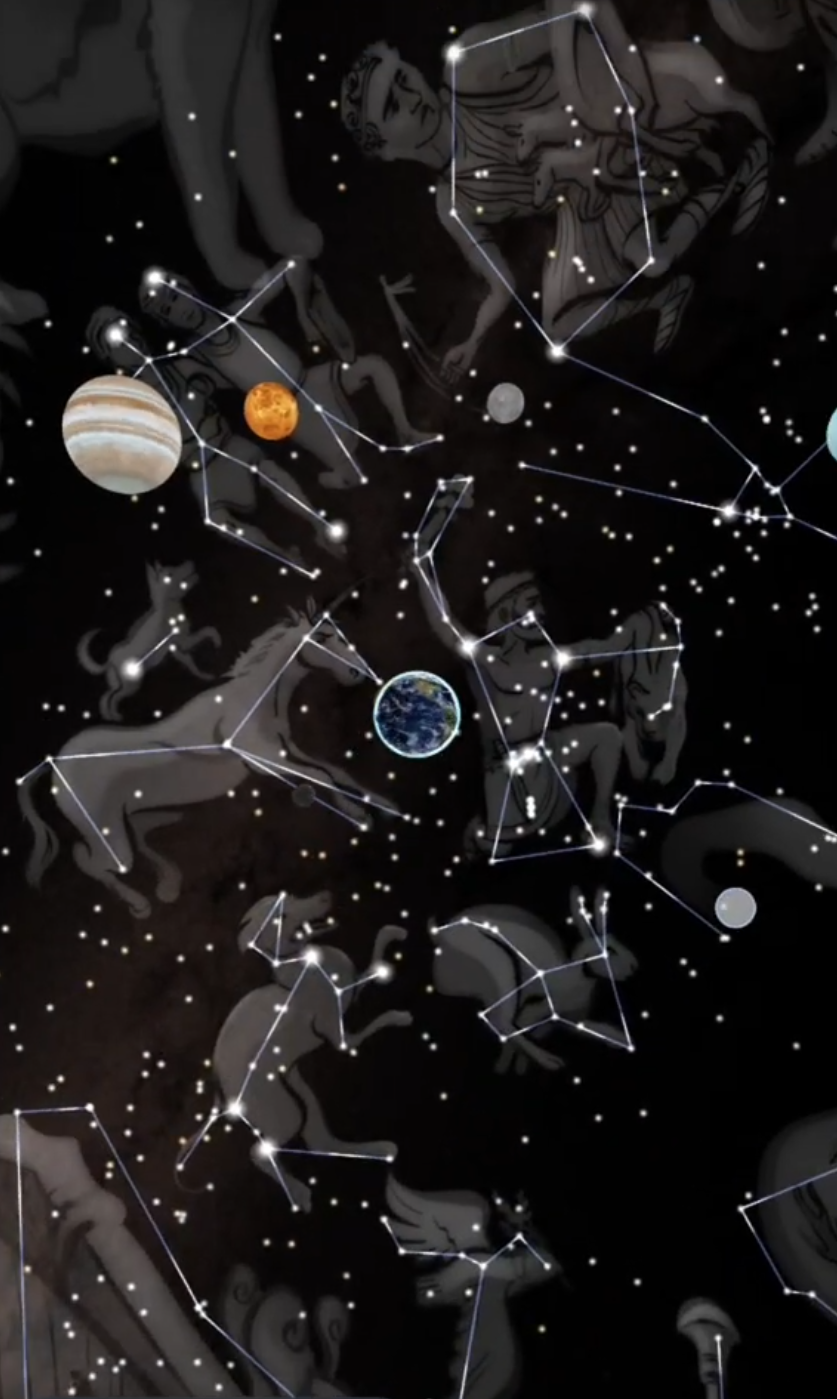
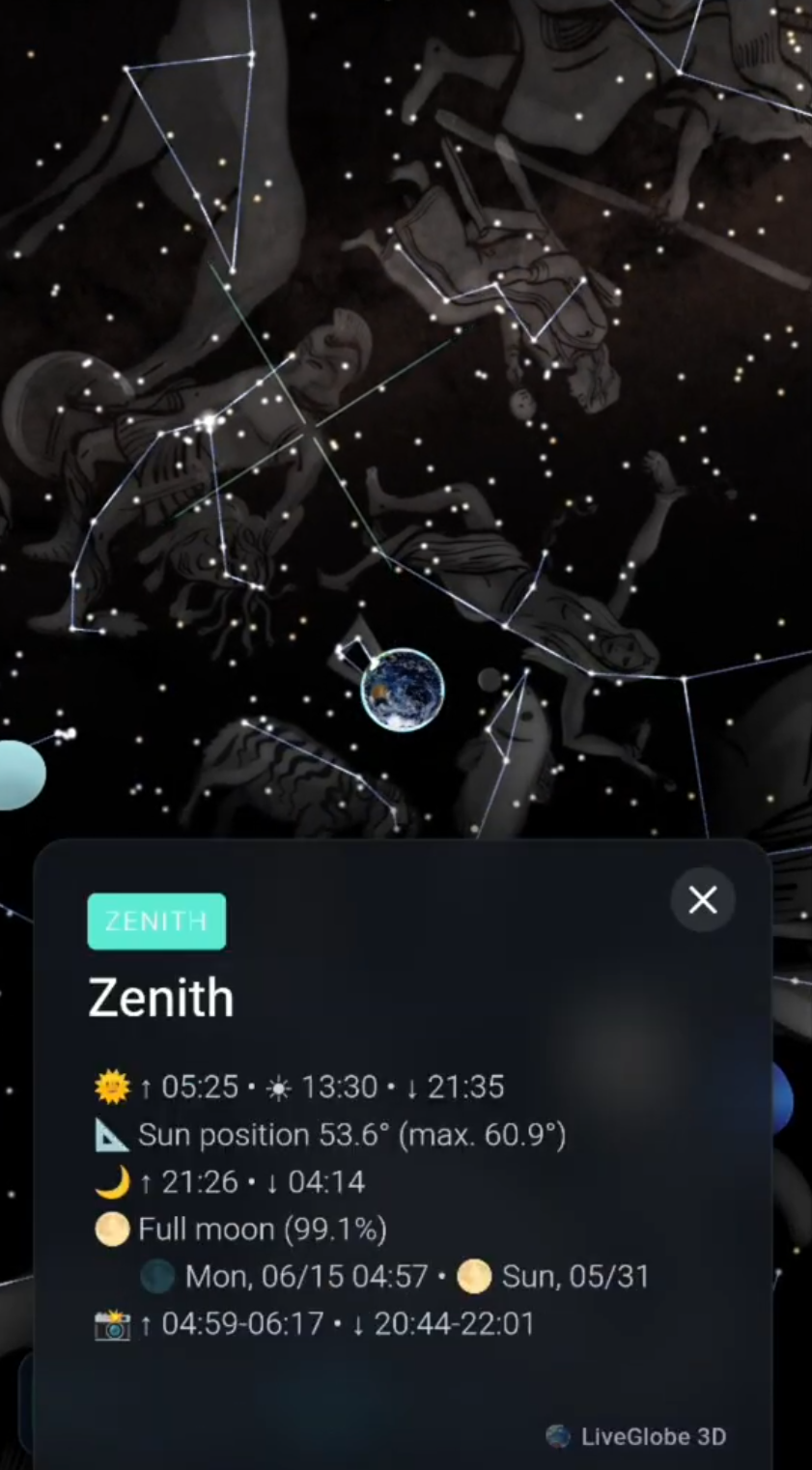
The rotating globe in LiveGlobe 3D offers a starting point for thinking spatially; you can switch between Earth and sky views and show the Moon using the space menu. For the reason behind tidal locking, though, the chair-and-ball exercise is more useful: these views do not amount to a simulation of the Moon’s axial spin or a view of its far side. Access to web views depends on your account and available options.
For a broader tour of the available sky features, see the stars, Moon and ISS overview. The answer to the original question is simpler: one spin keeps time with one orbit, with small apparent wobbles that let us see a little more over time.