How do ocean waves form—and why do they break near shore?
Learn how wind creates ocean waves, why swell reaches calm beaches, and how shallow water makes waves break, with a simple wave-period example.
Most waves you watch from a beach begin with wind transferring energy to the water surface. Waves can travel a long way across the ocean while the water mainly moves up and down and back and forth. Near shore, shallower water changes the waves: they slow down, grow steeper, and eventually break.
That explains two things that can seem surprising. A beach can have strong surf on a calm day. And a wave can have traveled a great distance without bringing the same water all the way with it.

How wind builds waves
Wind blowing over water creates small disturbances. As the surface becomes rougher, the wind can continue feeding energy into it. Small ripples can develop into a wind-driven sea. NOAA identifies three important controls:
- Wind strength: Strong wind can supply more energy when it blows faster than the wave crests move.
- Duration: A brief gust does not build the same sea as sustained wind.
- Fetch: The uninterrupted stretch of water over which the wind blows in roughly the same direction.
The same wind speed therefore does not automatically produce the same waves on a small sheltered lake and the open Atlantic. A long fetch alone is not enough either: strength and duration matter too.
Does the water travel with the crest?
Picture a floating cork. A nonbreaking wave lifts and lowers it, with some back-and-forth motion as well. The crest continues onward. The cork does not ride every passing crest to the next continent.
In deep water, water particles follow approximately circular paths, with motion decreasing with depth. This is a simplified picture: wind, currents, and wave drift can move a floating object too. Breaking surf also carries water forward.
The useful distinction is that a wave primarily carries energy, whereas an ocean current transports water in a particular direction.
Why are there waves when there is no wind?
The waves need not have formed where you see them. After leaving their generating area, they can travel great distances as swell. These wave trains often look smoother and more regular than the short, choppy waves being driven by local wind.
A distant ocean storm can therefore generate waves that later reach a beach with little wind of its own. Local wind waves and incoming swell can also overlap. Calm air at the beach does not guarantee calm surf.
Why do waves break near shore?
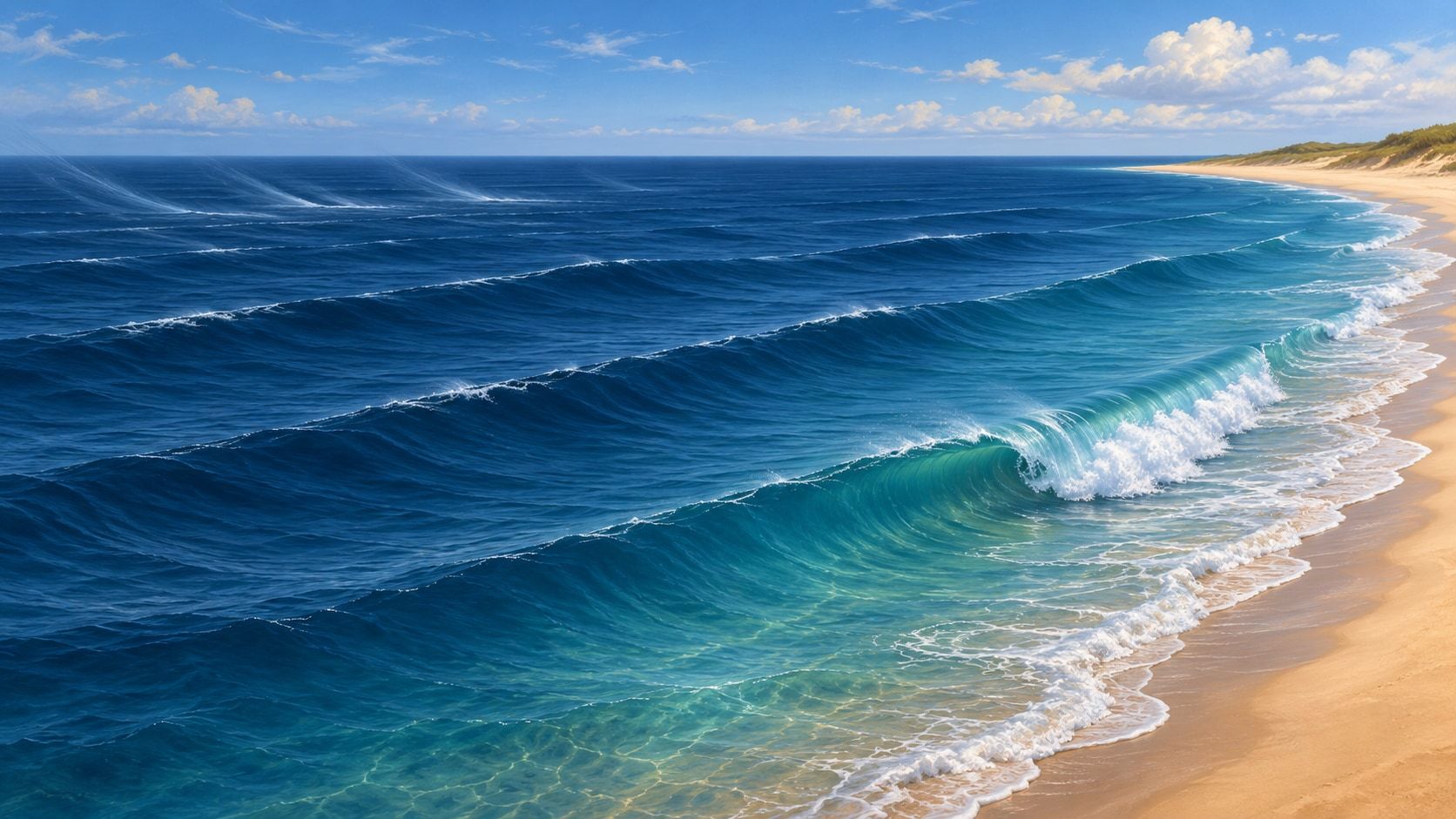
When the water becomes shallow enough relative to the wavelength, the seabed starts to influence wave motion. The wave slows down. The time between successive crests stays approximately the same, so the crests become more closely spaced. The wave can grow taller and steeper.
Eventually, a wave can become too steep to remain stable. Its crest spills or pitches forward and breaks into foam. The shape of the seabed and the slope of the coast help determine where and how that happens. Excessively steep waves can break offshore too; breaking is not exclusive to beaches.
The cover illustrates ordinary ocean waves and surf. A tsunami starts with sudden water displacement, rather than the everyday wind-driven process described here.
Three things to notice from shore
- Spacing: Wavelength is the distance between successive crests. A tall wave is not necessarily a long wave.
- Timing: Wave period is the time between crests passing a fixed point. If 60 seconds pass between the first and seventh crest, the six intervals average about ten seconds.
- Breaking zone: Look for the place where crests steepen and white water appears. This reveals the effect of shallower water.
Watch from a safe position on shore. Appearance alone cannot tell you whether swimming is safe; follow local beach advice and warning flags.
Put the ocean journey in perspective
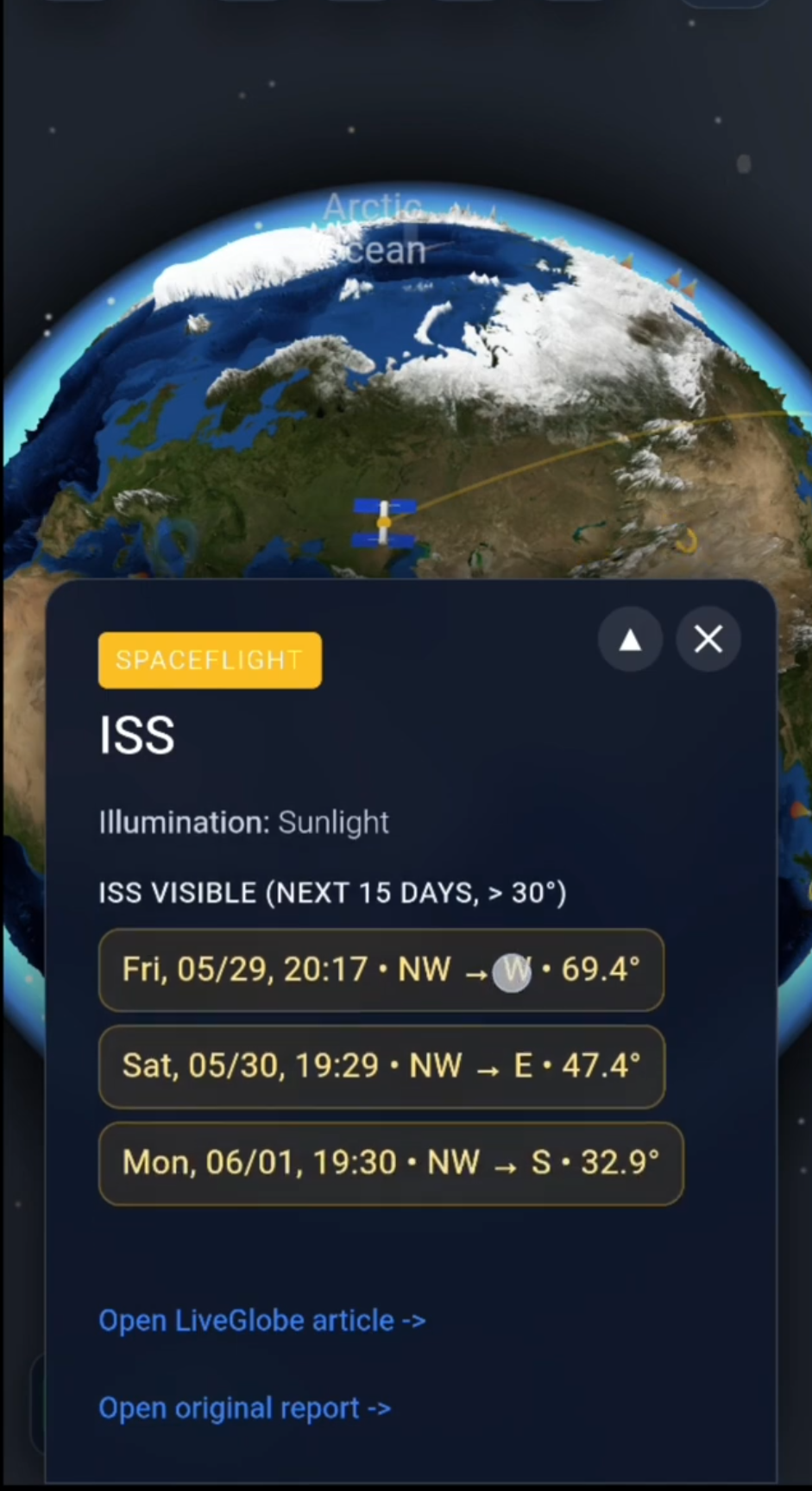
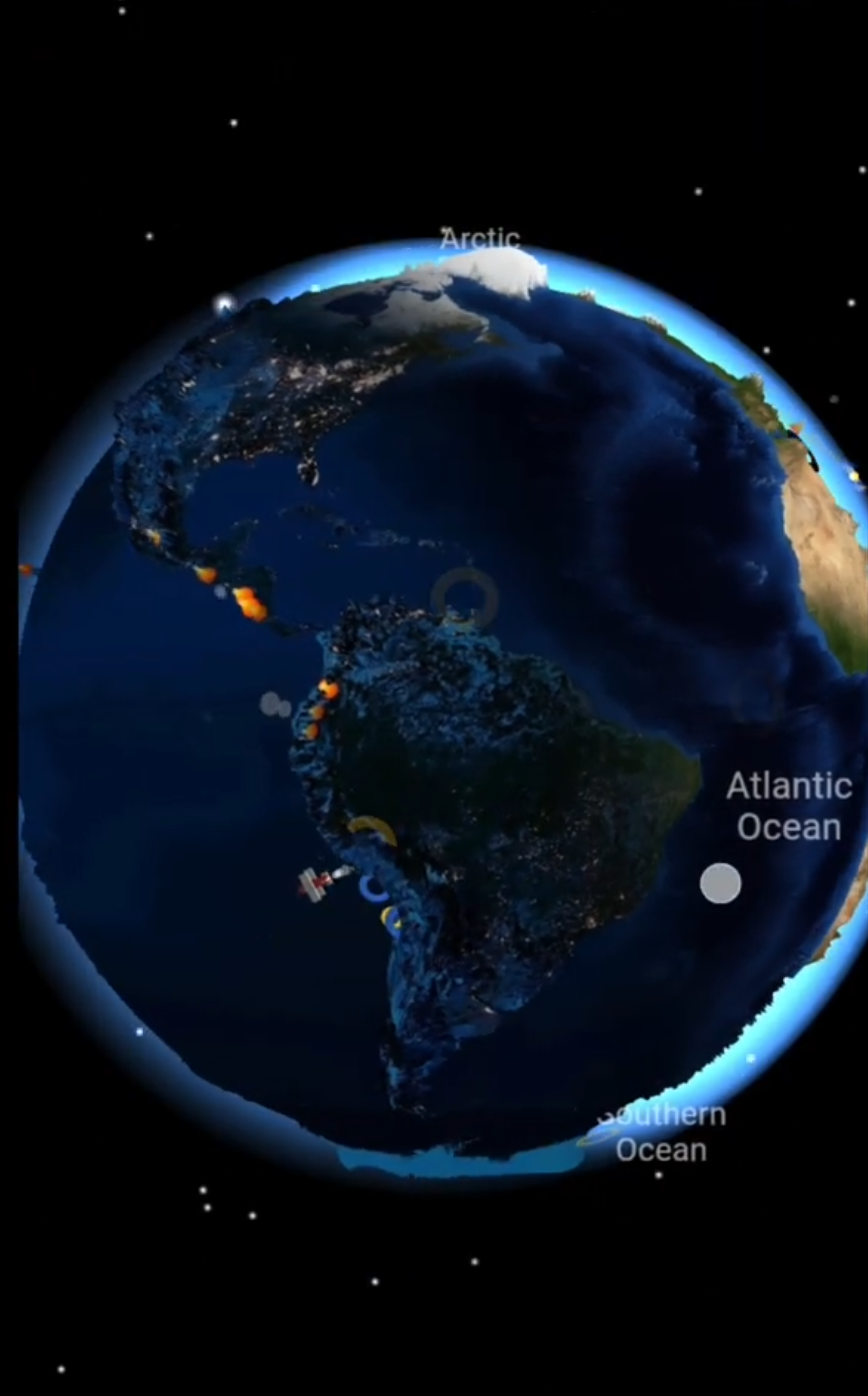
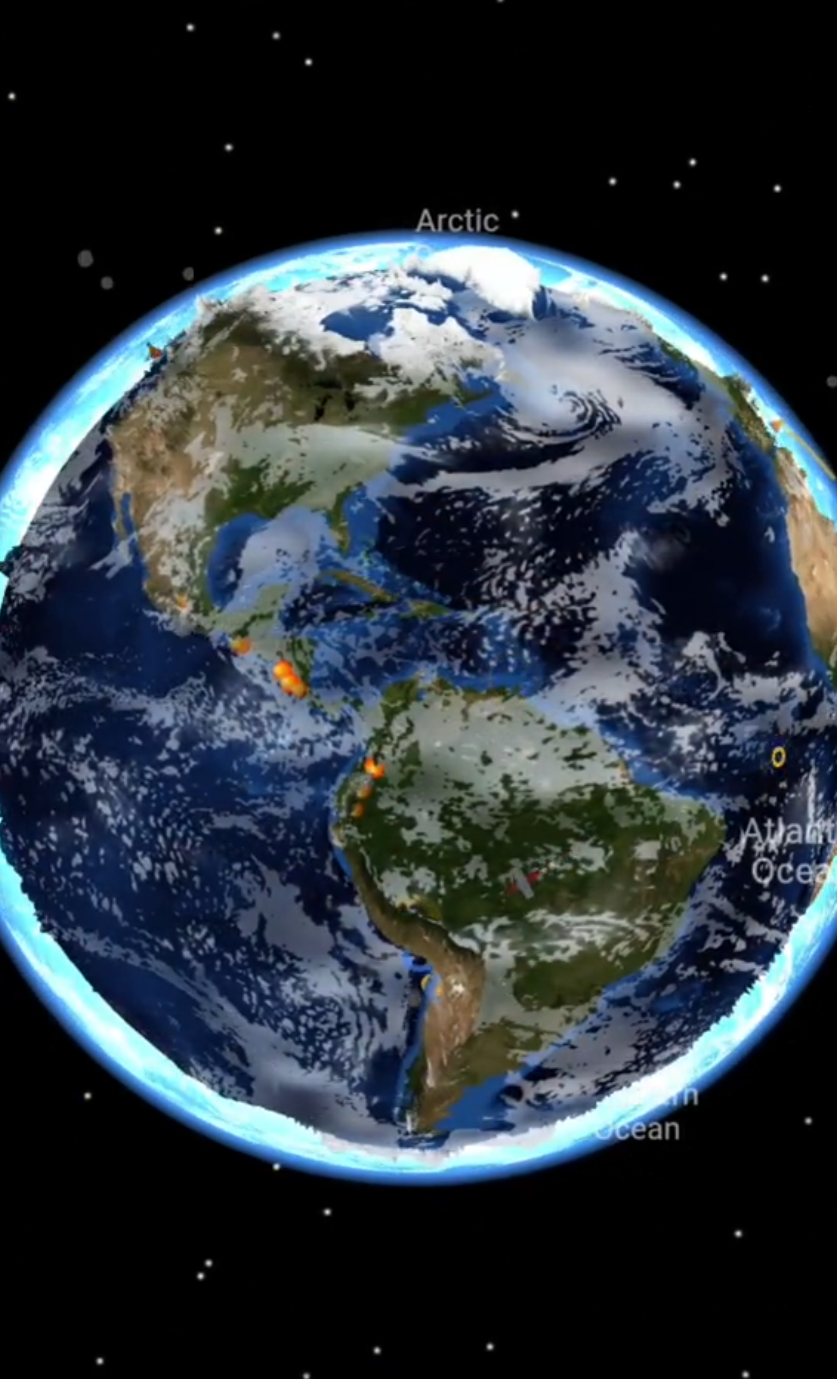
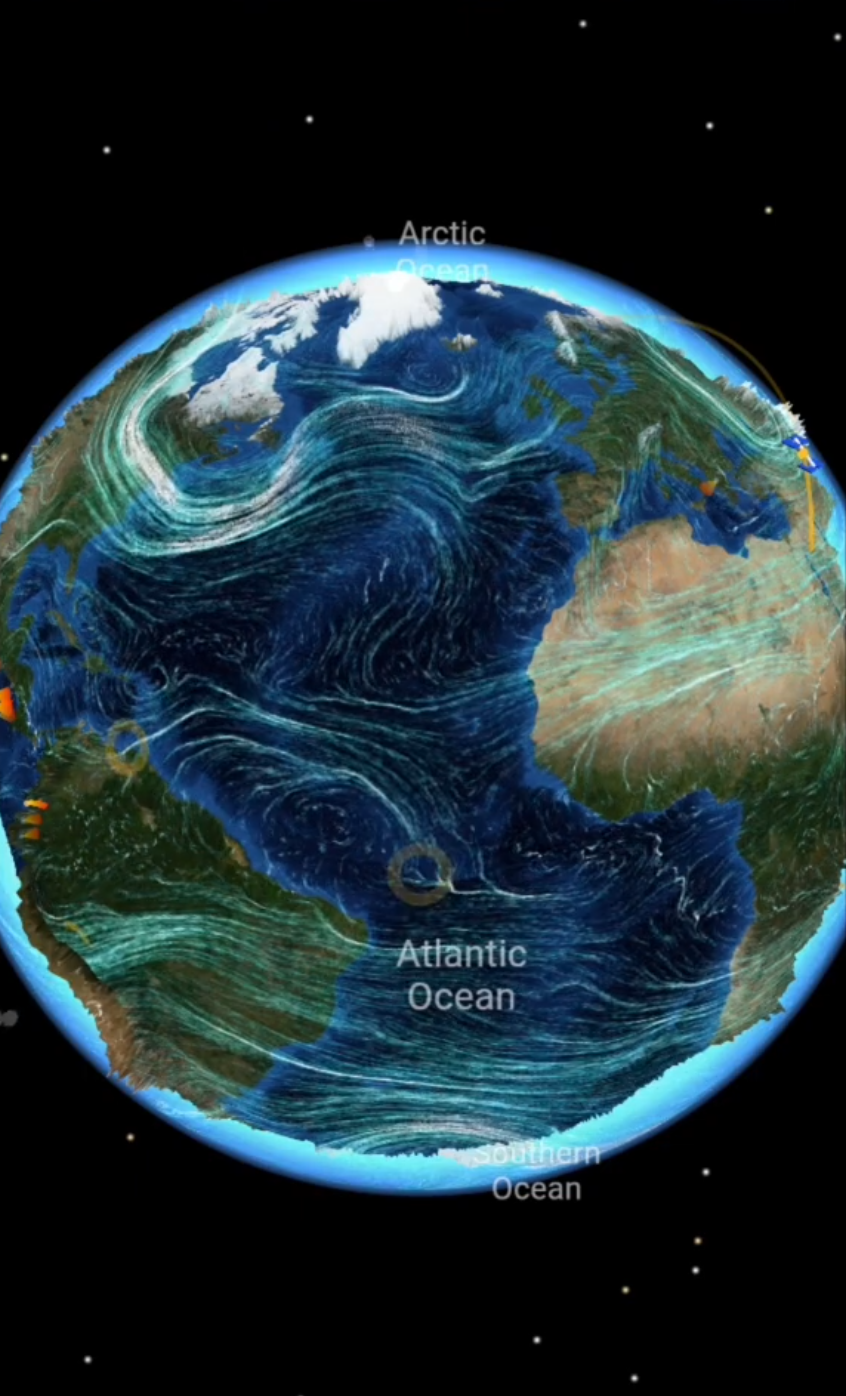
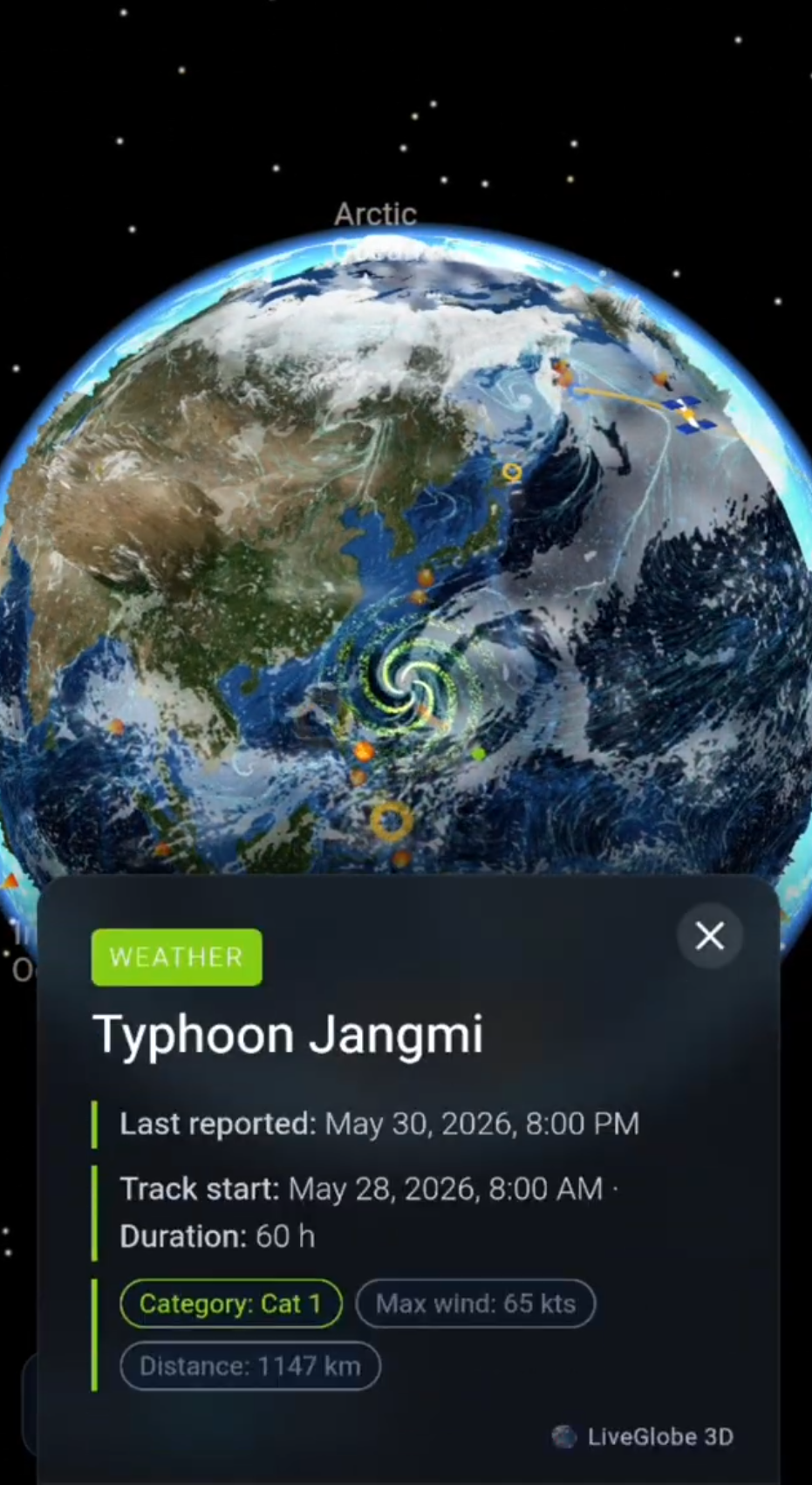
In LiveGlobe 3D, rotate and zoom the globe to compare the Atlantic and its coastlines. Think of an exposed west-facing coast and a more sheltered bay: how much open water lies in front of each, and from which direction could swell arrive? Web access may require a login.
The image shows the general globe view with Europe, Africa, and the Atlantic. It provides geographical context. For wave heights and local conditions, consult an appropriate marine forecast; the globe view is not a surf forecast.
Remember: Wind generates waves, swell carries their energy onward, and shallow coastal water makes them steeper until they break. Explore the geographical setting with LiveGlobe 3D.
Further reading
Short clips
The app in motion: short, genuine glimpses straight from use.
At a glance
How the app feels on your phone.