Sea breeze and land breeze: why coastal winds can change direction
Why does wind often blow inland by day and offshore at night? Understand sea and land breezes, the return flow, and a simple coastal observation exercise.
The beach warms up while the water stays relatively cool. A little later, a fresh breeze arrives from the sea. A sea breeze develops when land and water warm at different rates, setting up a local circulation of air. At night, the surface flow can reverse: a land breeze then blows from land toward the water.
The names describe the wind near the surface. The complete circulation also includes a return flow higher up. Keeping both in mind gives a fuller explanation than “warm air rises” on its own.
Why land warms faster than water
On a sunny day, the land surface usually warms faster than a neighboring large body of water. Heating in the ground is concentrated in a thin surface layer. In water, sunlight penetrates deeper and mixing spreads heat through a larger volume. Water can also store a great deal of heat, so its temperature often changes less between day and night.
Warm ground heats the air above it. The warmer air column expands, and the redistribution of air creates pressure differences between land and sea. Those pressure differences drive the horizontal flow. The beach does not develop an empty space that simply “sucks in” air (NOAA: The Sea Breeze).
The daytime sea breeze: inland below, back out above
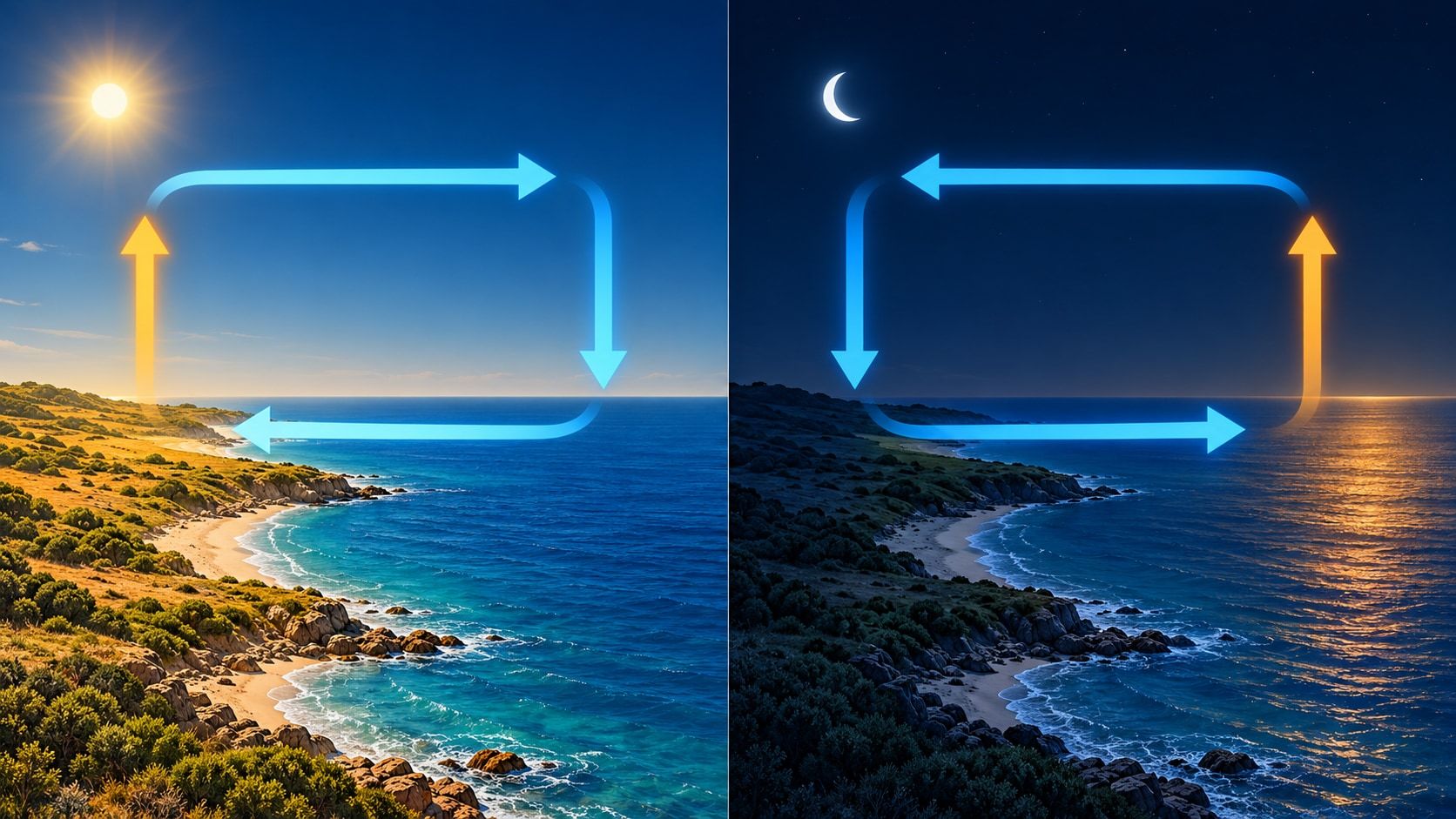
A simplified sea-breeze circulation has four parts:
- Air rises over the more strongly heated land.
- Cooler marine air moves inland near the surface. This part is the sea breeze.
- A return flow higher up carries air back toward the water.
- Air sinks over the water, completing the circulation.
The temperature contrast and circulation take time to develop. A sea breeze does not switch on automatically at sunrise. Nor is the loop a rigid tube of air: real air mixes, and the background weather flow acts at the same time.
This makes a sea breeze a local, thermally driven wind. An onshore wind can also result from a larger weather system, however. Its direction alone does not establish that a sea-breeze circulation is present.
The nighttime land breeze: a possible reversal
After sunset, the land surface often loses heat faster than the sea. If the air over land becomes cooler than the air over the water, the surface flow can reverse. Air now moves from land toward the sea: a land breeze. In the idealized circulation, air rises over the relatively warmer water and returns toward land aloft.
Land breezes are often weaker and shallower than sea breezes. Stable nighttime conditions inhibit vigorous vertical movement, while terrain, vegetation, and buildings further obstruct the surface flow. NOAA describes these differences in its explanation of land breezes.
| Feature | Sea breeze | Land breeze |
|---|---|---|
| Typical timing | Daytime, when land is warmer | Nighttime, when land has cooled more |
| Surface flow | Water → land | Land → water |
| Rising air in the simple model | Over land | Over water |
| Common character | Stronger and deeper | Weaker and shallower |
This is a possible daily cycle under suitable conditions, rather than a timetable that every coast follows.
Why the breeze differs from one day to the next
The local circulation combines with the background wind. A strong offshore flow can hold back the sea breeze or stop it developing. A supporting flow can carry it farther inland. Coastline shape and terrain also affect its progress.
The advancing edge of the cooler marine air is the sea-breeze front. Warm air can be lifted along this boundary. With suitable moisture and atmospheric stability, cumulus clouds or thunderstorms may develop; a sea breeze does not automatically bring rain. For the next step in that process, see how clouds form.
Large lakes can produce a similar circulation. An ocean is not essential: the important ingredients are an effective land–water temperature contrast and favorable weather conditions.
A sea breeze is not a fixed compass direction
Imagine a straight coastline running north–south, with water to the west and land to the east. In the simple daytime model, the sea breeze moves eastward and comes from the west. At night, a land breeze could move westward and come from the east.
At a coast with water to the east, those directions would be reversed. “Sea” and “land” describe the source relative to the shore, not a universal westerly or easterly wind. Meteorological wind directions name where the air comes from; see understanding wind direction for more.
Explore a coastline yourself
Start a simple observation note with three questions: Where is the water? Where is the wind coming from? How do its direction and the feel of the air change during the day? From the same open spot in the morning and afternoon, record the time, cloud cover, and wind origin. One observation is a clue; the wider weather situation helps you decide whether a breeze is a plausible explanation.
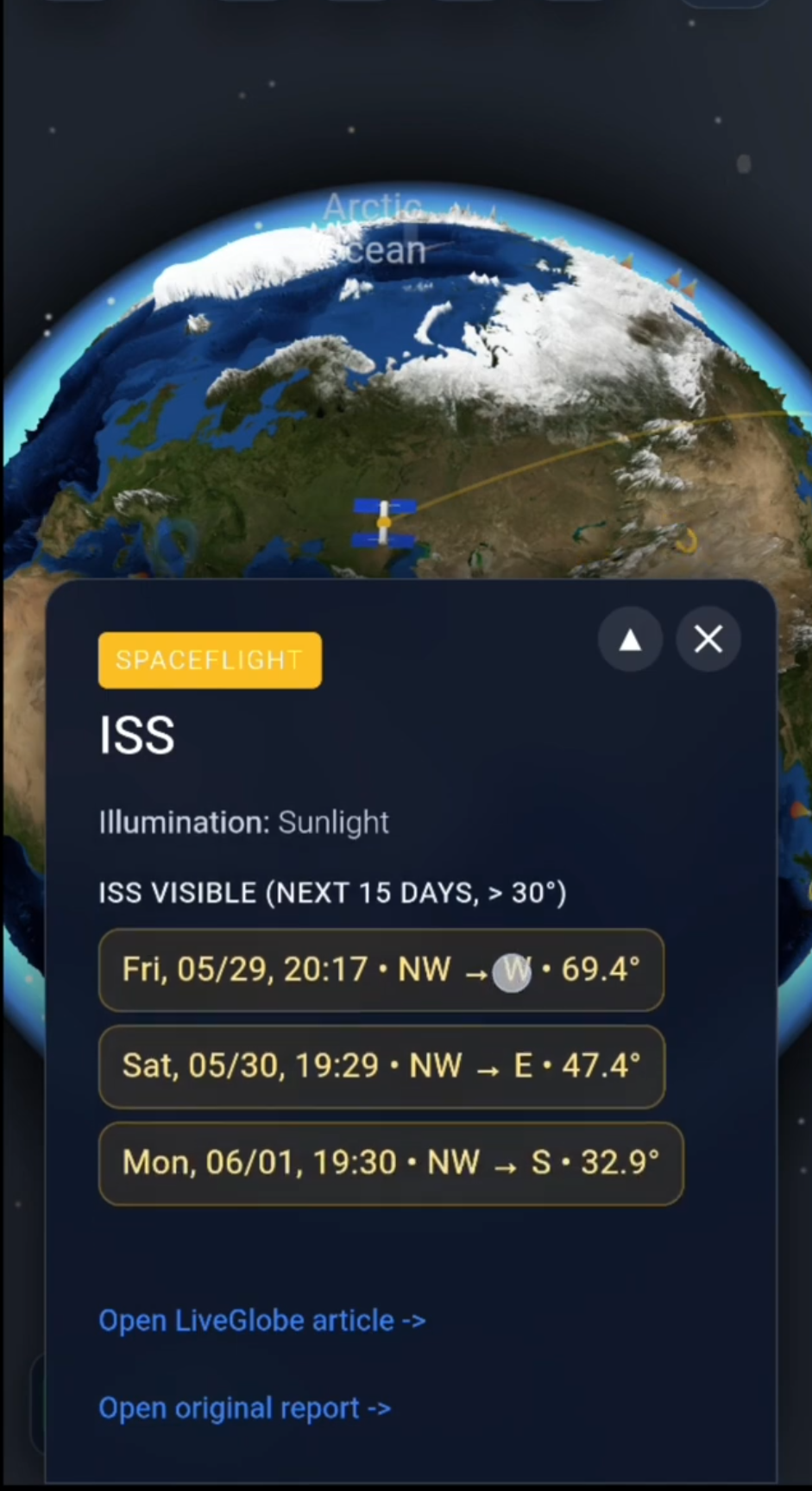
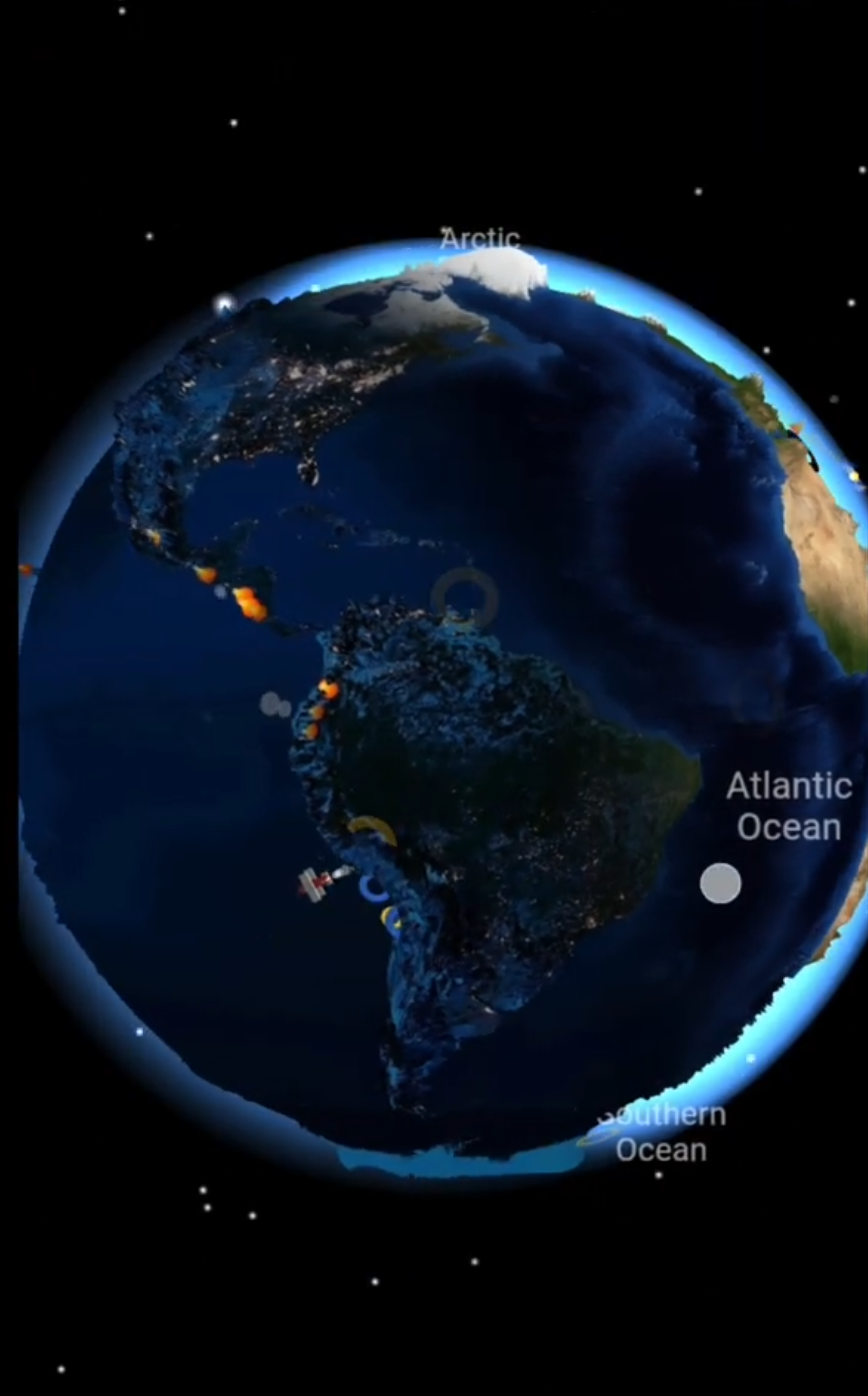
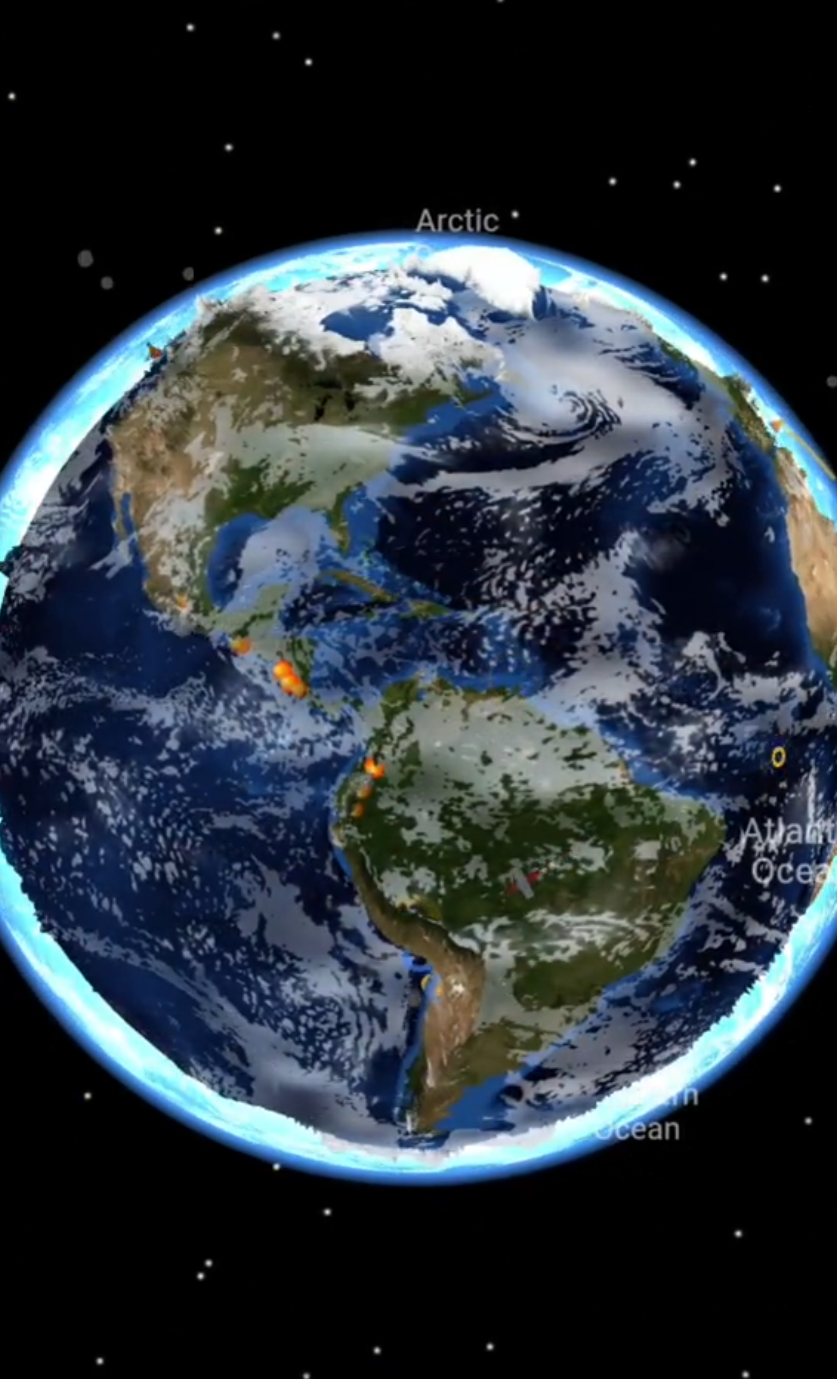
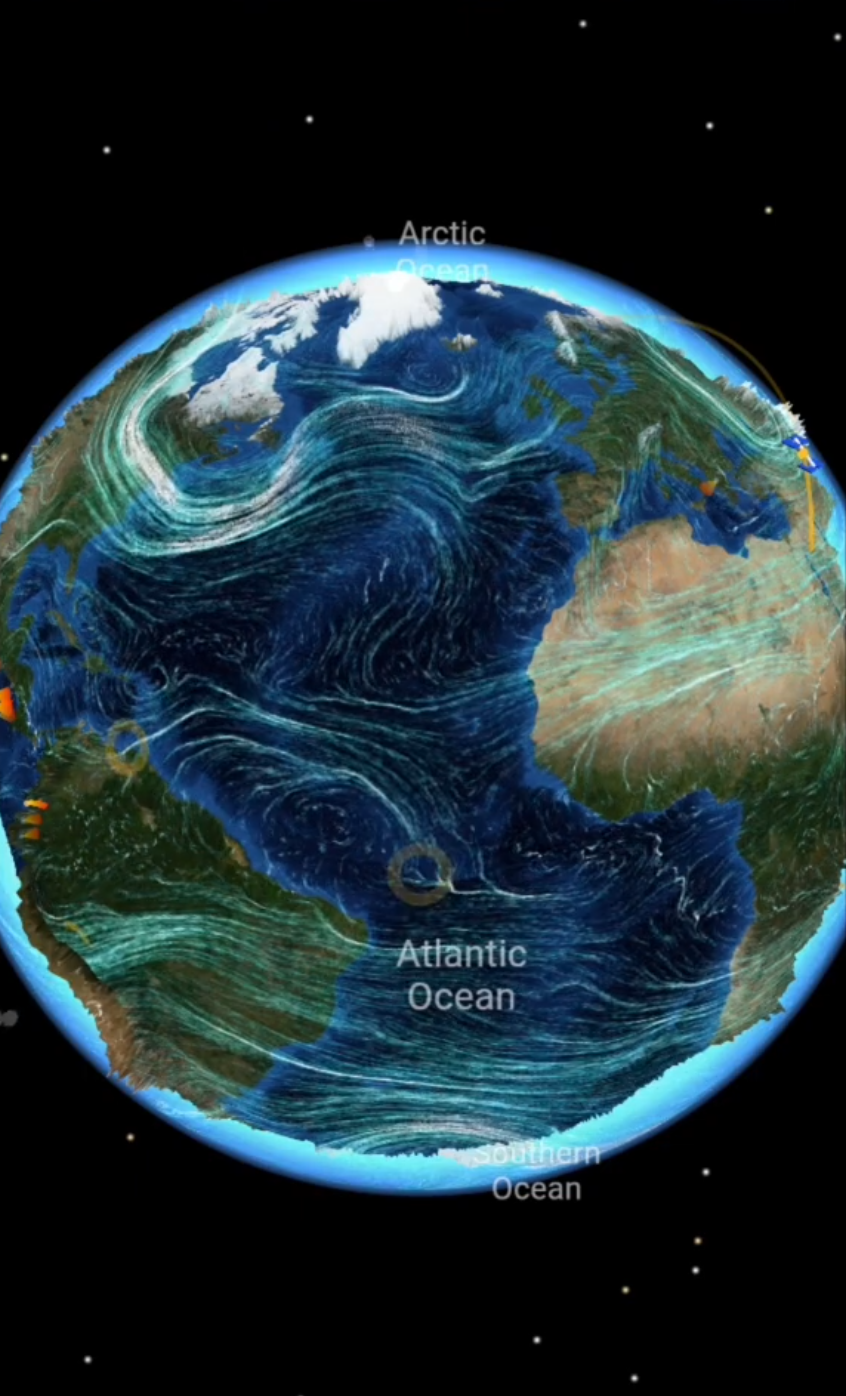
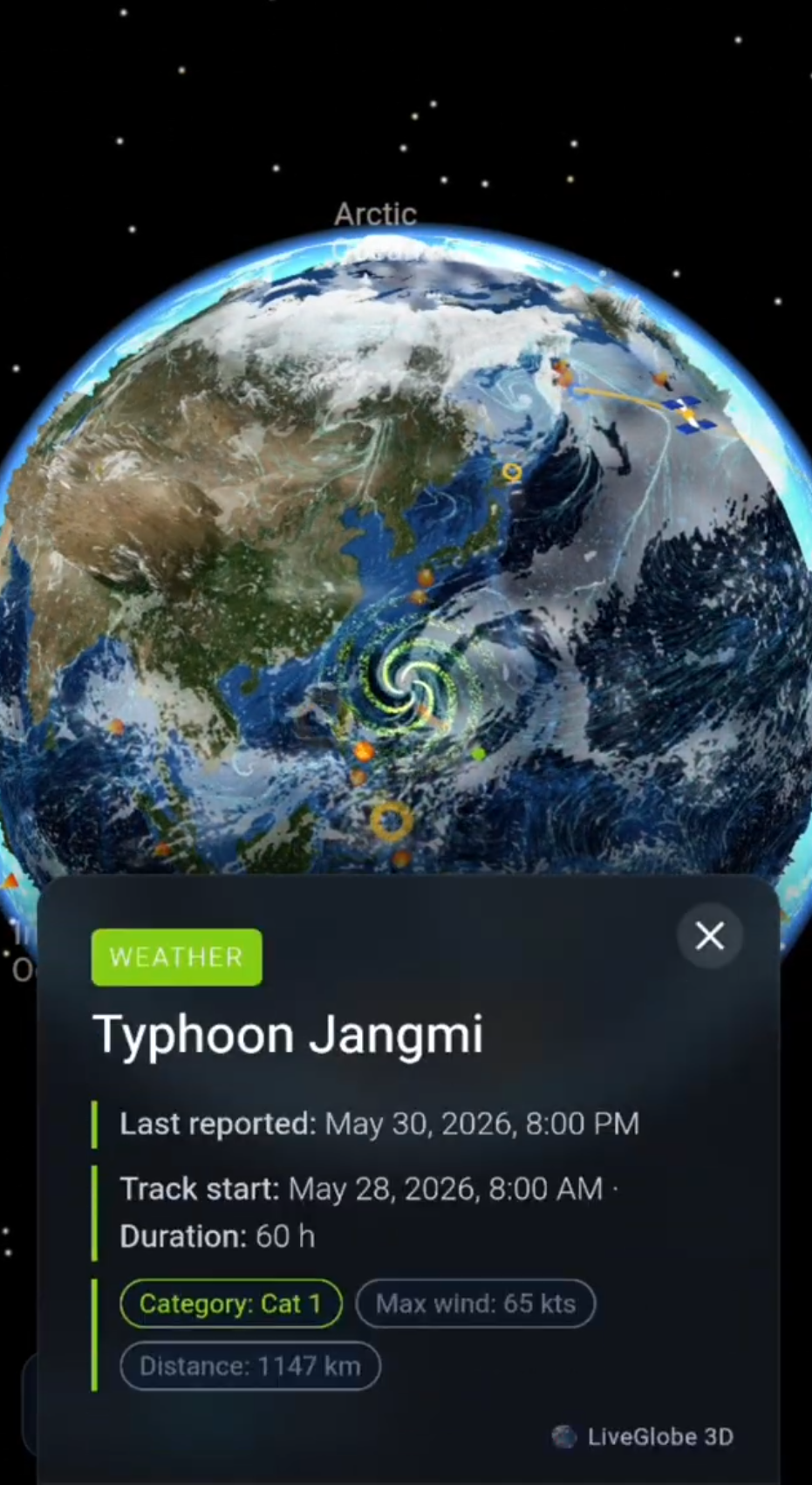
In LiveGlobe 3D, you can search for a coastal region, rotate and zoom the globe, and compare the water, land, and shoreline in their geographical setting. The web app has a sign-in flow; place search depends on external search data, and the globe requires WebGL. This exercise helps with orientation; identifying a local breeze requires local weather observations.
Then sketch the same shore twice: daytime surface flow from water to land, and a possible nighttime reversal, each with a return flow above. Uneven heating drives the circulation; the background weather helps determine its actual shape. Try the exercise at a familiar coast with LiveGlobe 3D.
Short clips
The app in motion: short, genuine glimpses straight from use.
At a glance
How the app feels on your phone.