Why is Venus called the morning star and evening star?
Why is Venus the morning and evening star? Understand its inner orbit, east and west viewing directions, brightness and phases, with a simple paper model.
The morning star and evening star are two names for the same planet: Venus. When its position is favorable, we see it in the east before sunrise or in the west after sunset. The change happens because Venus orbits the Sun inside Earth’s orbit. It is a planet reflecting sunlight, not a star producing light like the Sun.
A brilliant point in twilight may therefore be Venus. To identify it reliably, check the date, time, location and direction as well. The reason for its two names stays the same whether or not it is visible from your location today.
Why does Venus stay near the Sun in our sky?
Picture the solar system from above. Earth follows an outer orbit, while Venus travels around the Sun on a smaller, inner orbit. Looking toward Venus from Earth consequently means looking roughly toward the Sun. Venus can appear to either side of it, but not on the opposite side of the sky in the way an outer planet can at opposition.
The apparent separation from the Sun is called elongation. This is an angle in the sky, not the distance between Venus and the Sun in miles or kilometers. Venus can be far away in space while still appearing close to the Sun along our line of sight.
NASA explains the morning and evening appearances through this changing perspective on the inner orbit. When the apparent separation is too small, solar glare hides Venus. It is not normally an object you can follow throughout the night.
Evening in the west, morning in the east
The important distinction is which side of the Sun Venus occupies in the sky:
| Position relative to the Sun | Possible viewing window | Familiar name |
|---|---|---|
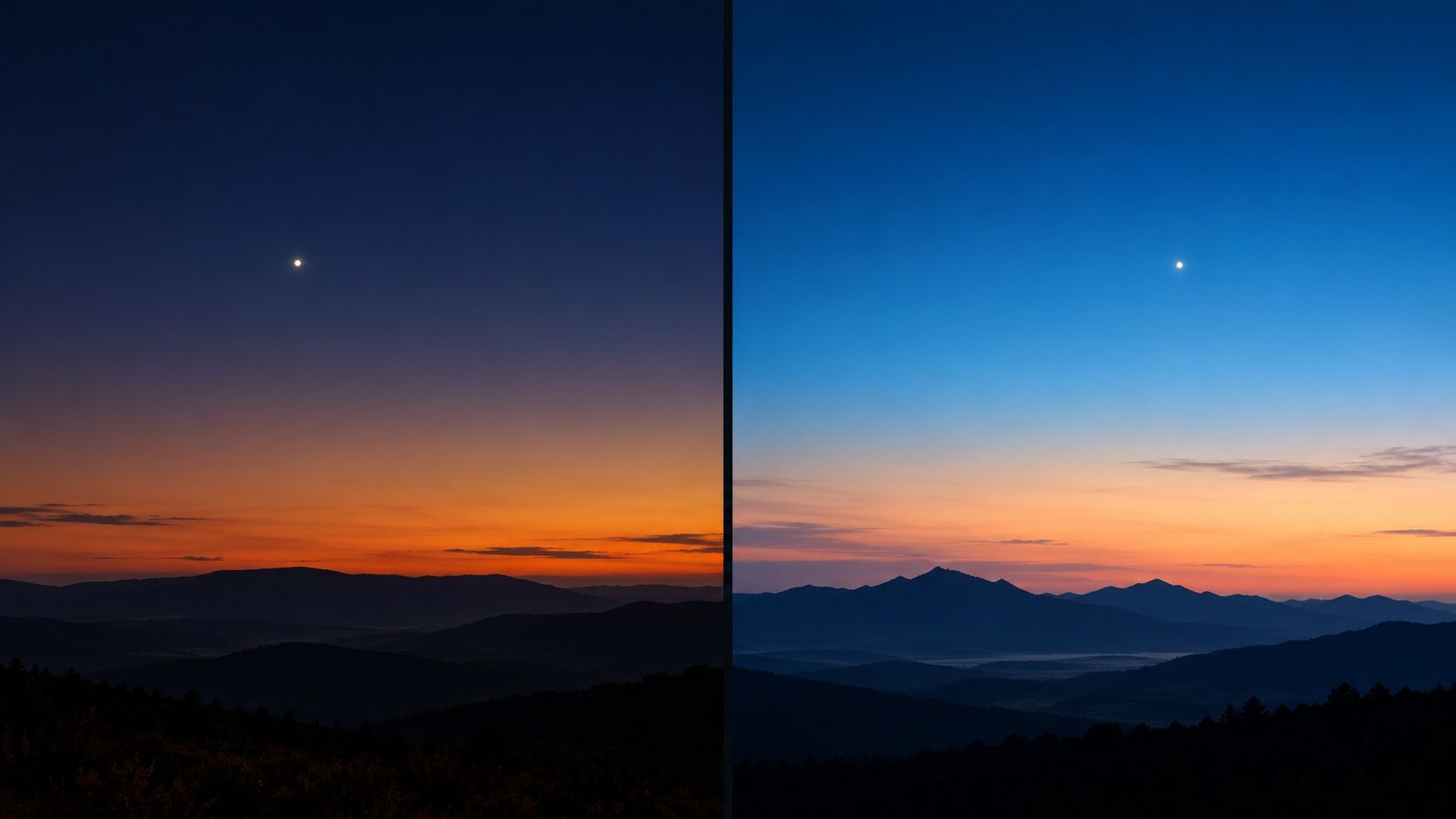
| East of the Sun | Above the western horizon after sunset | Evening star |
| West of the Sun | Above the eastern horizon before sunrise | Morning star |
| Very small angular separation | Difficult or impossible to pick out in solar glare | Poor twilight visibility |
“East of the Sun” does not mean looking east in the evening. Venus then follows the Sun in the sky’s apparent daily motion: the Sun has set, but Venus remains above the western horizon. In the morning configuration, Venus rises ahead of the Sun.
These names describe different parts of an appearance cycle, not a daily switch between morning and evening. Earth and Venus both move around the Sun. A similar relative arrangement returns roughly every 584 days. That is the overall repeat cycle, not the length of one uninterrupted morning or evening appearance.
Why is Venus so bright?
Its thick cloud cover reflects much of the sunlight falling on it. ESA Kids explains this connection between clouds and brilliance. Venus is the brightest planet in our sky; among the familiar celestial objects, only the Sun and Moon outshine it.
Its apparent brightness also depends on its distance from Earth and how much of its sunlit side faces us. Being closer and showing a more fully illuminated disk are separate factors, rather than interchangeable explanations.
To the unaided eye, Venus looks like a brilliant point. Its often steadier light can be useful when comparing it with stars, but that alone does not establish its identity. Our guide to why stars twinkle explains why even a planet can shimmer near the horizon.
Does Venus have phases like the Moon?
Yes. The Sun lights half of Venus, while our changing viewpoint reveals different portions of that illuminated half. A telescope can show a half-lit disk or a crescent. Both NASA and ESA describe these phases.
The crescent is not Earth’s shadow falling on Venus. It comes from our viewing angle. Normally, the unaided eye does not resolve the shape: the twilight point is not a visibly tiny crescent Moon. Phases describe the illuminated shape, whereas morning star and evening star describe the viewing period.
Try a simple paper model
You can explore the geometry without observing equipment:
- Draw the Sun in the middle of a sheet, with two circles around it. Label the inner circle Venus and the outer circle Earth.
- Mark a fixed Earth position on the outer circle and draw a line from it to the Sun.
- Move a coin representing Venus around the inner circle. Imagine a sightline from the Earth mark to the coin each time.
- Compare that sightline with the direction of the Sun. Venus appears on one side, then the other, but never opposite the Sun.
This flat, not-to-scale model explains the limited separation. Use the table’s sky orientation to connect it with morning and evening. Earth is held still only to make comparison easier; in reality it moves too.
Plan an observation that tells you something
First check a current sky guide for your location and date. During an evening appearance, choose an open western horizon after sunset. During a morning appearance, look toward an open eastern horizon before sunrise. Angular separation, season and local obstructions all affect the available window.
On several suitable dates, note the time, direction, approximate height above the horizon and cloud cover. This separates a predicted position from a successful sighting. Start with naked-eye viewing; do not search near the Sun using binoculars or a telescope.
Common questions
Are the morning star and evening star different planets?
Not when these familiar names refer to Venus. They describe the same planet in different configurations. Other bright planets can appear in twilight too, so a nickname alone cannot identify a point of light.
Can I see Venus every evening?
No. There are morning appearances, evening appearances and unfavorable periods near the Sun. Weather and the local horizon also influence visibility.
Does the evening star mark due west?
No. “In the west” means a region of the sky, not a precise compass bearing. Venus is not a substitute for checking direction.
Explore the sky with LiveGlobe
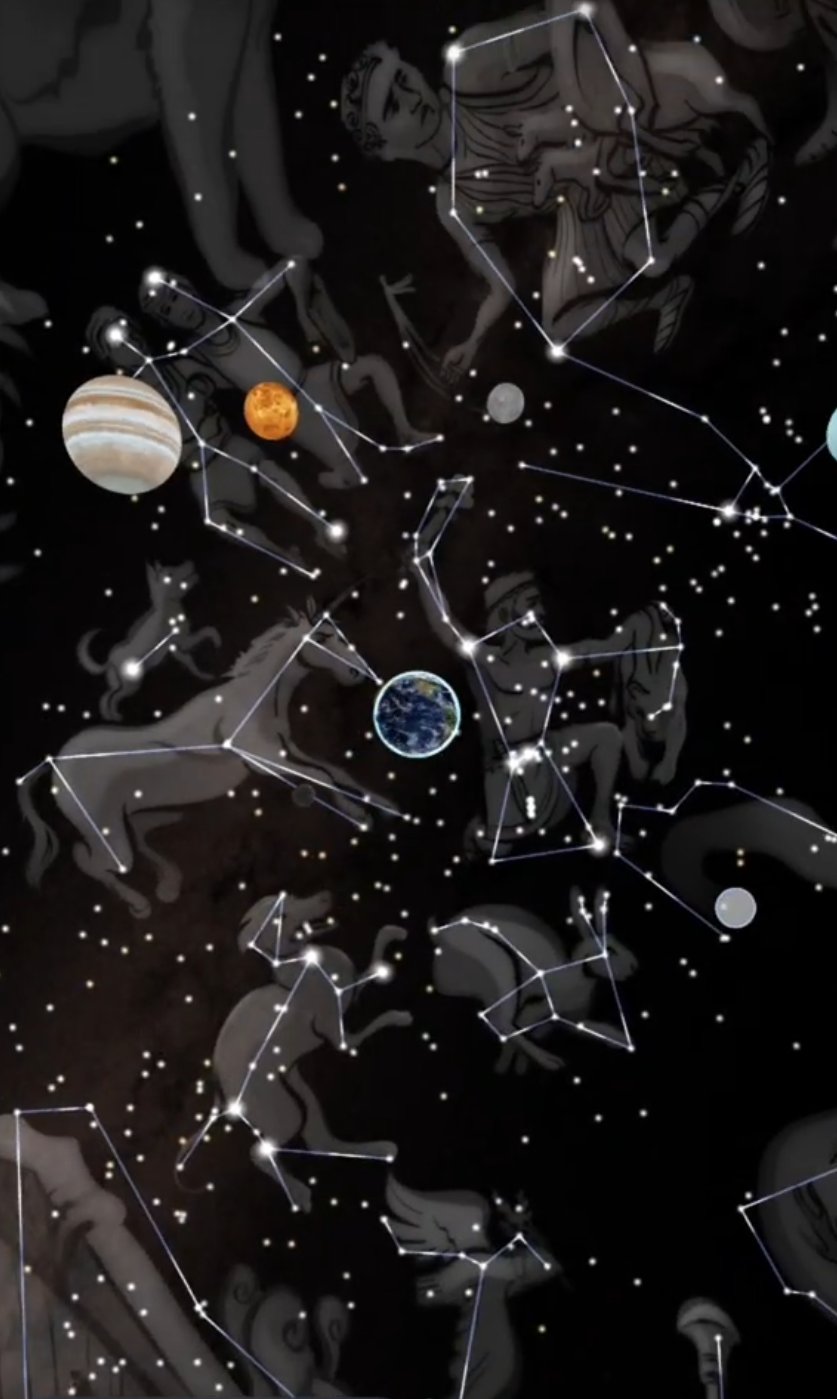
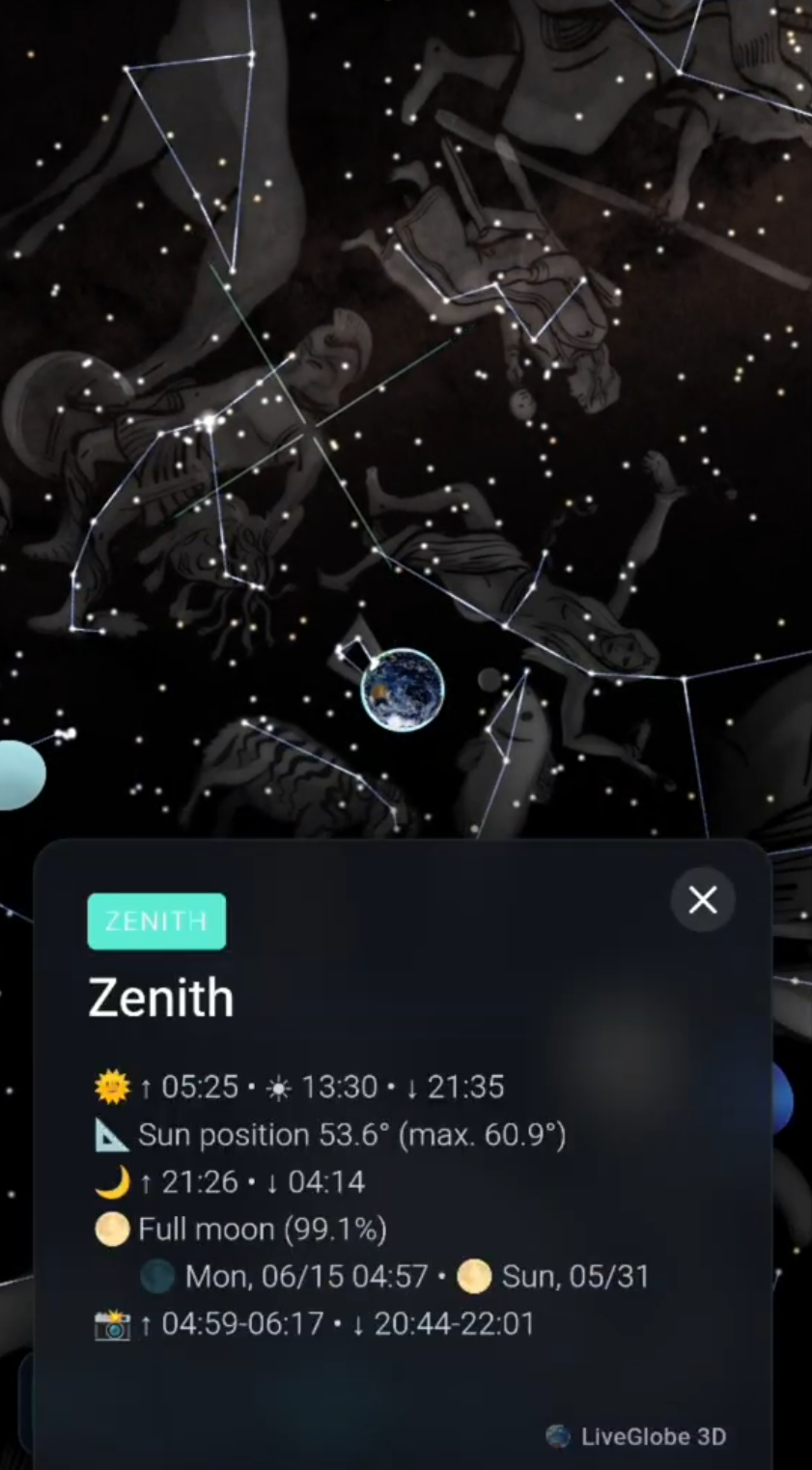
In LiveGlobe 3D, you can switch from Earth to Sky and enable planets in the space menu. Planet data depends on the backend, and the web access flow includes signing in. Use the sky view for spatial context, alongside a current local sky guide for a specific observation time.
Short clips
The app in motion: short, genuine glimpses straight from use.
At a glance
How the app feels on your phone.