What causes shooting stars? Meteoroids, meteors and meteorites explained
Discover what causes shooting stars, how meteoroids, meteors and meteorites differ, why meteor showers return, and how to plan a night of watching.
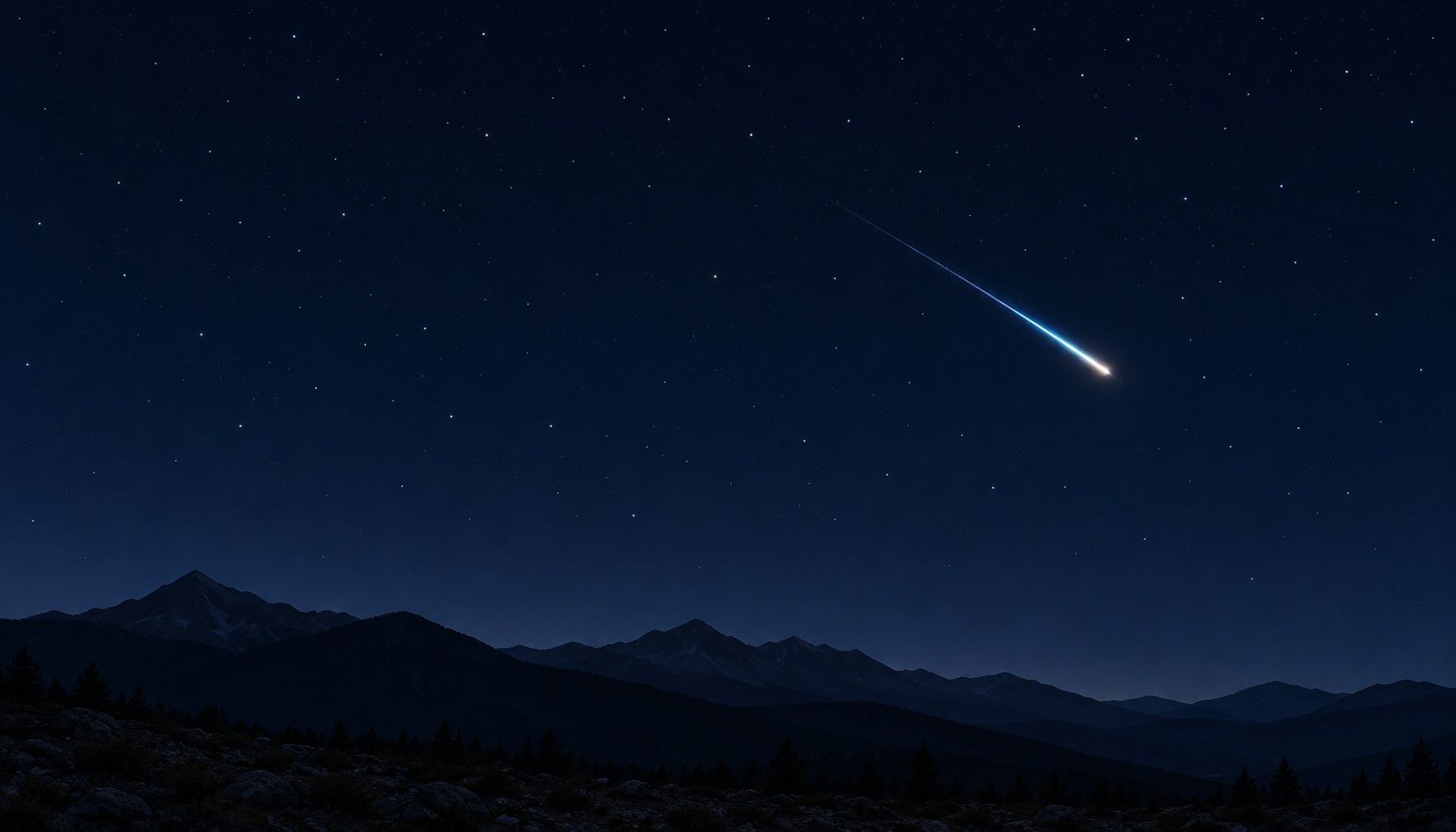
A streak flashes across the night sky, then vanishes. Is a star falling? No. A shooting star is the light produced when a small particle from space enters Earth’s atmosphere at high speed. A grain-sized fragment can be enough. The visible streak is called a meteor; no actual star is involved.
Three terms—and a look at Earth’s motion—explain why these flashes sometimes appear alone and sometimes arrive in greater numbers.
Meteoroid, meteor or meteorite?
The names describe different things or stages in a possible journey. NASA distinguishes them by their location and what happens to them:
| Term | Meaning | Simple example |
|---|---|---|
| Meteoroid | A small natural particle or rocky object in space | A dust grain released by a comet |
| Meteor | The light phenomenon caused by fast atmospheric entry | The brief streak you call a shooting star |
| Meteorite | Material that survives the passage and reaches the ground | A piece of extraterrestrial rock found on Earth |
That last stage does not always happen. The small particles responsible for ordinary meteor showers usually disintegrate in the atmosphere. A night full of shooting stars does not leave a field full of meteorites.
How can something so small make a bright streak?
Speed is the key. The American Meteor Society gives a typical atmospheric entry range of about 11–72 kilometers per second. Collisions with the air convert the particle’s motion into other forms of energy: material heats intensely, is stripped away and can vaporize. This interaction produces the brief luminous trail we see from below. ESA’s introduction to meteors describes the rapid heating, in German.
For a worked example, choose a hypothetical speed of 30 km/s. Multiplying by 3,600 gives 108,000 km/h. This is an illustrative value within the published range, not a measurement of the next meteor you see.
Most visible meteor activity takes place roughly 80–120 kilometers, or 50–75 miles, above the ground, according to the AMS. That is a broad range rather than a fixed glowing layer: speed and particle properties affect where a meteor becomes visible and fades. A shooting star is neither a distant star dropping toward Earth nor a rock burning just above nearby treetops.
Why do meteor showers return around the same dates?
Comets leave dust and small fragments along their orbits. A few asteroids also supply debris streams. When Earth crosses one of these streams on its journey around the Sun, more particles enter our atmosphere. Because Earth returns to similar parts of its orbit each year, many showers recur around the same season (NASA).
The Perseids are a familiar example: their particles come from comet Swift-Tuttle. Their name does not mean they travel here from the stars of Perseus. The constellation marks the direction from which they appear to arrive.
Individual sporadic meteors also occur outside recognized showers. A streak does not automatically belong to whichever shower is currently listed on a calendar.
What is a meteor shower’s radiant?
Trace the paths of several meteors from the same shower backward in your imagination. They seem to meet in a shared region of the sky. This apparent starting point is called the radiant.
It is a perspective effect. The particles arrive along nearly parallel paths, rather like railroad tracks that appear to meet in the distance. From our viewpoint, their trails seem to spread out from one direction. A star in that region is not launching them. The AMS explains this geometry and points out that you do not need to stare straight at the radiant: shower meteors can appear across a wide area of sky.
A practical plan for watching meteors
A wide view is more useful than strong magnification. A telescope shows only a small patch; your unaided eyes can cover a much larger area.
- Check activity: Start with an up-to-date shower calendar, such as those linked from NASA’s overview. Check the year, your location and whether the radiant rises above your horizon.
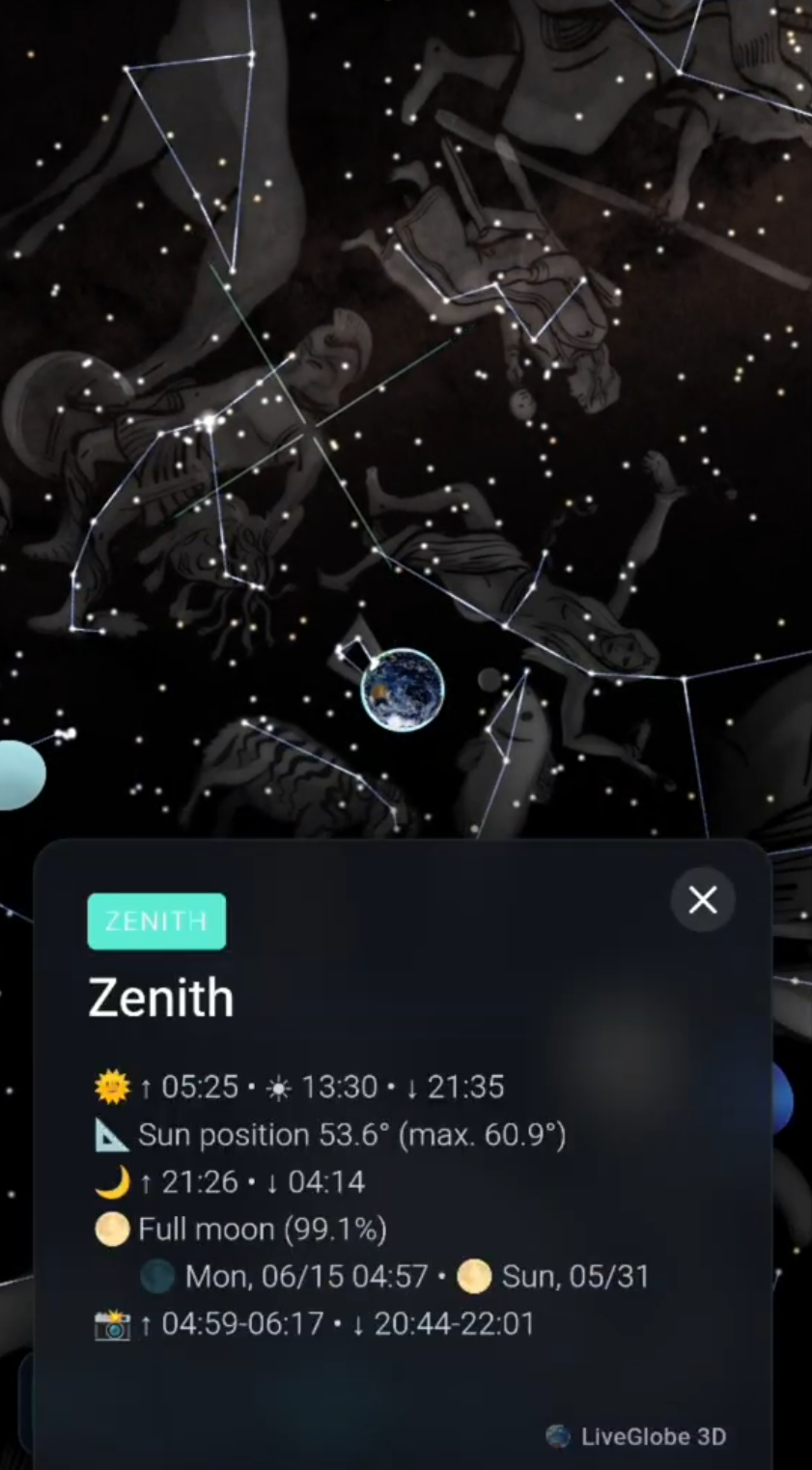
- Choose a dark window: Moonlight, streetlights and bright screens hide fainter meteors. Local moonrise and moonset matter as well as lunar phase.
- Find an open view: Look for a dark, mostly clear sky with few obstructions. Warm clothing and a reclining chair make a patient session easier.
- Let your eyes adjust: The AMS recommends at least 20–30 minutes for dark adaptation. Avoid returning to a bright phone screen.
- Allow quiet spells: Note your start time, observing duration and conditions. Fifteen uneventful minutes do not prove that a shower has failed.
A published hourly rate is not a personal viewing promise. In particular, the ZHR, or Zenithal Hourly Rate, describes standardized activity with a very dark sky and the radiant overhead. It is not simply the number you will count in an hour.
Put the starry sky in context with LiveGlobe 3D
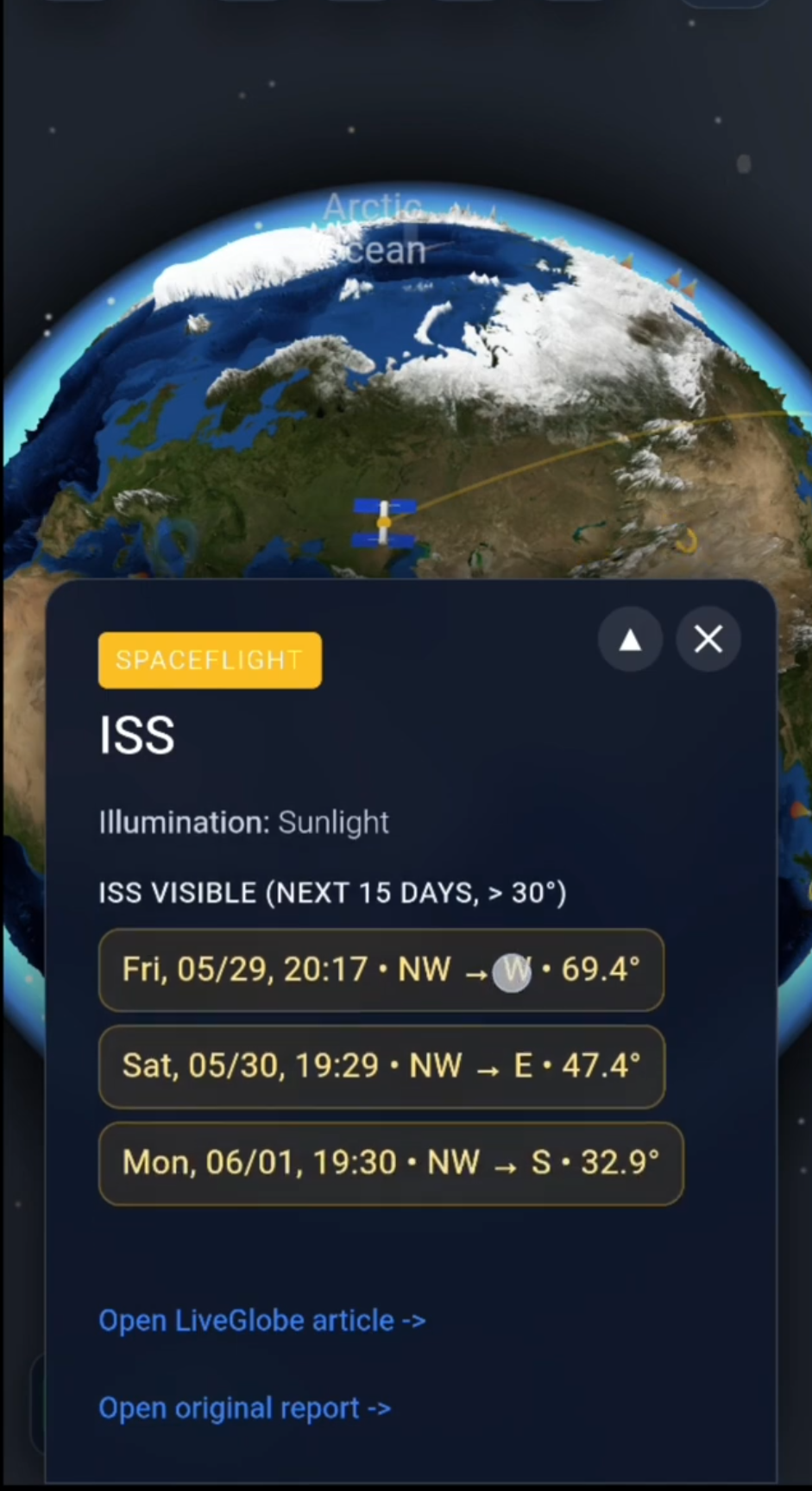
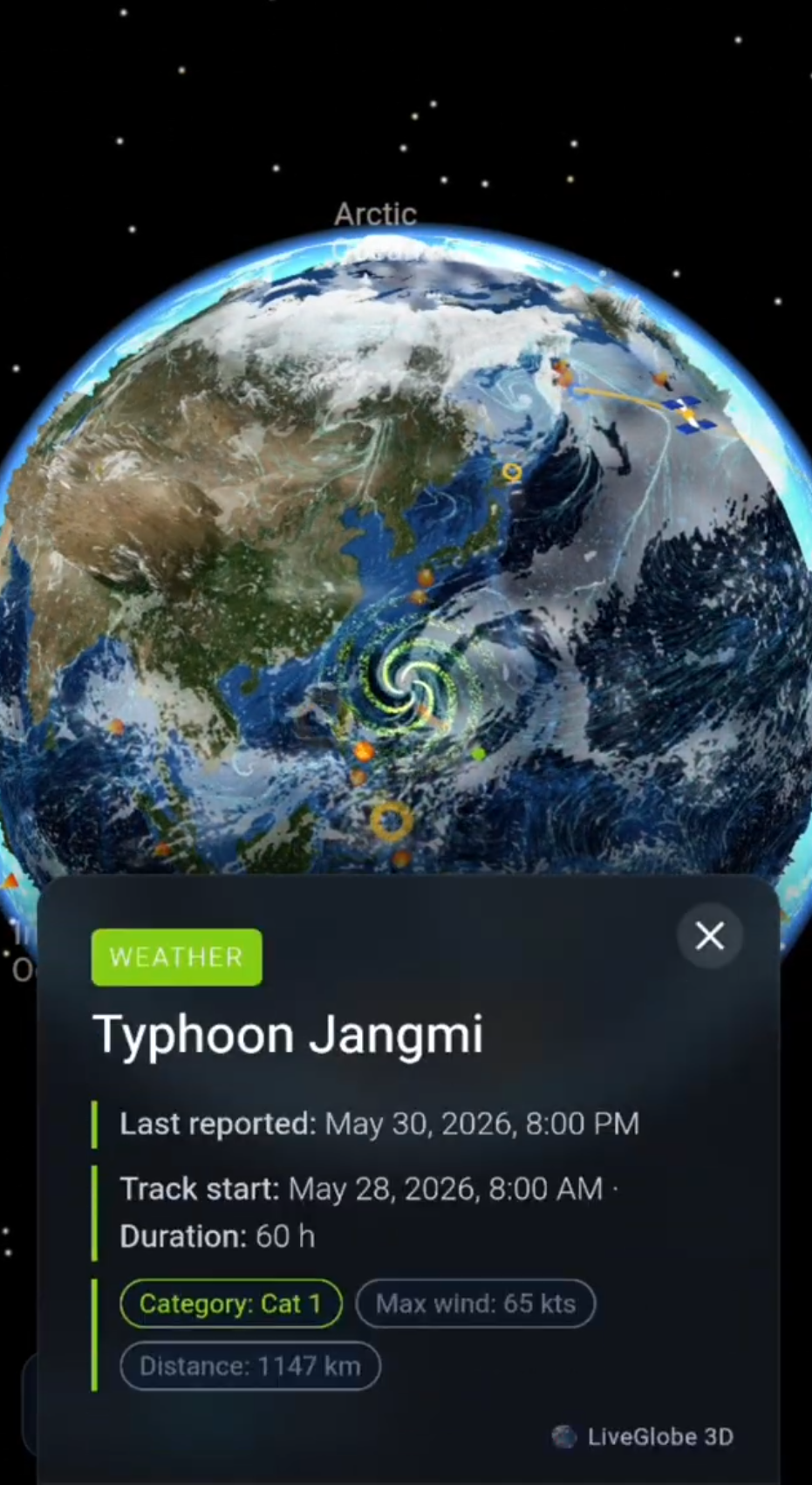
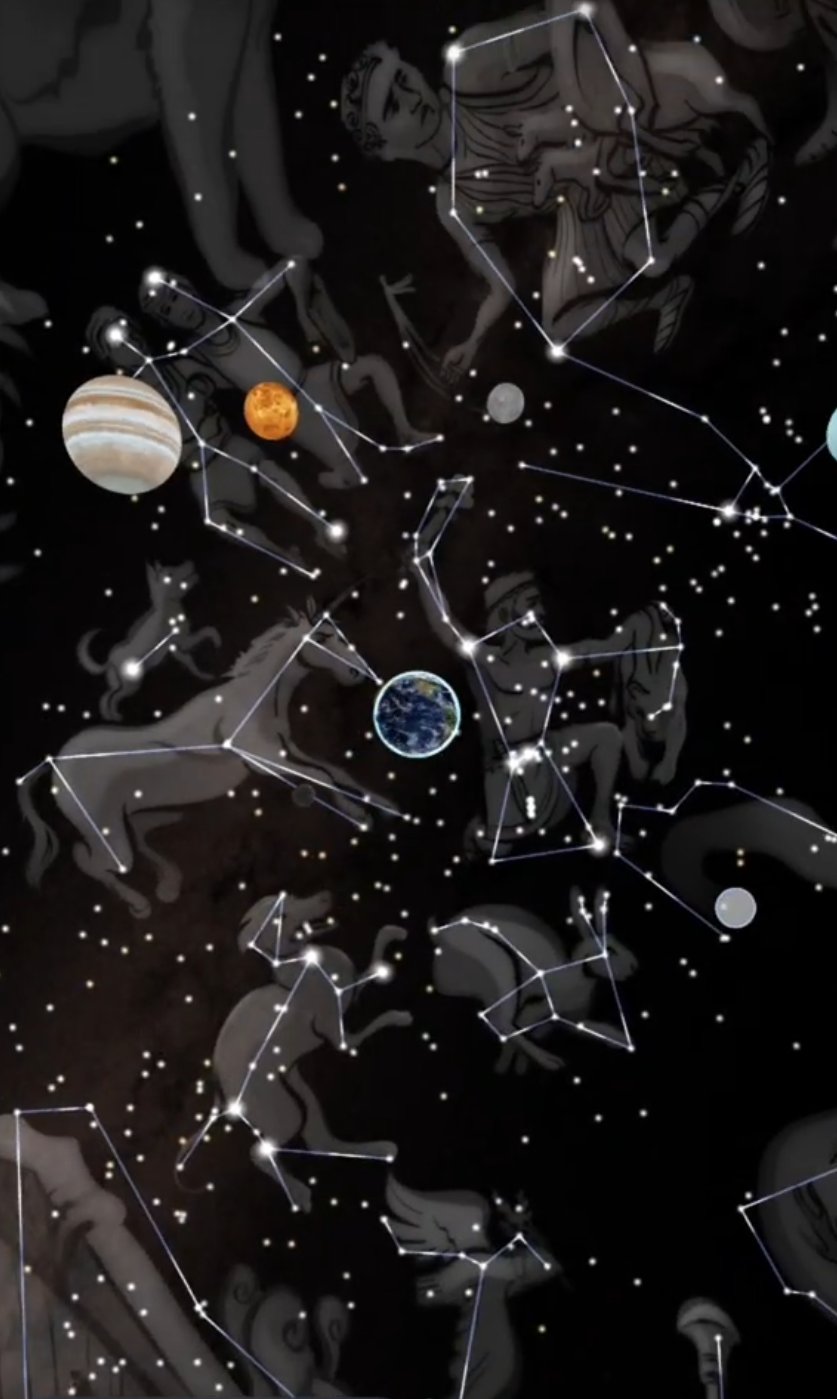
In LiveGlobe 3D, you can switch between Earth and Sky views and explore stars and constellation lines in the space menu. Use that orientation to connect a constellation’s name with an area of sky. The web app has a sign-in flow. Use a current meteor shower calendar to choose your observing window.
For the seemingly stationary points of light, read why stars twinkle. In that case, air changes light arriving from distant stars; a meteor’s light is produced within our atmosphere.
Explore LiveGlobe 3D’s sky view as a starting point—and watch for those brief streaks on your next dark, clear night.
Short clips
The app in motion: short, genuine glimpses straight from use.
At a glance
How the app feels on your phone.