Why is the night sky dark? Understanding Olbers' paradox
Why doesn't starlight make the whole sky bright? Understand Olbers' paradox through light travel time, cosmic history, expansion and the microwave background.
After sunset, the Sun is below the horizon. That explains why its brilliant light no longer lights up our sky. But the universe contains countless other stars. Why doesn’t all their light add up to a bright sky in every direction? This is the question behind Olbers’ paradox, and it connects an ordinary evening to the history of the universe.
The short answer is that the universe has a finite history, stars have not been shining forever, and light takes time to reach us. Space is also expanding, stretching radiation to longer wavelengths and reducing the radiation we receive. An eternal, unchanging universe filled with stars is not a description of our actual universe.
Two different reasons for a dark sky
There is a local question and a cosmic one:
| Question | What matters |
|---|---|
| Why does it get dark after sunset? | Direct sunlight disappears, and the atmosphere above the observer is no longer illuminated as it is during the day |
| Why is the background between stars dark? | The history of the universe and the light that can reach us from it |
During the day, air molecules scatter sunlight in many directions, producing the blue sky. Without a substantial atmosphere, the sky would look black even with the Sun above the horizon, as on the Moon. So a lack of atmosphere cannot fully answer the second question. NASA’s “Why is space black?” makes this distinction clear.
A thought experiment: a star in every direction
Imagine a universe that extends infinitely, never changes, and has always contained a roughly uniform distribution of shining stars. In any direction you look, your line of sight should eventually meet a stellar surface. The whole sky ought to shine, rather than showing isolated points of light.
That expectation is Olbers’ paradox. The paradox does not mean nature contradicts itself. It means the dark sky we observe contradicts the assumptions of this particular model.
Aren’t distant stars simply too faint?
An individual star gets fainter with distance. Place an equally luminous star twice as far away, and we receive a quarter as much light per unit area. But in the imaginary universe, more distant spherical shells of equal thickness also contain more stars: a shell’s area grows with the square of its radius.
Fainter individual stars and more stars per shell balance each other in this idealized calculation. Distance alone therefore cannot make the sum from indefinitely many shells disappear. The Physics FAQ on Olbers’ paradox also explains the equivalent argument using the shrinking apparent disks of distant stars.
Stars have not been shining for eternity
In our current cosmological picture, the universe is about 13.8 billion years old. It has not contained stars throughout that time. The first stars formed as the universe evolved, as described in NASA’s cosmic history overview.
Light also takes time to travel. Looking farther away means looking farther back into the past. We do not receive the accumulated light of endless generations of stars stretching into an unlimited past. We receive radiation from a universe with a finite history.
This is the essential change to the thought experiment. It does not require us to claim that all of space has an edge. A finite time since the early hot universe is different from knowing the total extent of space.
What does expansion change?
As light travels through expanding space, its wavelength stretches. This cosmological redshift moves radiation toward longer wavelengths, reducing the energy of each photon. The arrival rate of photons from a distant source is also affected, further reducing the radiation received.
“Redshifted” does not mean every distant galaxy looks red to the unaided eye. Radiation can shift out of visible light and into infrared. This differs from the intrinsic colors of stars, discussed in why stars have different colors.
The universe’s age and evolution are fundamental; expansion adds to the explanation. Neither “everything is far away” nor “everything is redshifted” gives the full picture on its own.
Could dust hide all the extra starlight?
Dust really can dim the light from individual stars and galaxies. But it cannot rescue the original eternal-universe model. Dust absorbing radiation forever would gain energy, warm up, and emit radiation of its own. A permanently cold curtain cannot simply erase the incoming energy.
This argument concerns the hypothetical unchanging universe. It does not mean actual dust clouds are unimportant to astronomy.
Dark to our eyes is not the same as empty of radiation
Space is not radiation-free. The cosmic microwave background, a relic of the early hot universe, reaches us from every direction. It is not visible starlight.
ESA’s explanation of Planck and the cosmic microwave background describes how expansion stretched this radiation to present-day microwave wavelengths. Its temperature is around 2.7 kelvin. With suitable instruments, the sky is far from simply black; our eyes detect only a small part of the electromagnetic spectrum.
Take the question outside
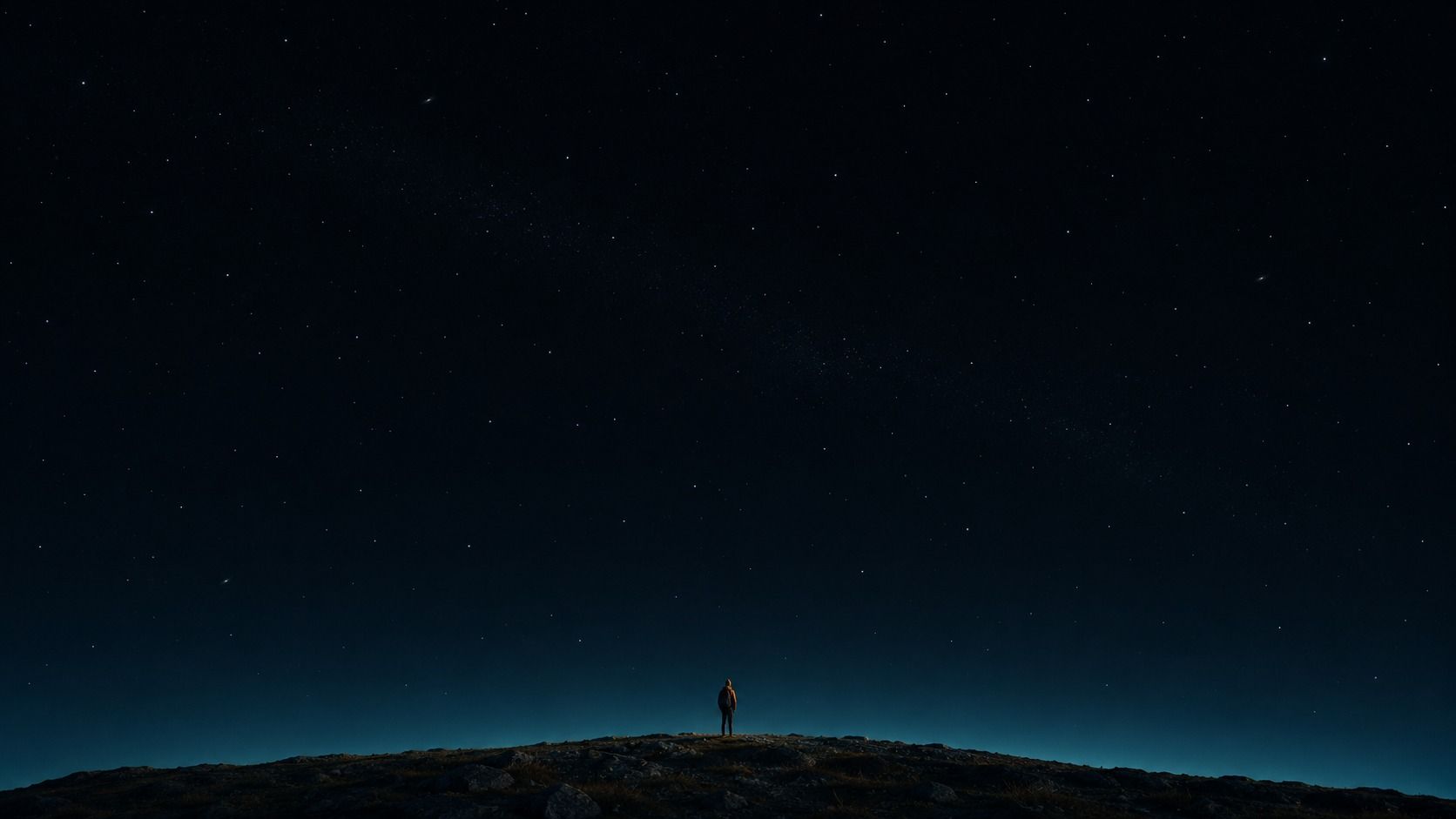
On a clear evening, separate two observations: the individual stars shining above you and the dark background between them. They belong to the same sky, but they raise different physical questions.
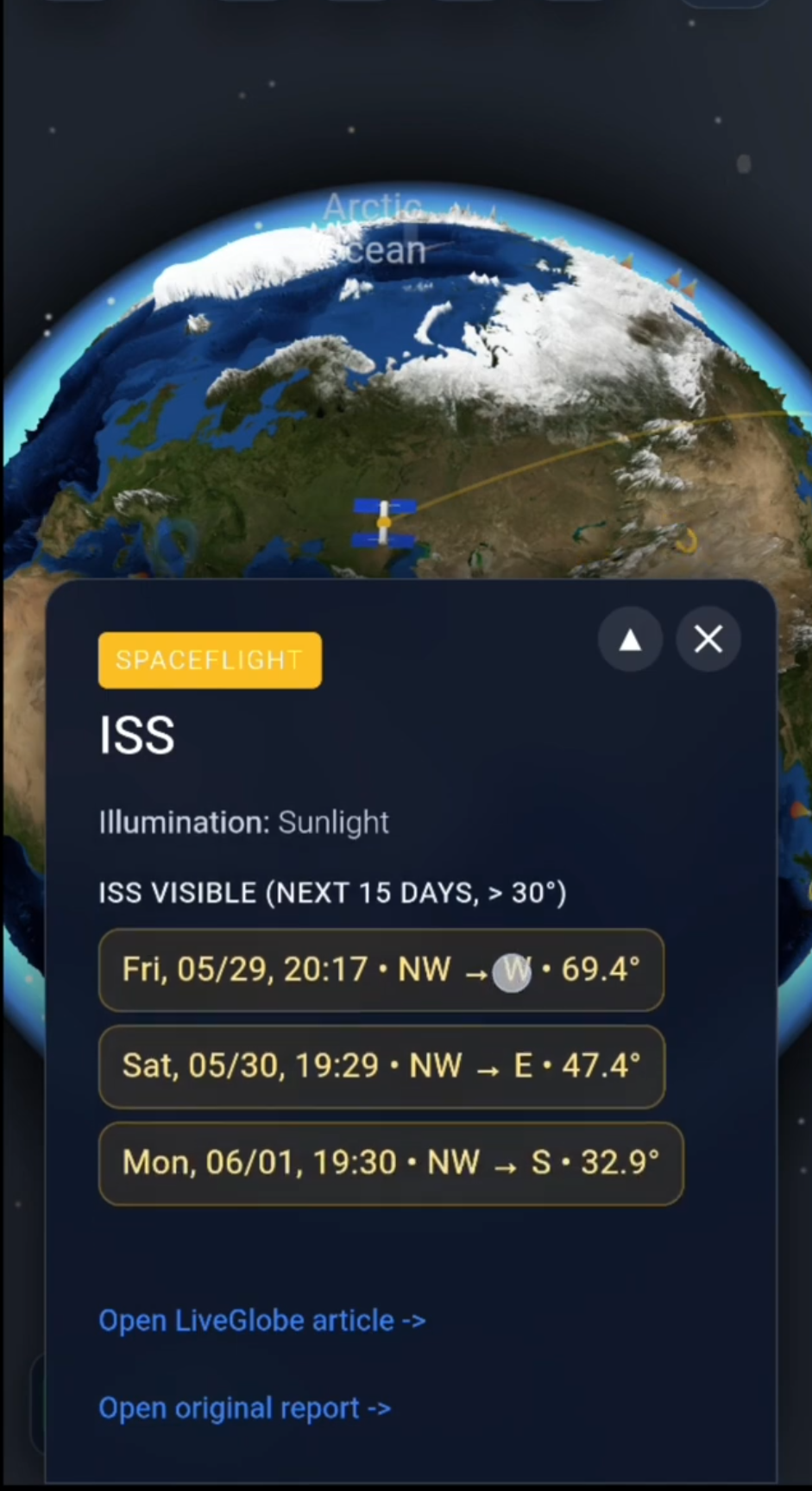
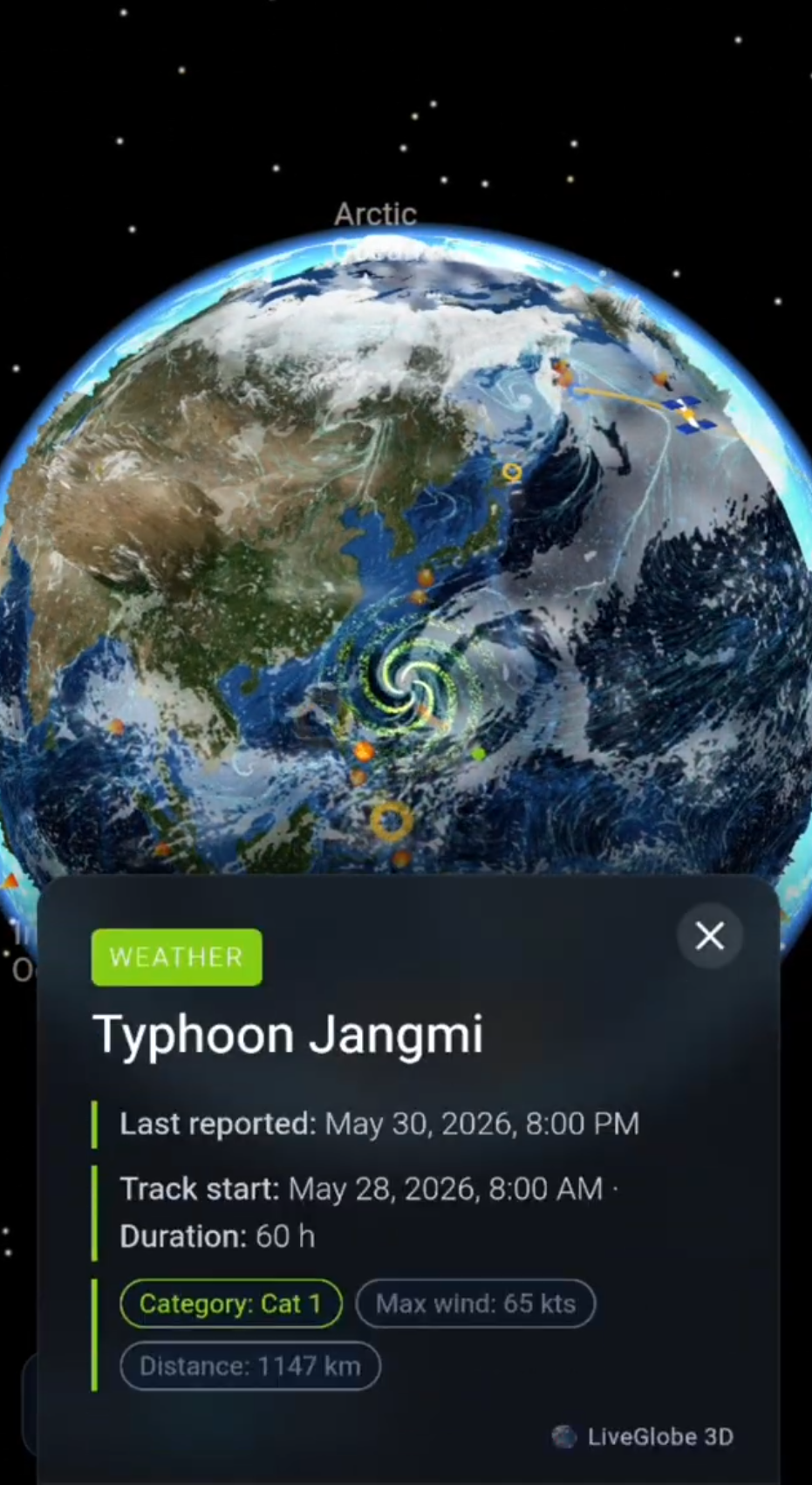
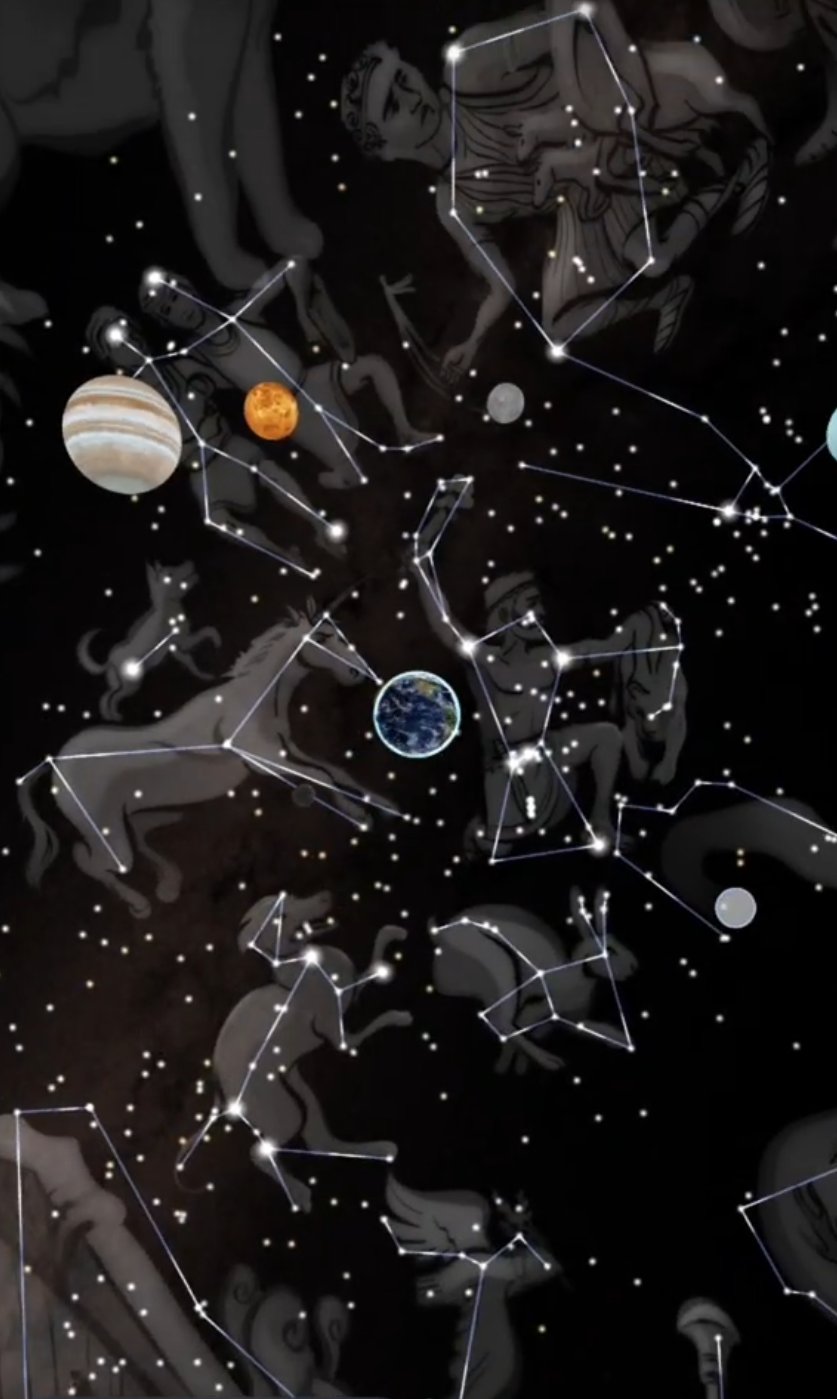
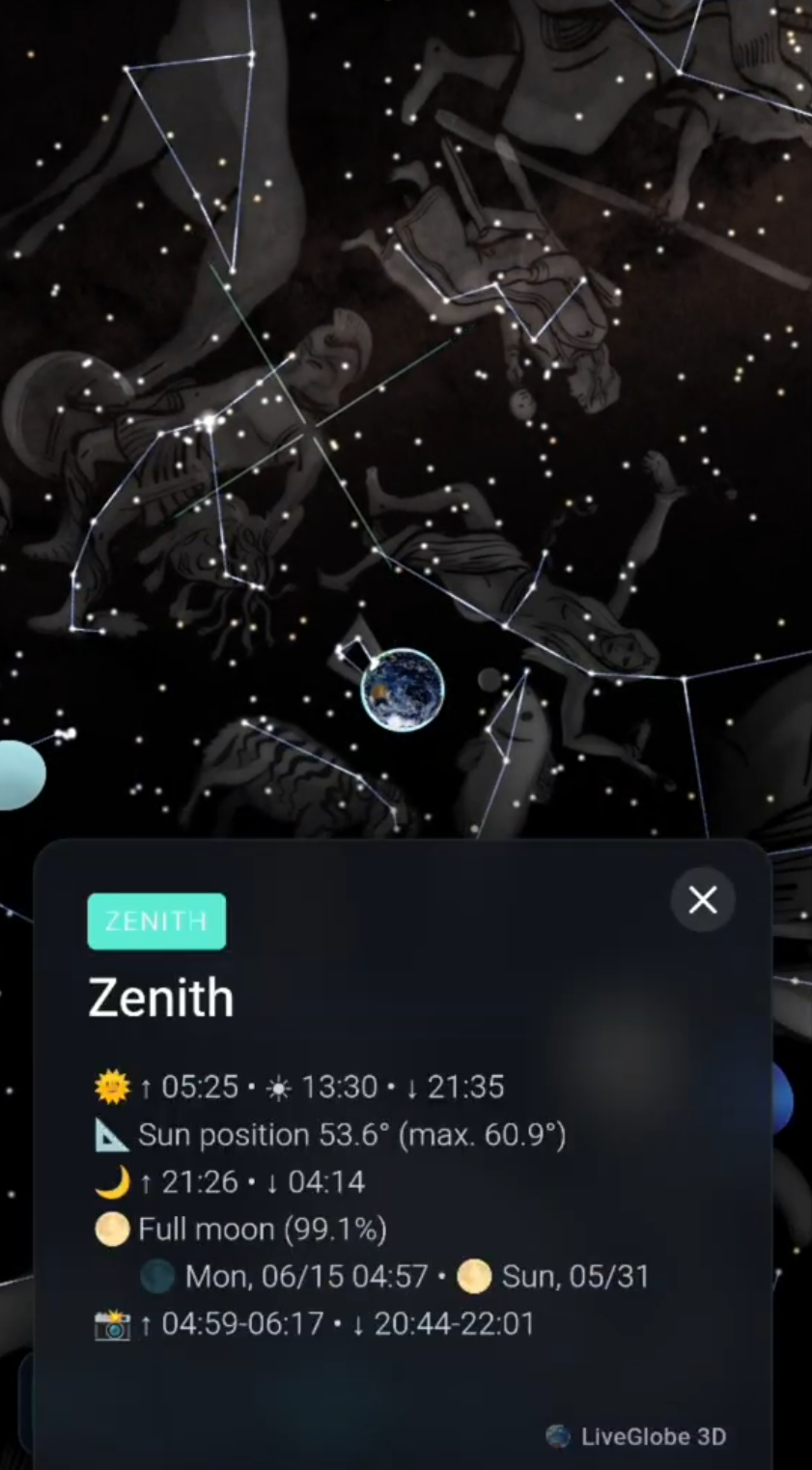
In LiveGlobe 3D, you can switch between Earth and sky views and explore constellation lines through the space menu. Use this to orient yourself among star patterns. The web app is designed to require sign-in; the cosmological explanation here comes from the linked scientific sources.
Explore LiveGlobe 3D and the views available to you. The darkness between the stars is more than a blank backdrop: it reminds us that the universe has a history.
Short clips
The app in motion: short, genuine glimpses straight from use.
At a glance
How the app feels on your phone.