Than vs then: the difference and ten exercises with answers
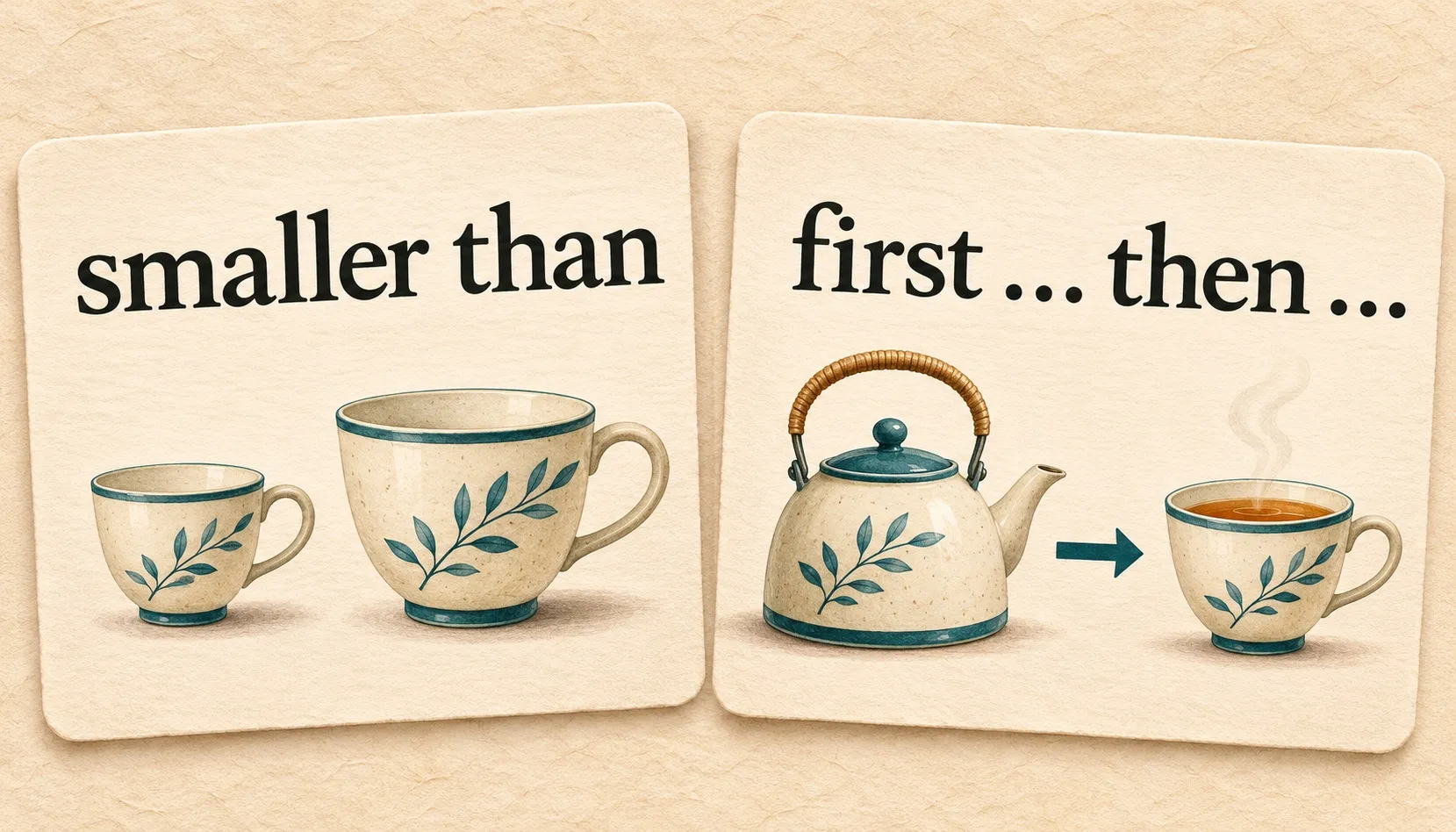
Use than to compare: This cup is smaller than that one. Use then for a time, a next step or a consequence: Make some tea, then sit down. One letter changes the relationship between the ideas.
Instead of relying on sound or a neighbouring word, ask: Am I comparing things, or referring to a time, a sequence or a conclusion? That question also helps with sentences about time that still need than.
The difference at a glance
| What you mean | Word | Example |
|---|---|---|
| compare A with B | than | This bag is lighter than mine. |
| more or less than an amount | than | We need less than an hour. |
| at that time | then | I lived in Berlin then. |
| next, after that | then | First read, then answer. |
| in that case | then | If you’re ready, then we can leave. |
Cambridge’s entries explain than in comparisons and the different meanings of then. Start with this distinction: than compares; then places something in time or draws a conclusion.
Than: identify the two sides of the comparison
Use than to introduce what you are comparing something with:
- The train is faster than the bus. You compare two ways of travelling.
- This exercise is more difficult than the first one. You compare two tasks.
- The tickets cost less than twenty euros. You compare the price with an amount.
The same rule applies to better than and more than. Write This option is better than the other one, not better then. For help forming the adjectives themselves, see the guide to comparative and superlative adjectives.
Watch out for earlier than. Although the sentence concerns time, We arrived earlier than expected compares the actual arrival time with the expected one. A time-related word does not automatically require then.
Then: a time, a sequence or a consequence
Then can refer back to a time that has already been mentioned:
- I was a student back then. At that time in the past, I was a student.
- The meeting starts at ten. I’ll see you then. Then refers to ten o’clock.
- The report is due on Friday. I’ll finish it by then. By then sets Friday as the deadline.
It also puts actions in order: First boil the water, then make the tea. The second action follows the first. Neither action is being described as bigger, faster or better.
For a consequence, then means in that case: If the shop is closed, then we’ll come back tomorrow. You can leave then out of this sentence. If you include it, however, spell it with e.
Similar sentences, different questions
- The room is warmer than before. Is it warmer compared with an earlier temperature? Use than.
- The room was cold. We then turned on the heating. What happened next? Use then.
Both words can appear in one sentence: We found a cheaper ticket than the first one and then booked it. The price comparison comes first; the booking follows. Check each position separately rather than choosing one word for the whole sentence.
Cambridge gives then /ðen/ and stressed than /ðæn/, with an unstressed form /ðən/ for than. For a spelling check, meaning is a more dependable guide than trying to identify the vowel in quick speech.
Ten exercises: than or then?
Fill each gap with than or then. Number 10 needs both words. Read the whole sentence and give a reason for your choice before checking the answers.
- My new backpack is lighter ___ my old one.
- First save the document, ___ close the laptop.
- I moved here in 2020. I didn’t speak much English back ___.
- The walk takes less ___ thirty minutes.
- If everyone agrees, ___ we can start.
- We arrived earlier ___ expected.
- The appointment is on Monday. Please send the form before ___.
- This soup tastes better ___ the one I made yesterday.
- Open the box and ___ read the instructions.
- We chose a smaller table ___ the old one and ___ ordered two chairs.
Answers and reasons
- than — A comparison between the weights of two backpacks.
- then — Save first; close the laptop afterwards.
- then — Back then refers to the time around 2020.
- than — Less than compares the duration with thirty minutes.
- then — A consequence: agreement allows the activity to start.
- than — Earlier than compares the actual arrival with the expected one, even though the subject is time.
- then — Before then means before that point in time: Monday’s appointment.
- than — Better than compares two soups.
- then — Reading follows opening the box.
- than; then — First a size comparison, then an order for chairs.
Move from gaps to your own sentences
On paper, write one comparison with than and one sequence with then from your everyday life. For example: My bag is smaller than yours. First I pack it, then I leave. Cover the two words and put them back. Next, change the object, quality or action so you have to make a fresh decision about meaning.
For a second challenge, write a sentence with earlier than and another with back then. Explain why only one makes a comparison. This is an independent writing activity you can do without an app.
Keep practising with phrases
Lingo Phrase Cards offers prepared vocabulary in phrases, with IPA and audio on the target-language side. For general language practice, choose an available language direction and an unlocked set, try to recall the answer before turning the card over, then assess your answer in the regular study mode. That assessment controls the Leitner review schedule. Certain category sets require a licence.
For your next spelling check, remember: Comparison? Than. Time, sequence or conclusion? Then. Explore the available language directions and sets on the Lingo page.