Lunar eclipses: why does the Moon turn red, and why not at every full Moon?
Why does the Moon turn red during a lunar eclipse? Understand Earth's shadow, eclipse types and the Moon's tilted orbit, with a simple demonstration.
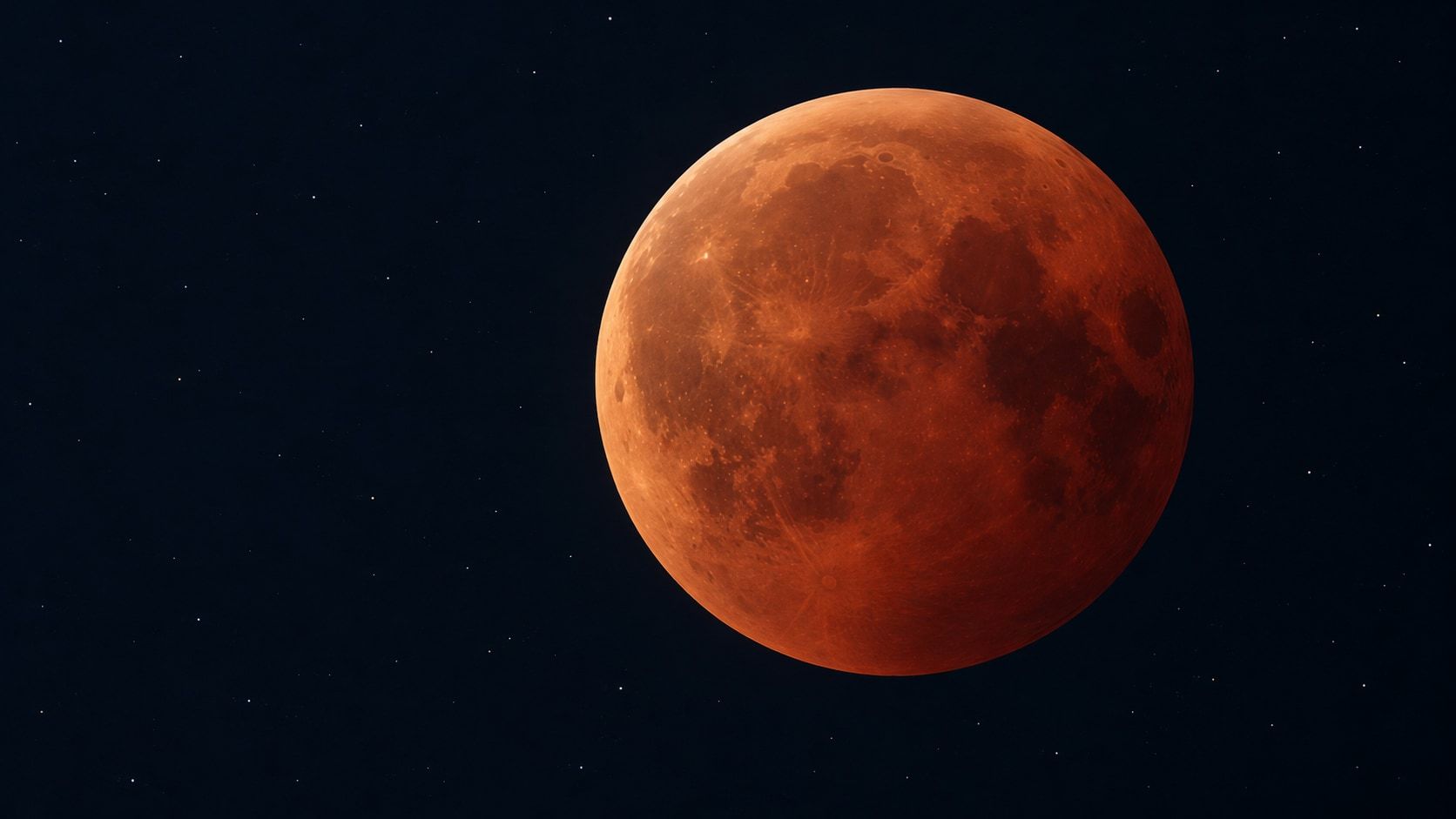
A bright full Moon slowly dims. A curved shadow moves across its disk, and eventually it glows a muted copper red. During a lunar eclipse, the Moon passes through Earth’s shadow. It need not disappear: a little sunlight can still reach it through Earth’s atmosphere.
Two ideas explain the scene: the arrangement of the Sun, Earth and Moon, and the journey of light through our air. Together they also explain why most full Moons pass without an eclipse.
The order is Sun – Earth – Moon
A lunar eclipse can happen only at full Moon, with Earth between the Sun and Moon. But Earth’s shadow reaches the Moon only when the alignment is close enough. NASA’s guide to lunar eclipses distinguishes the full-Moon phase from an actual passage through the shadow.
Ordinary lunar phases have a different cause. Over the month, we see different amounts of the Moon’s sunlit half. Earth’s shadow does not create the monthly waxing and waning. For the viewing geometry, see Seeing the Moon during the day.
During a solar eclipse, the Moon is between the Sun and Earth instead. A useful distinction: lunar eclipse = Earth’s shadow on the Moon; solar eclipse = the Moon in front of the Sun.
Umbra and penumbra: three kinds of lunar eclipse
The Sun is an extended disk, rather than a pinpoint light source. Earth’s shadow therefore has a dark inner region and a lighter outer region:
| Eclipse type | The Moon’s path | What you may notice |
|---|---|---|
| Penumbral | Through the penumbra only, where Earth blocks part of the Sun | A subtle dimming that is easy to miss |
| Partial | Only part of the lunar disk enters the umbra | A dark, curved section across the disk |
| Total | The entire lunar disk spends time inside the umbra | A much dimmer Moon, often reddish |
Inside the umbra, Earth completely blocks the direct view of the Sun’s disk. “Total” describes the position of the whole lunar disk inside that shadow, rather than the Moon becoming completely invisible. A total eclipse also includes penumbral and partial stages before and after totality.
How can red light reach the eclipsed Moon?
Some sunlight grazes Earth’s edge, travelling a long way through the atmosphere. Air scatters short-wavelength blue light out of the beam more strongly than longer-wavelength red light. The atmosphere also refracts light: it bends its path, allowing some of it to reach the Moon within Earth’s shadow.
The lunar surface is therefore dimly illuminated by filtered, reddish sunlight. The Royal Observatory Greenwich explains this role of atmospheric refraction. The Moon is not producing red light of its own, and its surface is not glowing hot.
Sunset provides a helpful comparison: light also travels a long path through air when the Sun is low. Why the sky is blue and sunsets are red explains the scattering involved.
Total eclipses do not all have the same colour or brightness. Clouds and particles along the atmospheric light path affect the result, which can range from orange to deep copper red. “Blood Moon” is a descriptive nickname, not a fourth eclipse type.
Why isn’t every full Moon eclipsed?
The Moon’s orbit is tilted by about five degrees relative to the plane of Earth’s orbit around the Sun. Most full Moons therefore pass above or below Earth’s shadow.
The two places where the orbital planes cross are called nodes. For a lunar eclipse, full Moon must occur close enough to one of them. Full Moon is only part of the requirement: the Moon’s position relative to Earth’s orbital plane must also fit. A flat drawing of three balls in a row leaves out this crucial third dimension.
Try a simple shadow demonstration
Use a lamp, a large ball and a smaller ball in a dim room. Keep the lamp in place as the Sun. The large ball represents Earth and the small one the Moon.
- Hold the small ball on the far side of the large ball from the lamp.
- Move it through the large ball’s shadow to demonstrate an eclipse.
- Raise or lower it slightly. It can now miss the shadow while remaining on the side of Earth away from the Sun.
- Look at the shadow’s edge. Its softness also depends on the size of the light source.
This is not a scale model. It demonstrates shadow geometry and an offset path, but not the red colour: the ball has no refracting atmosphere. A red lamp would imitate the colour without explaining its cause.
Prepare for an observation
For a particular eclipse, check an astronomical calendar with information for your location: Which stages are visible, will the Moon be above your horizon, and which time zone is used? An eclipse that is total globally may be only partly visible from your location if the Moon rises or sets during it. Clouds and a blocked horizon also affect the view.
A lunar eclipse can be watched with the naked eye, and binoculars make the shadow boundary easier to inspect. You do not need solar eclipse glasses to look at the Moon. Observing the Sun is different and requires appropriate solar-viewing protection.
Record the time, shadow shape and colour as you watch. This helps distinguish the eclipse from passing clouds. An orange Moon near the horizon, by itself, does not prove an eclipse is taking place.
Put Earth and Moon in spatial context
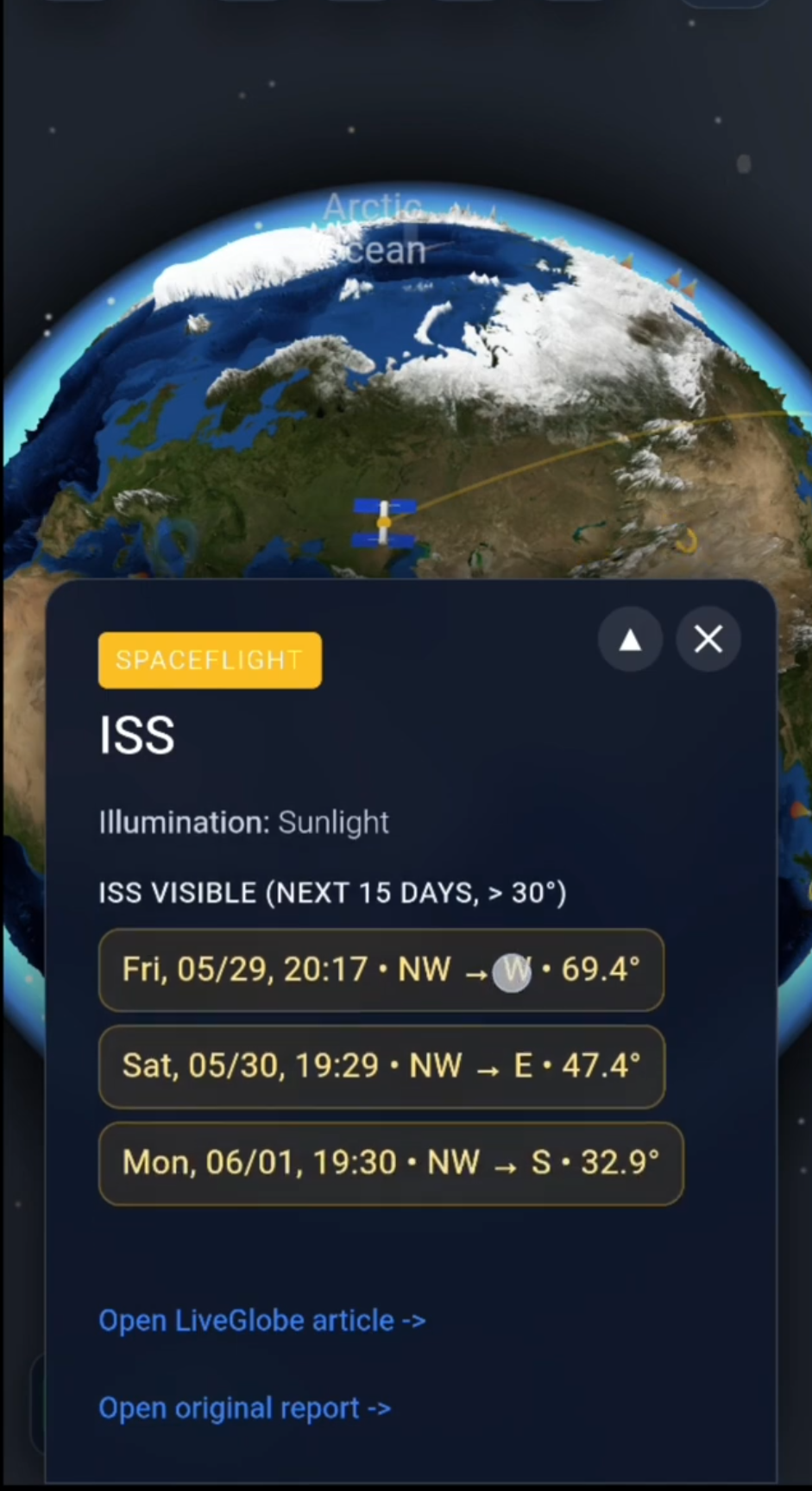
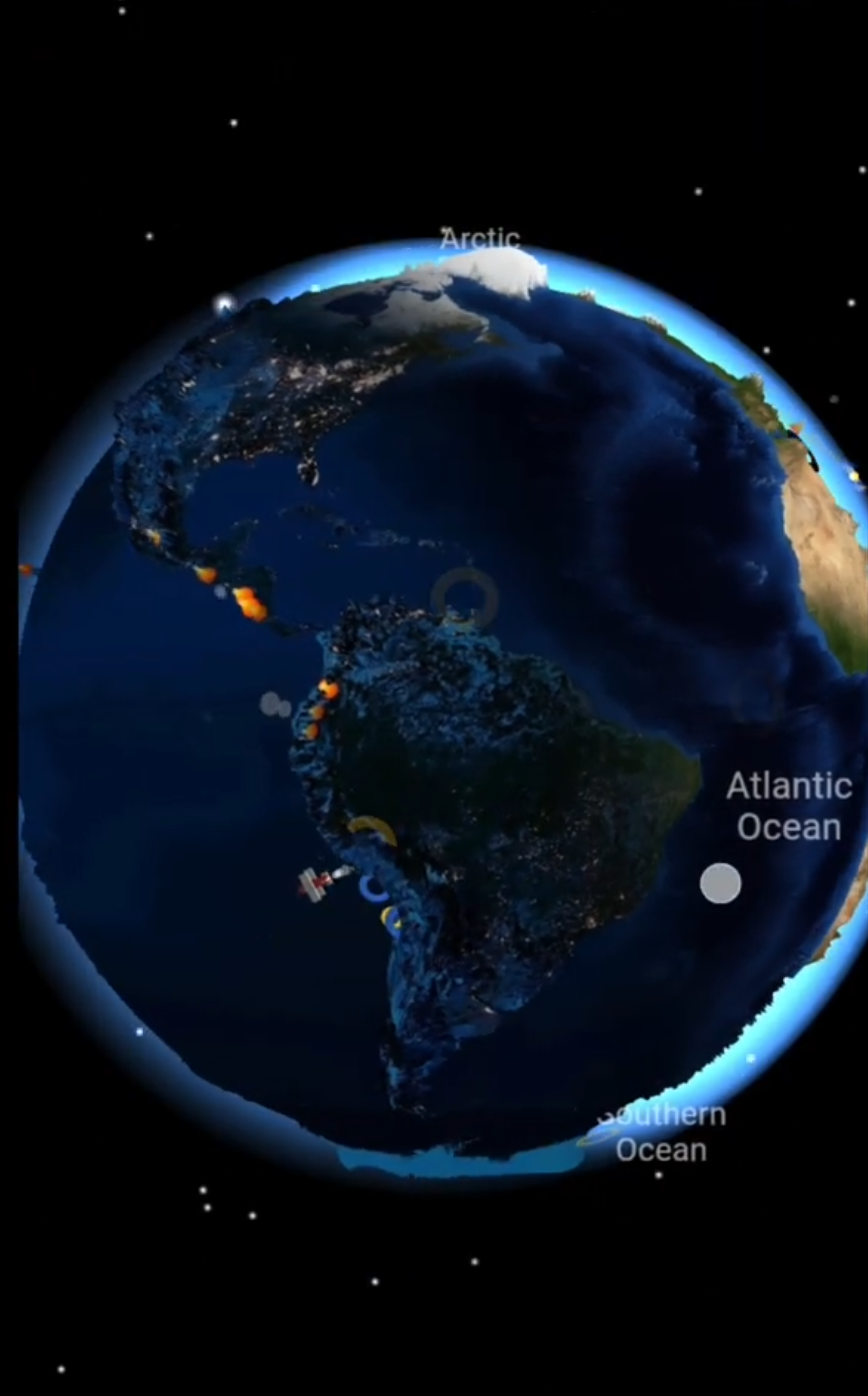
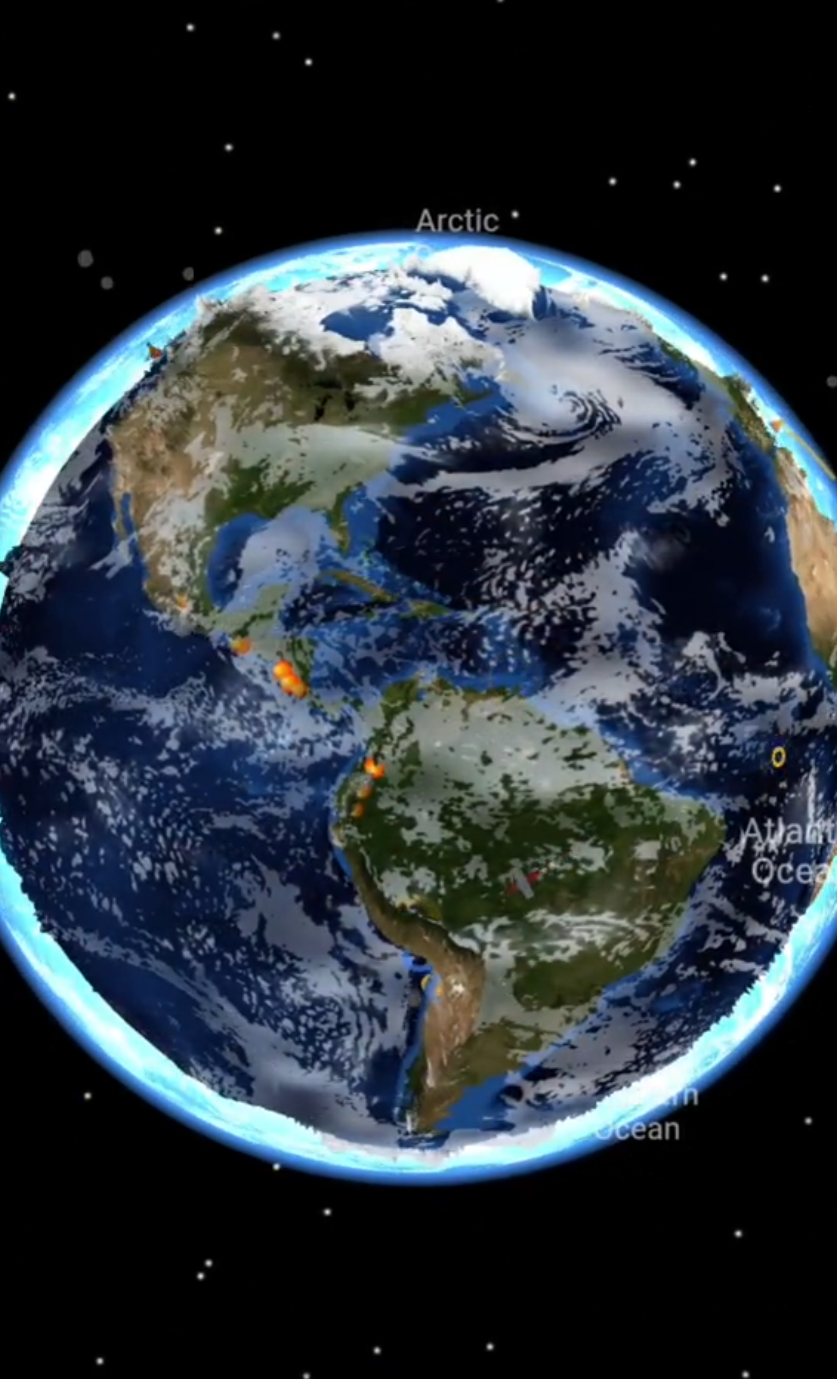
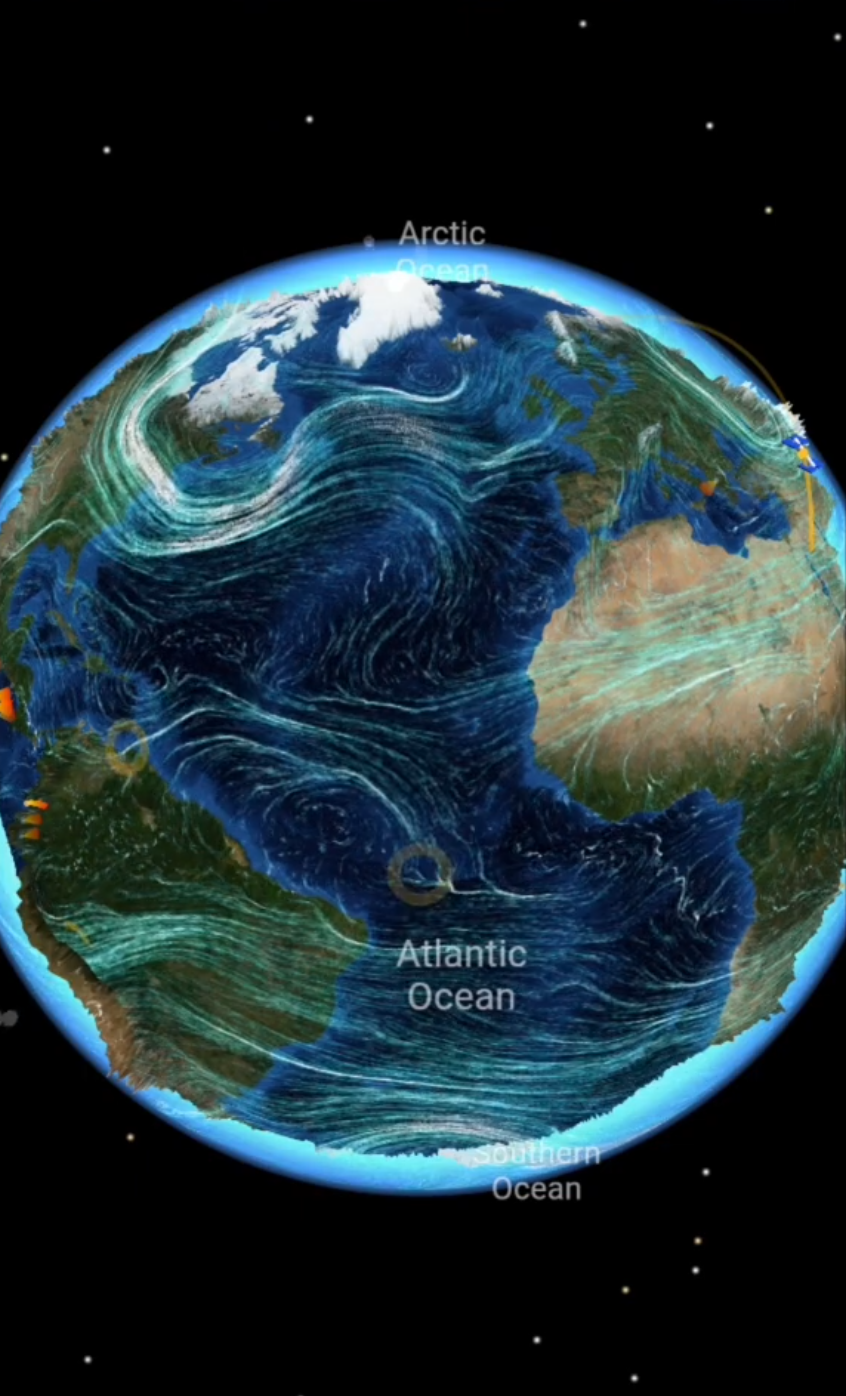
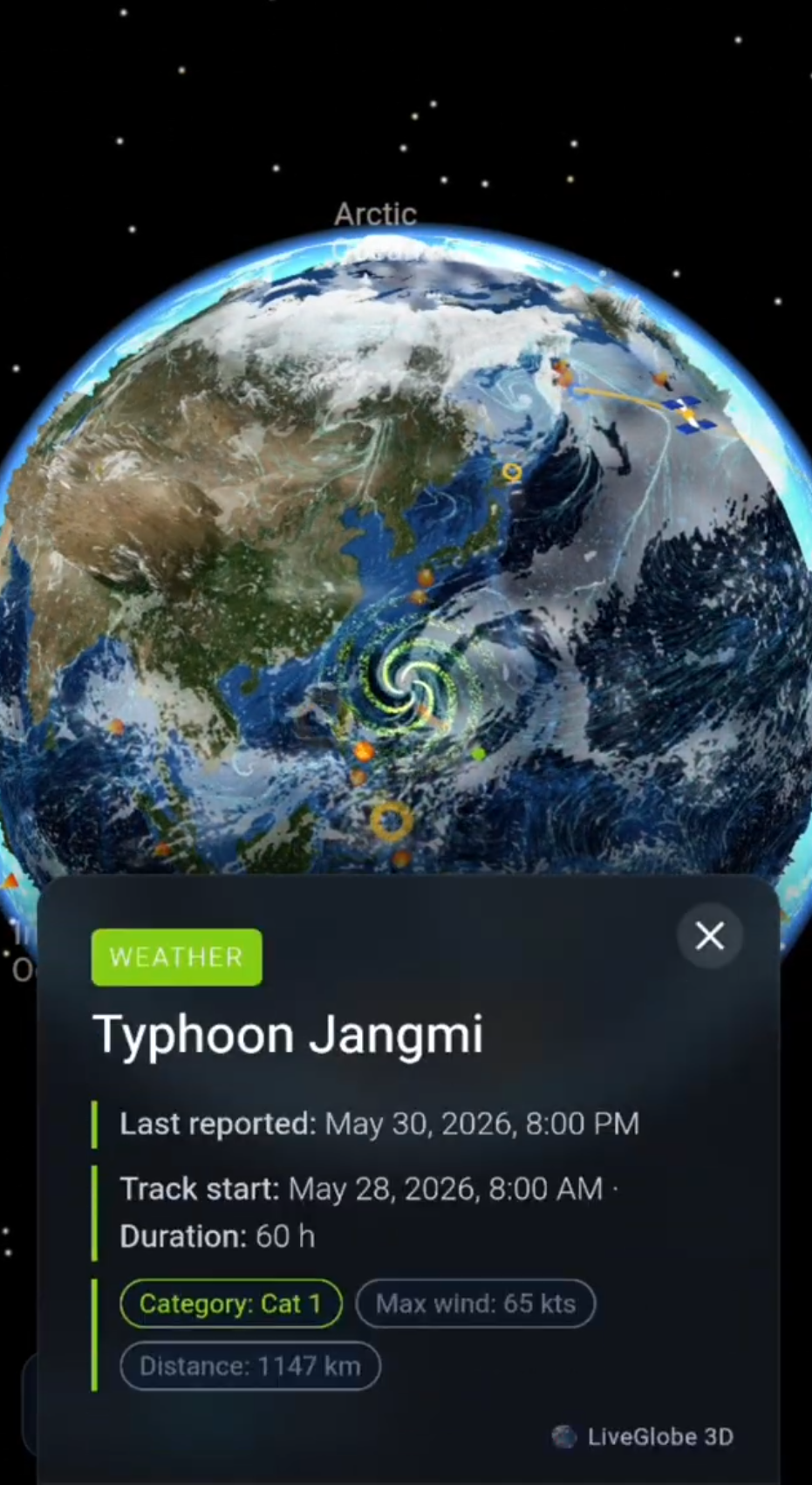
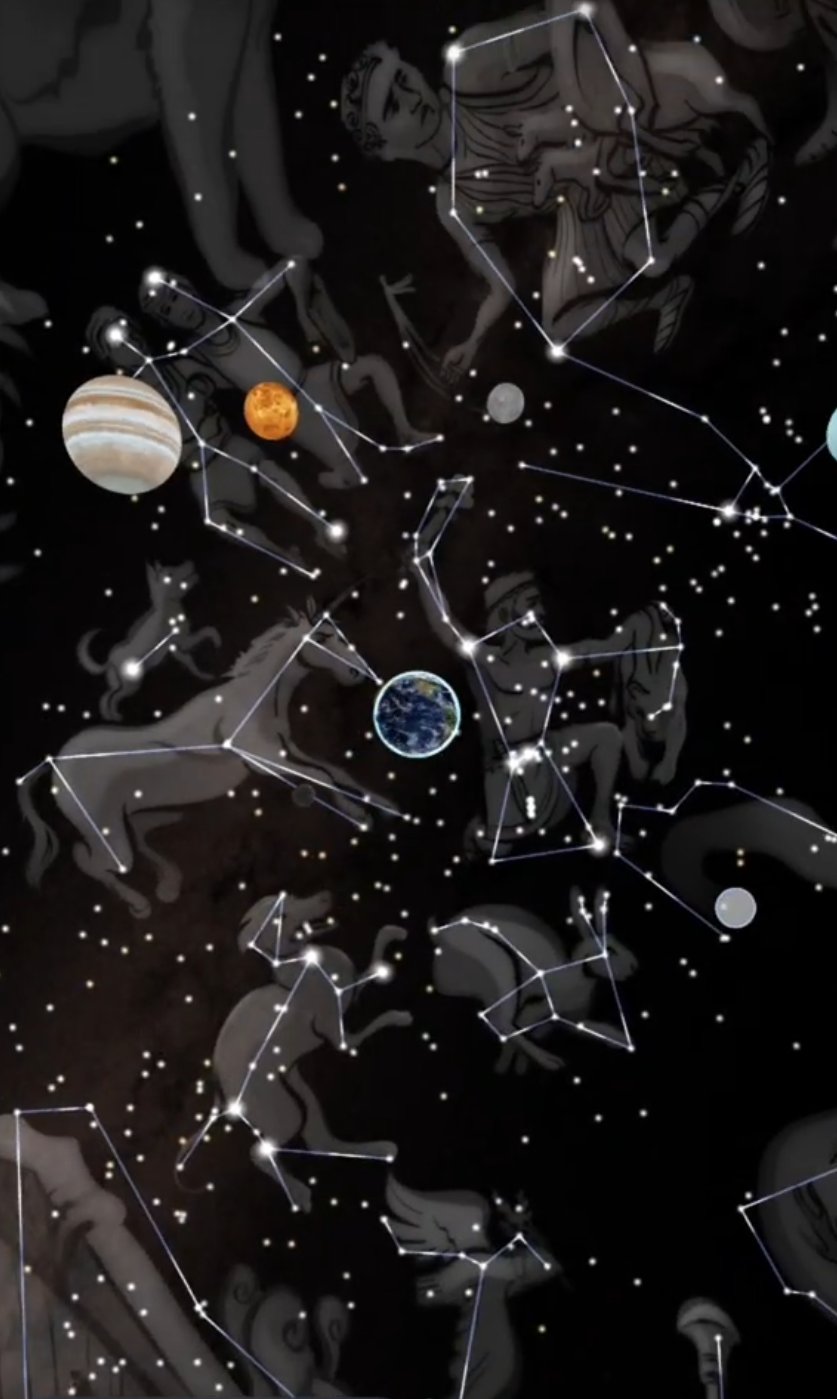
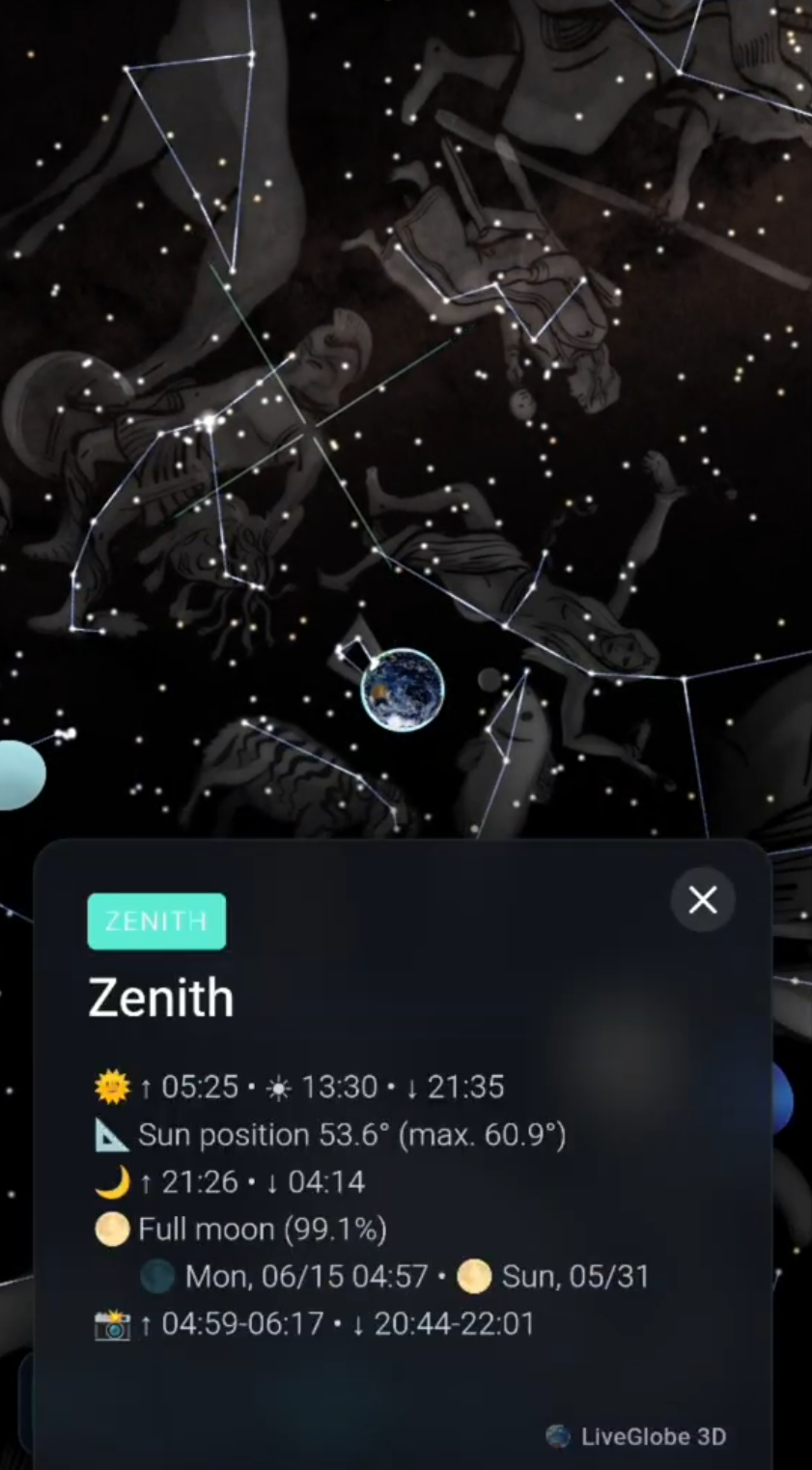
In LiveGlobe 3D, you can rotate and zoom the globe, switch between Earth and Sky, and enable the Moon view through the space menu. The web app is configured to require sign-in. Use these views for spatial orientation, and check local eclipse times and visibility in an astronomical calendar.
The key question is simple: is the Moon merely on the side of Earth away from the Sun, or is it actually passing through Earth’s shadow? Explore LiveGlobe 3D and the views available to you and connect that spatial picture with your next look at the Moon.
Short clips
The app in motion: short, genuine glimpses straight from use.
At a glance
How the app feels on your phone.