What causes Moon phases? From new Moon to full Moon
Moon phases come from our changing view of its sunlit half. Understand new, quarter and full Moons with a simple lamp-and-ball experiment.
One week the Moon is a slender crescent; later it becomes a bright circle. Moon phases happen because we see different amounts of the Moon’s sunlit half as it orbits Earth. The Moon itself does not change shape, and Earth’s shadow does not sweep across it every month.
The starting point is simple: sunlight illuminates roughly half the lunar globe. How much of that half we can see depends on the positions of the Sun, Earth and Moon. NASA’s guide to the eight phases explains this changing perspective.
The same sunlit half, a different view
The Moon’s visible light is reflected sunlight. Its sunward side has daytime; the opposite side has night. The boundary is called the terminator. It is the Moon’s own day–night boundary, not the edge of Earth’s shadow.
Imagine viewing a half-lit ball from different directions. From the light source’s side, you see its bright face. From behind it, you see its dark face. From the side, its disk looks half lit. As the Moon travels around Earth, our view changes in just this way.
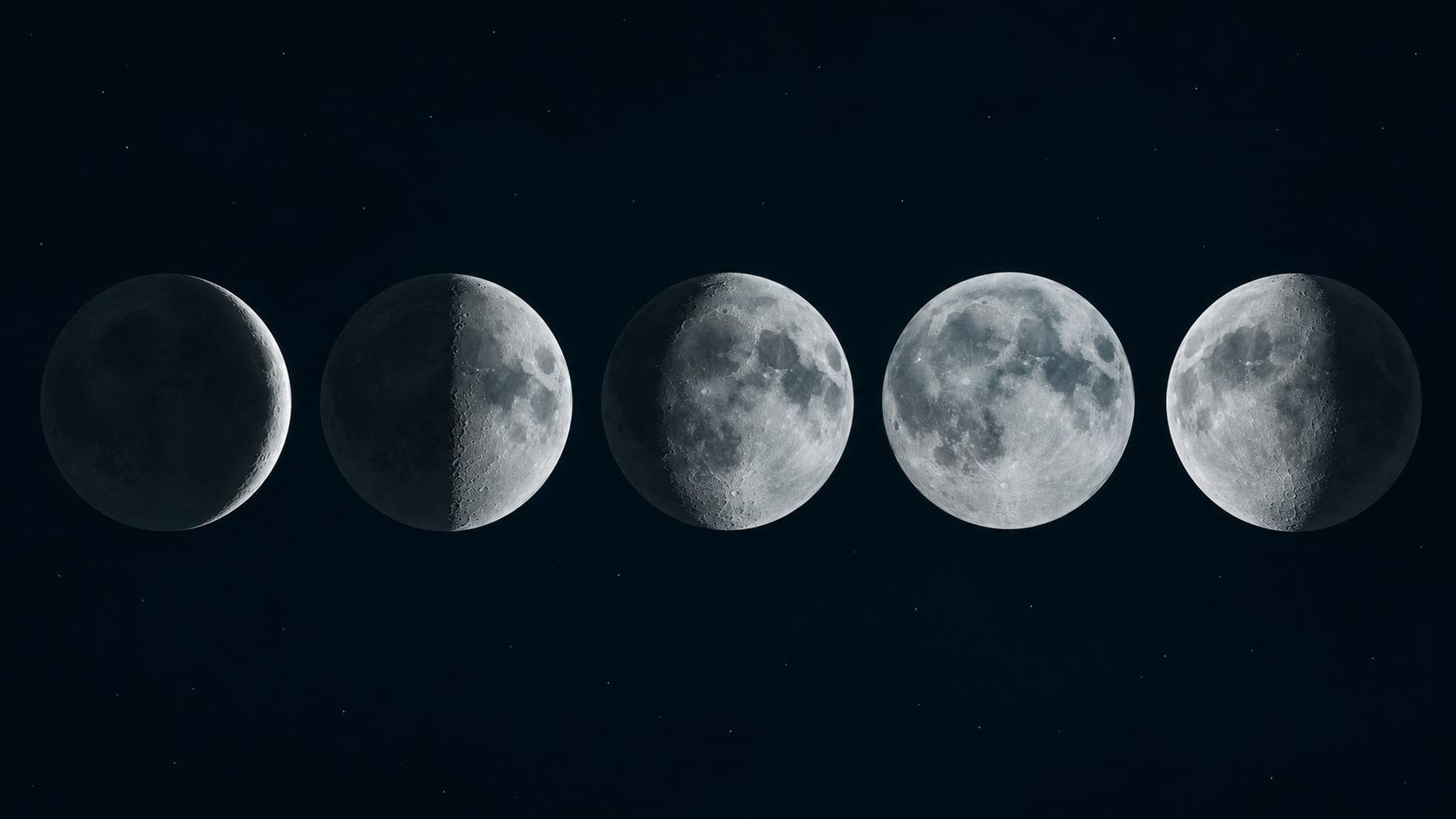
The eight phases in order
The changes are continuous. The familiar names mark stages and particular arrangements within the cycle.
| Phase | What we see from Earth |
|---|---|
| New Moon | The day side faces mostly away; the near side is dark. |
| Waxing crescent | A narrow part of the sunlit half comes into view. |
| First quarter | About half the visible disk is illuminated. |
| Waxing gibbous | More than half the disk looks bright. |
| Full Moon | We look almost directly at the illuminated day side. |
| Waning gibbous | The visible bright portion starts shrinking. |
| Last quarter | About half the disk is bright again. |
| Waning crescent | A thin crescent remains before the next new Moon. |
Waxing means the visible illuminated fraction is growing; waning means it is shrinking. “Quarter” refers to the stage in the phase cycle, not a quarter of the disk. At full Moon, the Moon is roughly opposite the Sun in our sky. At new Moon, it lies in the Sun’s direction.
Why does the cycle take about 29.5 days?
The average interval from one new Moon to the next is about 29.5 days. Yet one orbit measured against distant stars takes about 27.3 days. These figures use different reference points.
While the Moon circles Earth, Earth advances along its own orbit around the Sun. After returning to the same direction relative to the stars, the Moon must travel a little farther to recreate the same Sun–Earth–Moon phase arrangement. NASA’s overview from space distinguishes these two periods.
A phase is not an eclipse
During a lunar eclipse, Earth really does cast its shadow on the Moon. That requires a full Moon and the right alignment. An ordinary crescent instead shows us a large portion of the Moon’s own night side.
The lunar orbit is tilted by about five degrees relative to Earth’s orbital plane. Most full Moons therefore pass above or below Earth’s shadow, rather than through it. That is why the phases repeat monthly but eclipses do not (NASA: Eclipses). Our article on lunar eclipses and the red Moon explains that separate shadow event.
Try a lamp-and-ball experiment
Use a fixed lamp in a dim room and a light-colored matte ball. The lamp represents the Sun, your head represents Earth, and the ball represents the Moon.
- Hold the ball at arm’s length, roughly at eye level, with the lamp staying in one place.
- Turn slowly on the spot so the ball moves around your head.
- With the ball off to the side of the lamp’s direction, you will see a roughly half-lit disk.
- With the lamp behind you, the bright side faces you. Raise the ball slightly to keep your head’s shadow off it: you want a full Moon, not an eclipse.
- Toward the lamp, the ball’s dark face points toward you. Between these positions, look for crescents.
Watch the illuminated area, rather than the outline alone. The ball stays round while its bright shape changes. This models the lighting geometry; sizes and distances are not to scale.
Follow the cycle for yourself
Sketch the Moon on several days, noting the date and time. Is the bright portion growing or shrinking? This tracks the cycle without relying solely on left–right memory tricks. For observing times, see our guide to spotting the Moon during the day.
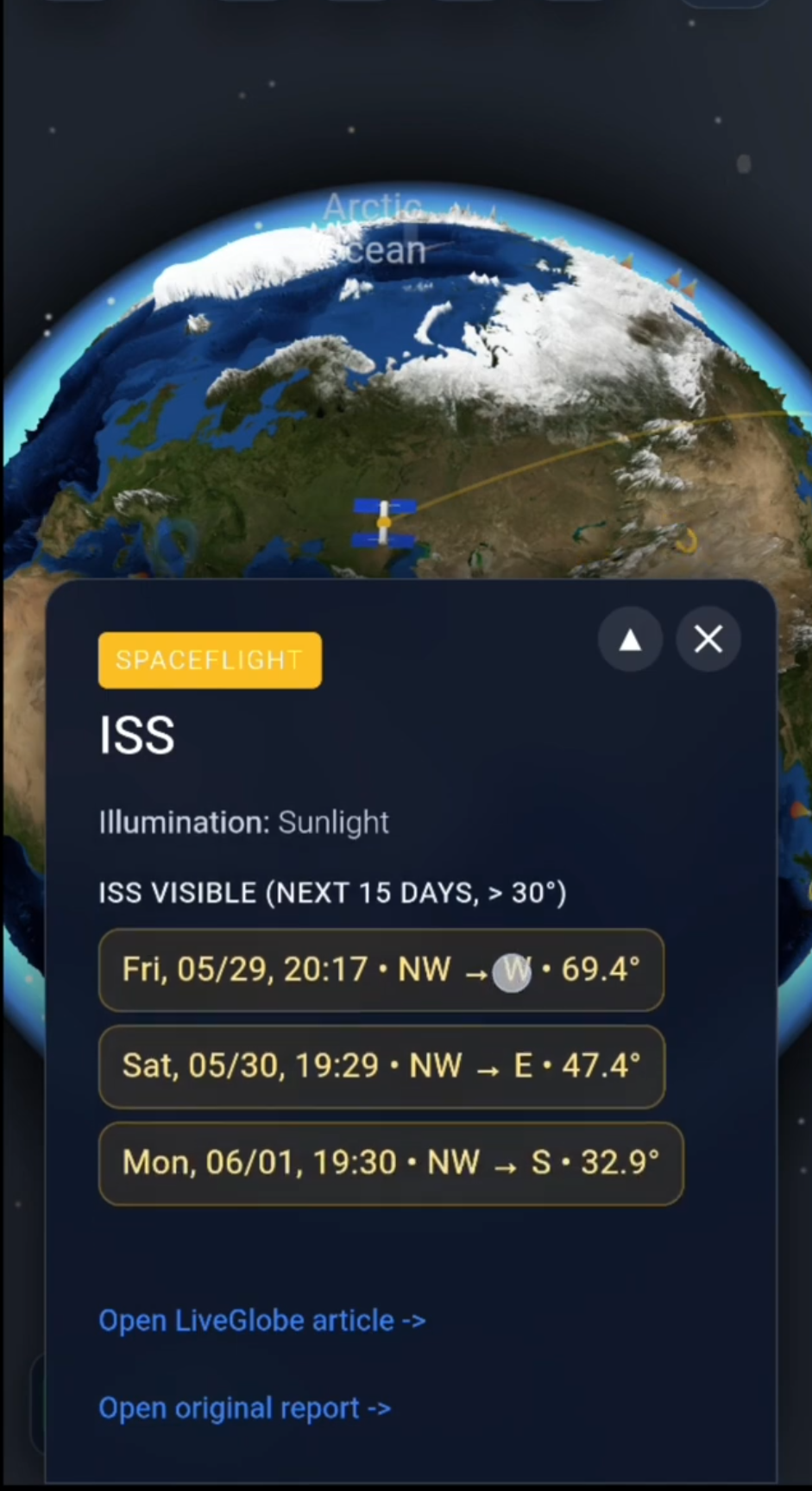
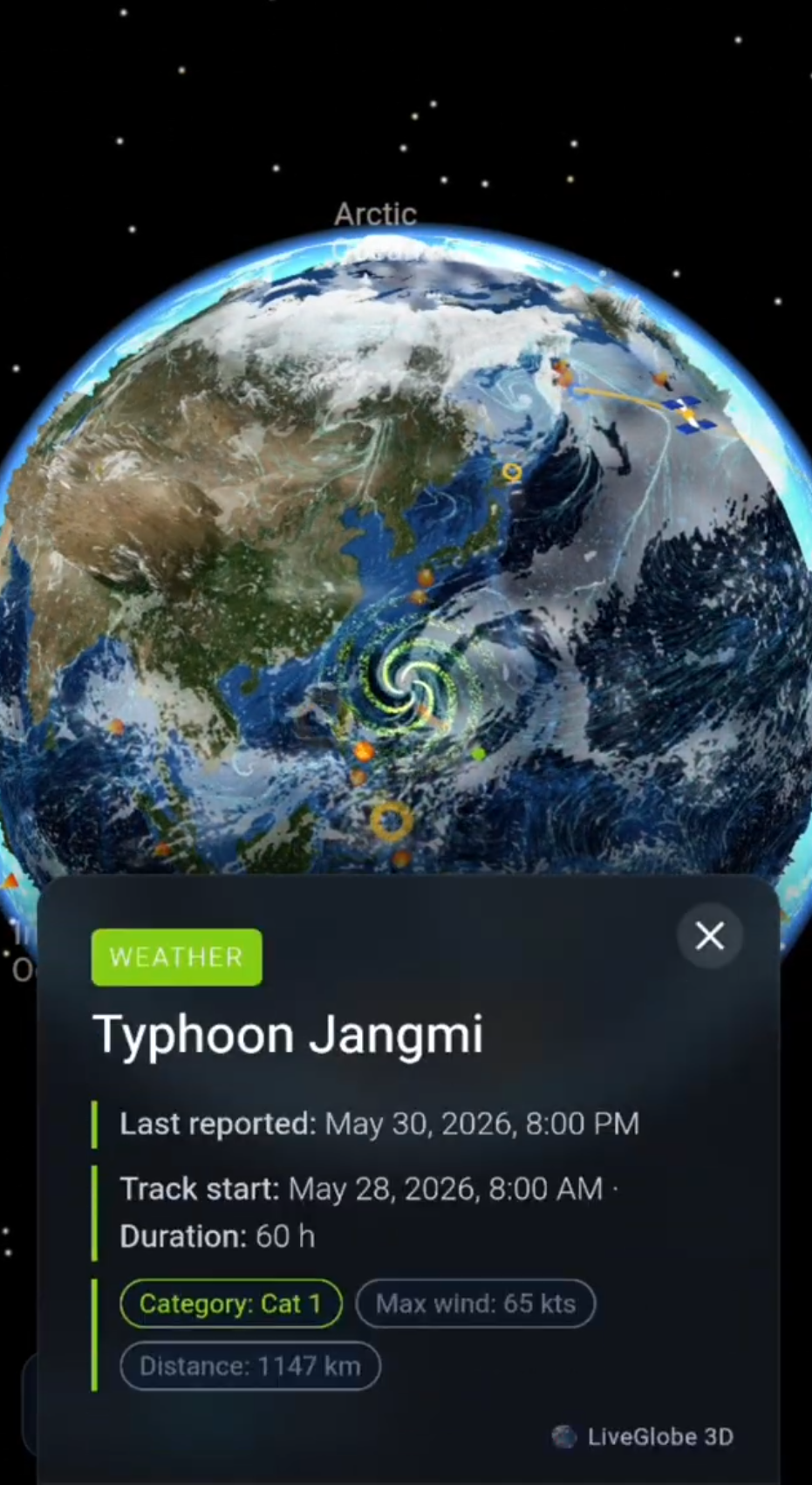
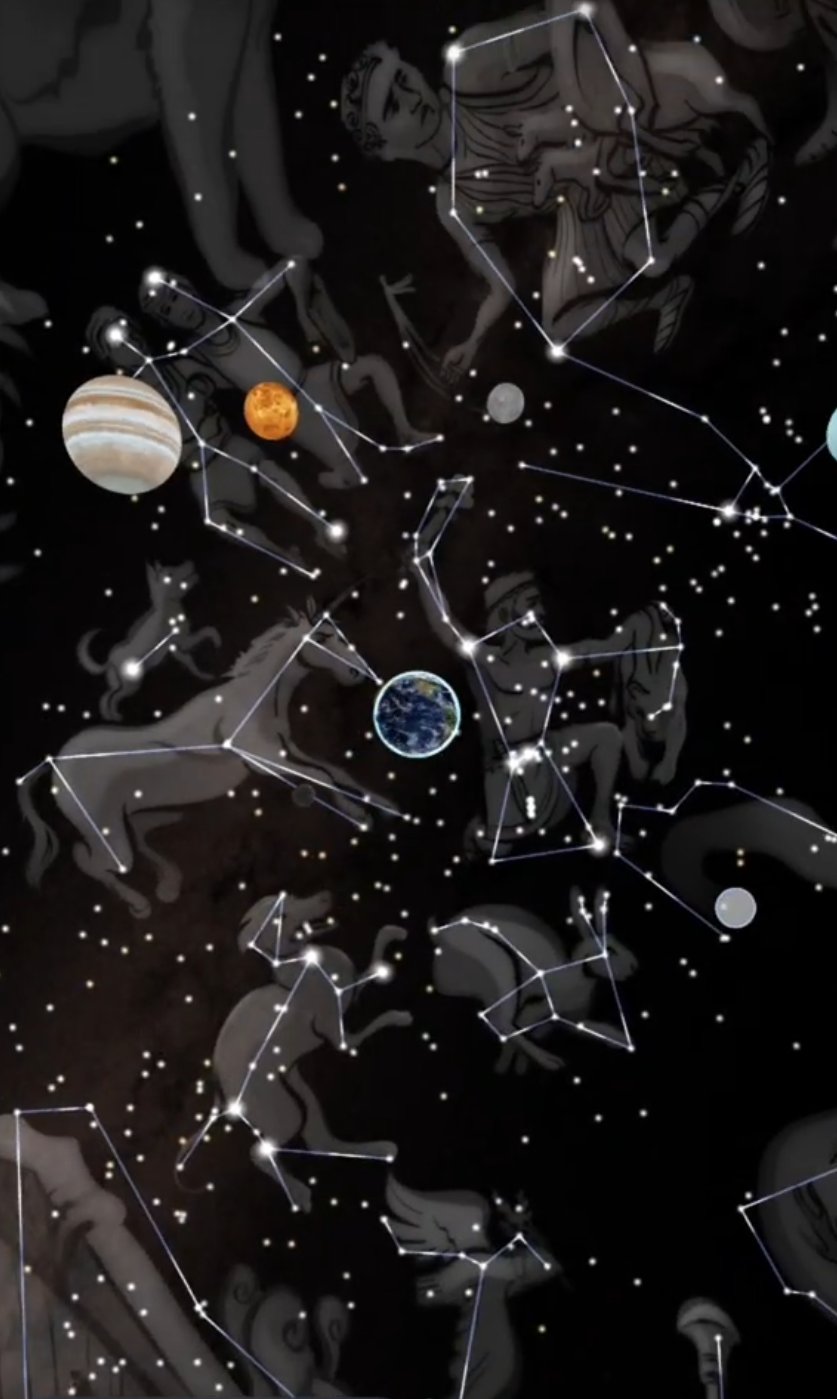
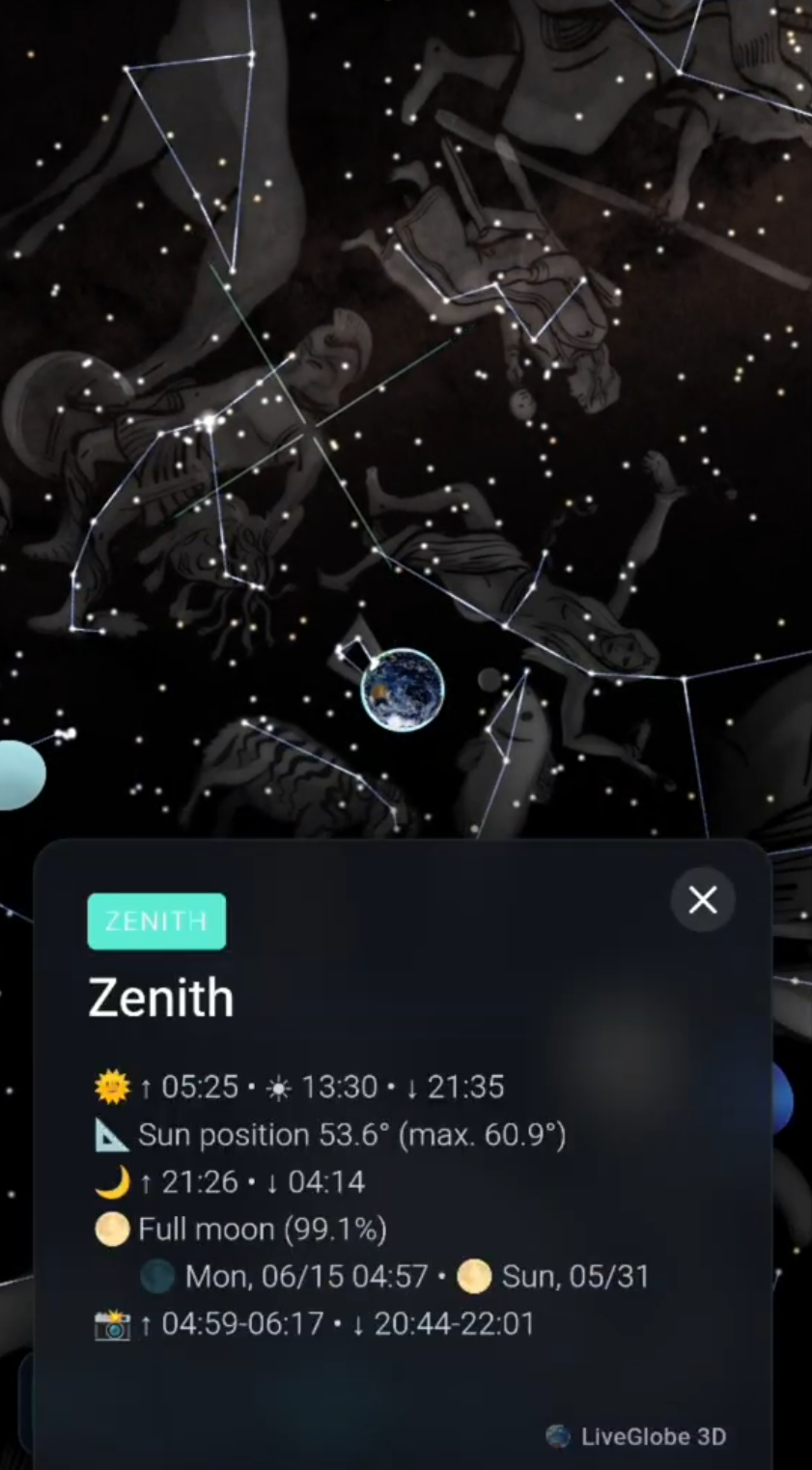
In LiveGlobe 3D, you can switch between Earth and sky views and enable the Moon in the space menu. Use these views for spatial orientation; the web app requires sign-in. The lamp experiment is a separate activity to try at home.
Explore the views available to you, and remember the central idea: the lunar globe does not grow and shrink—our view of its day side changes.
Short clips
The app in motion: short, genuine glimpses straight from use.
At a glance
How the app feels on your phone.