What does “dreiviertel acht” mean? German quarter-hour phrases explained
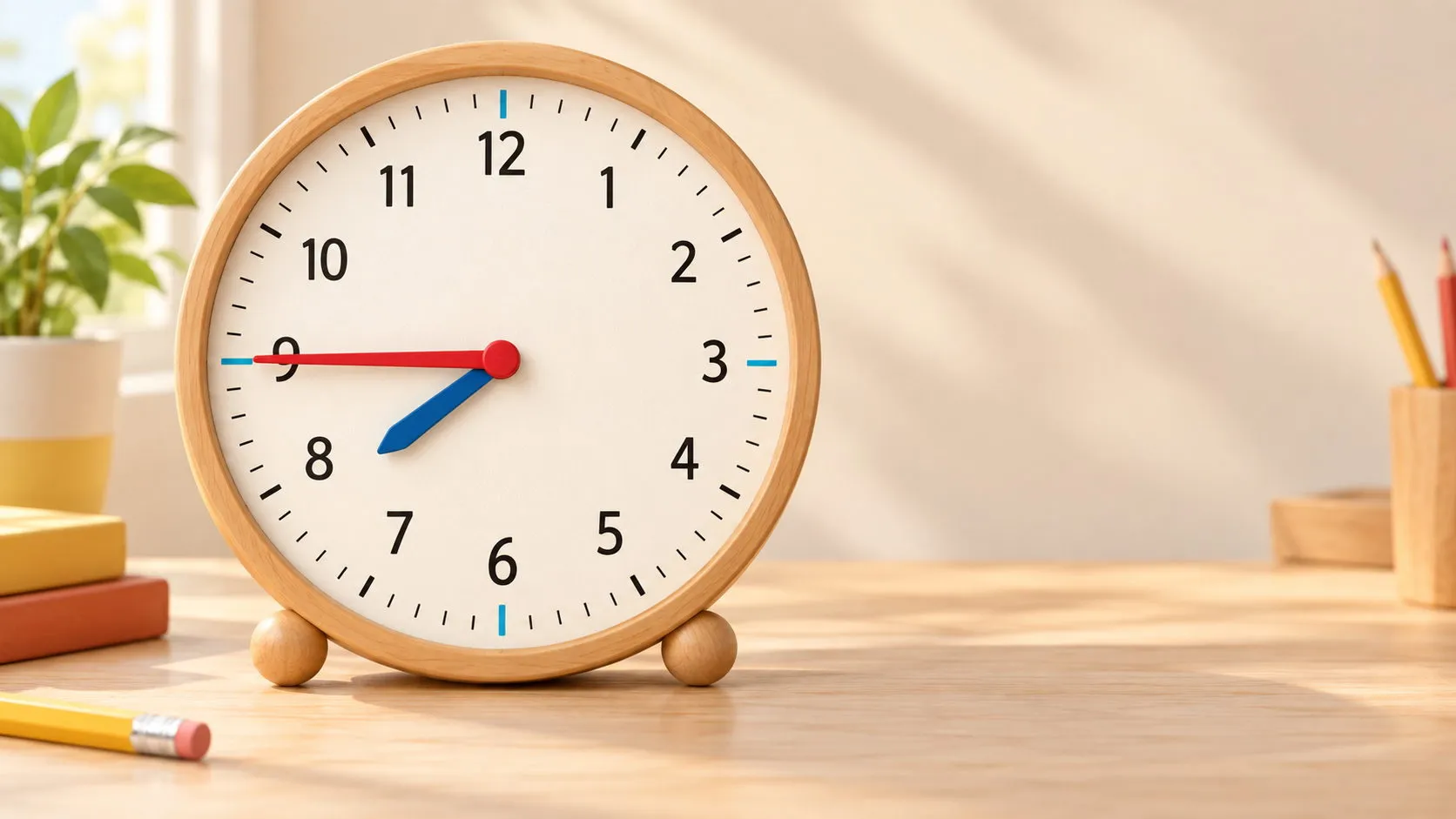
“Dreiviertel acht” means 7:45 — the same time as “Viertel vor acht” (quarter to eight). The minute hand points to 9; the hour hand is between 7 and 8, closer to 8. But “viertel acht” means 7:15, not 7:45. If you encounter both ways of telling time in German, the key is to identify which hour the fraction refers to.
Count the hour towards eight
Imagine the hour from 7:00 to 8:00 as one complete journey. At 7:15, one quarter of that journey is over: viertel acht, literally a quarter of the way towards eight. At 7:30, half the hour has elapsed: halb acht (halfway to eight). At 7:45, three quarters have elapsed: dreiviertel acht. Only a quarter of an hour remains, so Viertel vor acht also describes 7:45.
English “quarter to eight” focuses on the time remaining; German dreiviertel acht focuses on the fraction already elapsed towards eight. Both describe the same clock position. These German expressions vary by region, as documented by the Atlas of Everyday German; avoid assuming that every German speaker uses exactly the same wording.
Compare the words with the hands
| Digital time | German phrase counting towards the next hour | Alternative German phrase | Minute hand |
|---|---|---|---|
| 1:15 | viertel zwei | Viertel nach eins | at 3 |
| 1:45 | dreiviertel zwei | Viertel vor zwei | at 9 |
| 7:15 | viertel acht | Viertel nach sieben | at 3 |
| 7:30 | halb acht | halb acht | at 6 |
| 7:45 | dreiviertel acht | Viertel vor acht | at 9 |
| 10:15 | viertel elf | Viertel nach zehn | at 3 |
| 10:45 | dreiviertel elf | Viertel vor elf | at 9 |
The short hand moves continuously too: just beyond 7 at 7:15, halfway between 7 and 8 at 7:30, and nearly at 8 by 7:45. It reaches 8 only at 8:00. An analog clock alone cannot tell whether the same hand positions mean 7:45 in the morning or 19:45 in the evening; context supplies that detail.
Try a three-step clock exercise
Start at 7:00 on a clock with movable hands. Point to the next hour, 8, and work forwards. Move the minute hand to 3 for 7:15 and say viertel acht / Viertel nach sieben. Move it to 6 for 7:30 and say halb acht. Finally move it to 9 for 7:45 and say dreiviertel acht / Viertel vor acht. Keep moving the hour hand gradually towards 8 as you go.
Now check these without looking at the table:
- What time is dreiviertel zwei, and where is the minute hand?
- The minute hand points to 3 and the hour hand sits just past 10. Which two German quarter-hour phrases fit?
- Which comes later, viertel acht or Viertel vor acht, and by how much?
Answers: 1. 1:45, minute hand at 9; also Viertel vor zwei. 2. 10:15: viertel elf or Viertel nach zehn. 3. Viertel vor acht (7:45) is 30 minutes after viertel acht (7:15). If an appointment depends on the answer, ask for the time in digits rather than guessing from an unfamiliar phrase.
Explore the German variants on a practice clock
The UhrenABC practice clock offers one selected language variant at a time. With its German variant, its documented examples include viertel nach eins at 1:15 and viertel vor zwei at 1:45. The Berlin/East German variant uses viertel zwei and dreiviertel zwei for those same times. To compare them, switch variants in the settings one after the other; the application does not present a simultaneous translation between two languages.
Its freely adjustable clock lets you compare hand positions with a digital display and written time without marking an answer right or wrong. For a separate reading exercise, you can assemble the time using word tiles; the quarter-hour setting also includes whole and half hours. Try the two hand positions together and explain each German expression in your own words.