Listen and set the clock: six activities for two
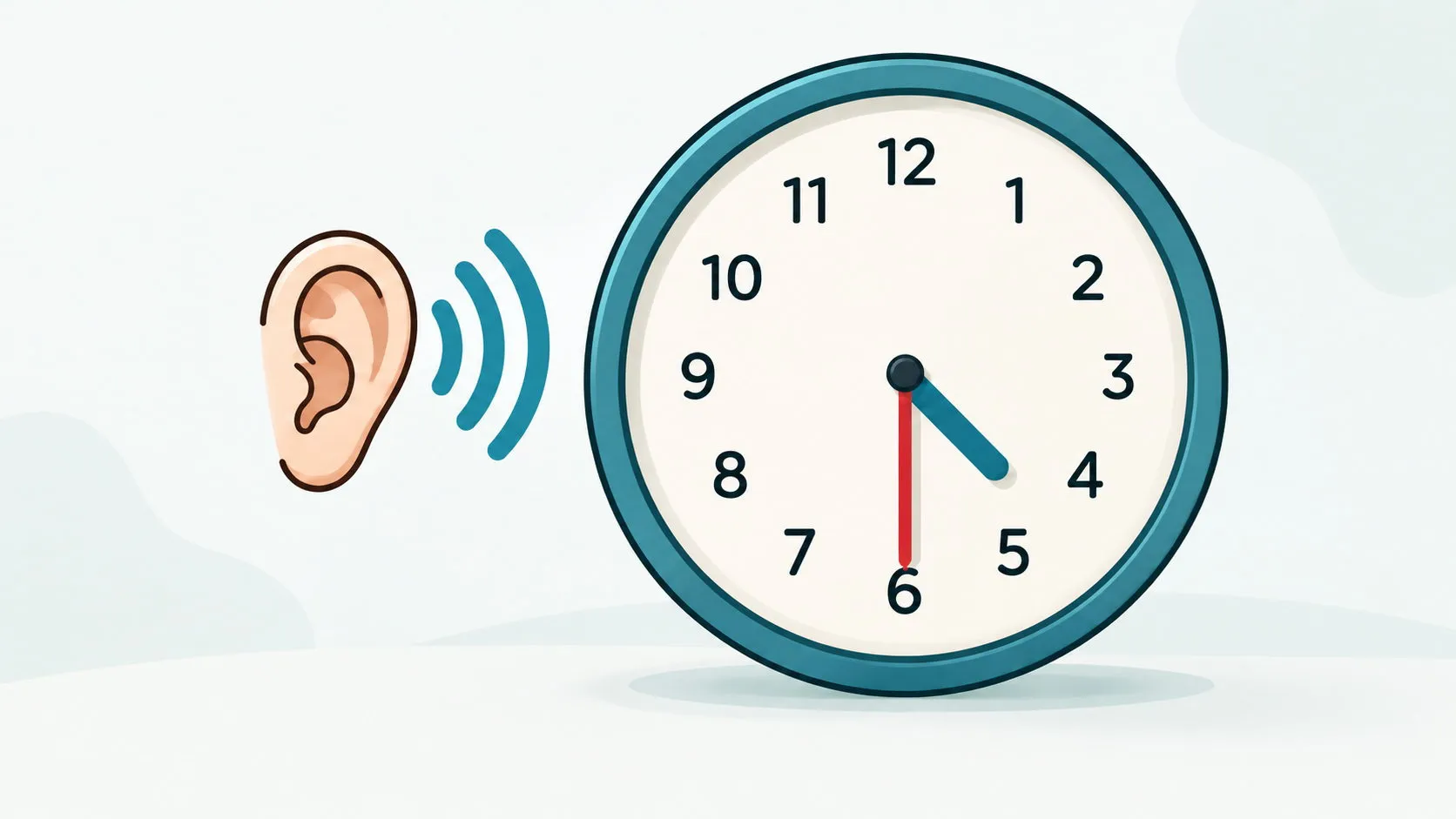
You say “half past four”, your child sets the clock, and together you explain where both hands belong. This partner activity needs no recording: one person reads a time aloud while the other listens and sets an analogue teaching clock. Keep the numerical answer hidden at first. The task is to turn the words you hear into hand positions.
Below are a simple routine, six ready-to-read prompts and a separate answer section. Start with hours and half hours, then move to quarters and five-minute intervals. Choose as many tasks as you can comfortably discuss together.
Get ready: who reads and who sets the clock?
You need a clock with movable hands and the prompt list. A homemade paper clock works, as does an adjustable on-screen clock. On a paper model, you move both hands yourself: the hour hand does not follow the minute hand automatically.
The reader keeps the prompts and answers out of the other person’s view. The listener sets the clock. If you use a screen, the reader can cover the digital and written time with a piece of paper, leaving the face and controls visible. Uncover the displays only when you are ready to check together.
Before you start, identify the long minute hand and the short hour hand. During an hour, the short hand gradually moves towards the next number. It does not stay exactly on the previous hour until the next one begins.
A routine for each prompt
- Read one prompt without adding its numerical answer.
- Ask the listener to repeat it. Read it again in the same words if needed.
- The listener sets both hands and explains their positions.
- Now reveal the answer. Check the minute and hour hands separately.
- If something does not match, adjust that hand and describe the difference.
This is a conversation, not a race. Swap roles after two prompts or after a small selection. Repeating a prompt or asking a question is part of the activity.
Read-aloud prompts: say only these sentences
Read the tasks you have chosen. Keep the answers further down the page covered while the listener sets the clock.
Round 1: hours and half hours
- “It is four o’clock.”
- “It is half past four.”
Round 2: quarter hours
- “It is quarter past four.”
- “It is quarter to five.”
Round 3: five-minute intervals
- “It is twenty past four.”
- “It is ten to five.”
All six prompts stay between four and five. That lets you compare minute positions without finding a different hour each time. In another round, mix up the order.
Answers: do both hands show the same time?
| Task | Time | Long minute hand | Short hour hand |
|---|---|---|---|
| 1 | 4:00 | on 12 | exactly on 4 |
| 2 | 4:30 | on 6 | halfway between 4 and 5 |
| 3 | 4:15 | on 3 | a quarter of the way from 4 to 5 |
| 4 | 4:45 | on 9 | three quarters of the way from 4 to 5 |
| 5 | 4:20 | on 4 | a third of the way from 4 to 5 |
| 6 | 4:50 | on 10 | close to 5, but not there yet |
“Half past four” means 30 minutes have passed since four o’clock: 4:30. “Quarter to five” means 15 minutes remain before five, so it is 4:45. The minute hand points to 9 and the hour hand is already near 5, but has not reached it. “Ten to five” is 50 minutes past four.
For the long hand, the printed 4 means 20 minutes. For the short hand, 4 names the hour. If the two roles are getting mixed up, see our guide to reading an analogue clock in five-minute steps.
Help with questions rather than giving the answer
Ask the listener to explain their thinking:
- “Which hour has started, and which comes next?”
- “How many minutes have passed since four?”
- “Should the short hand be near the start, in the middle or near the end of its journey to 5?”
If the short hand is exactly on 4 at 4:30, adjust only that hand first. The long hand can stay on 6. Move the short hand halfway towards 5 and repeat the prompt.
Agree on the wording for your first round. If your family usually says “four thirty”, that is another way to name the same time. You can compare different expressions once the basic routine is familiar.
Swap roles and make your own prompts
The person who was setting the clock now reads. Use the list again or prepare a new time. Write down its numerical answer and both hand positions before reading it aloud. Begin with times you can both explain.
Try saying “quarter past four” and “four fifteen” in turn. The hands stay in the same positions. Ask: “Did the time change, or only the words?” This turns the prompt list into a discussion about different names for one time.
Try the activity on the free practice clock
In the UhrenABC / ClockABC web application, open the free practice clock, labelled “Zeit üben” in the German interface. Use the hour and minute sliders to set your partner’s time. The analogue hands, digital displays and written time update together. Cover the extra displays initially if you want to check them only after explaining your answer.
The free clock does not automatically mark your partner’s spoken task. You check it together using the list and displays. You do not need the play button or an audio file for this round: the reader’s voice supplies the prompt.
Start with “four o’clock” and “half past four”. Explain both hands, then swap roles. You can find the application links on the UhrenABC website.